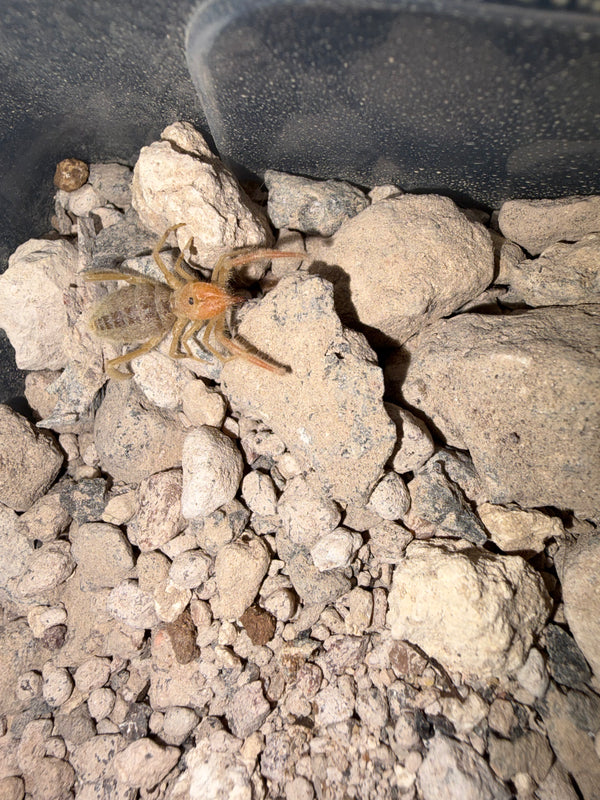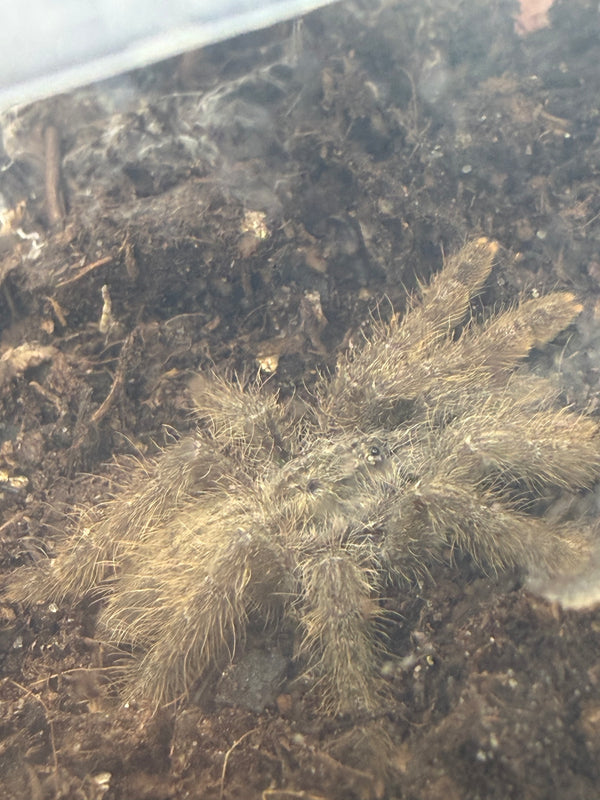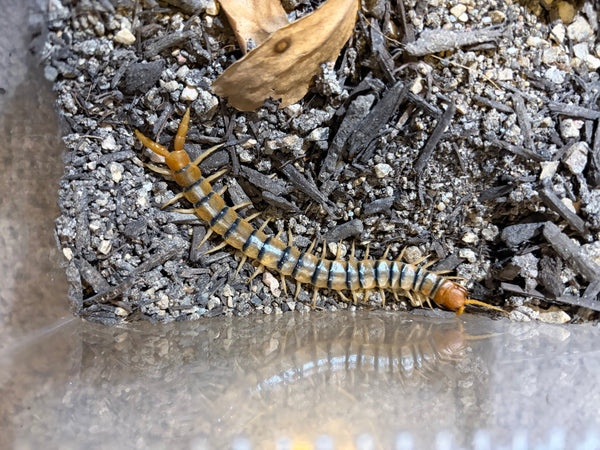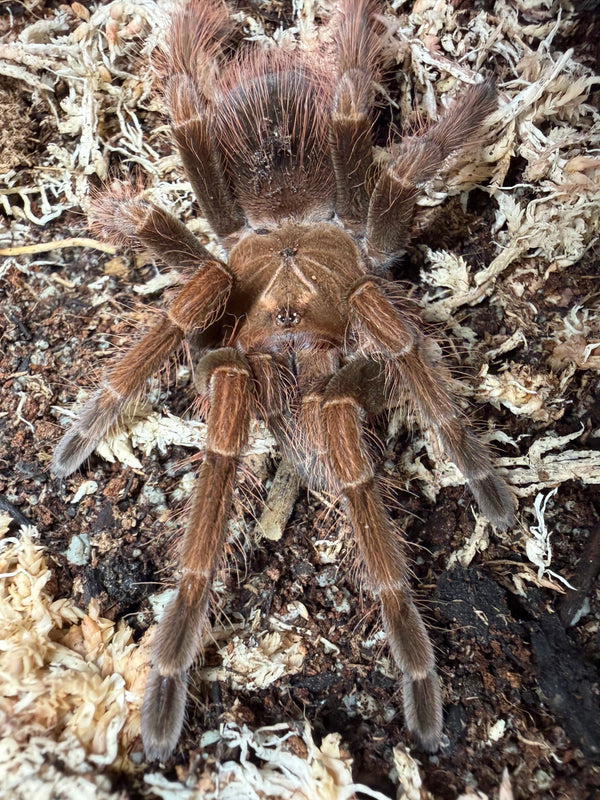
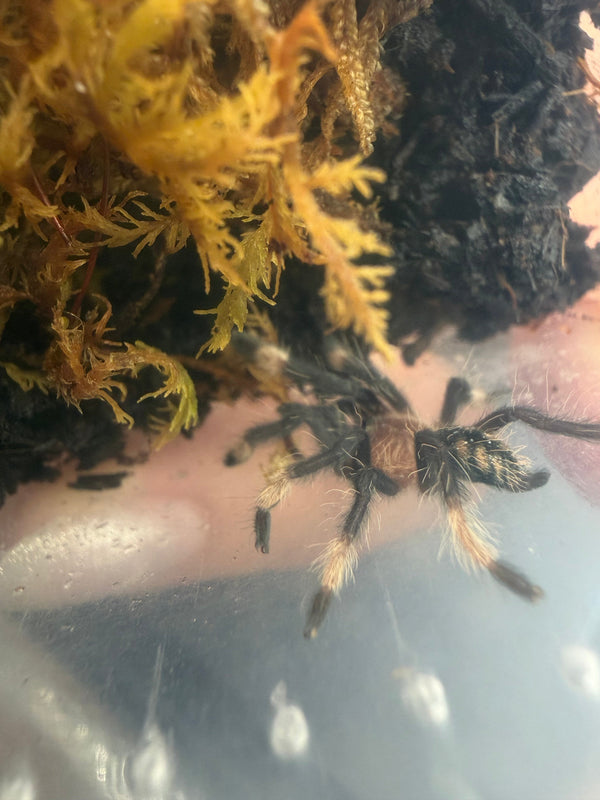
Venezuelan Suntiger Tarantula (Psalmopoeus irminia)
Tarantula

1-2 in - 5 in this arrival
This fella needs ground cover, a secure hide, and enough substrate depth to settle in.
Moderate-high humidity, secure ventilation, cork cover, and no bare-hand handling.
Fresh drop notes
The numbers live in the care guide. Enclosure size, temps, humidity, feeding schedule, premolt signs, handling boundaries: it's all in the care guide for this exact fella. Start with the full Advanced guide, or click for the quick Open the Simple version →
Lychas spp. - Spice 3 — Intermediate. Baby Buddy — for 2i–3i instars (escape-proof ventilation only); Bark Buddy for juveniles and adults
Lychas spp.
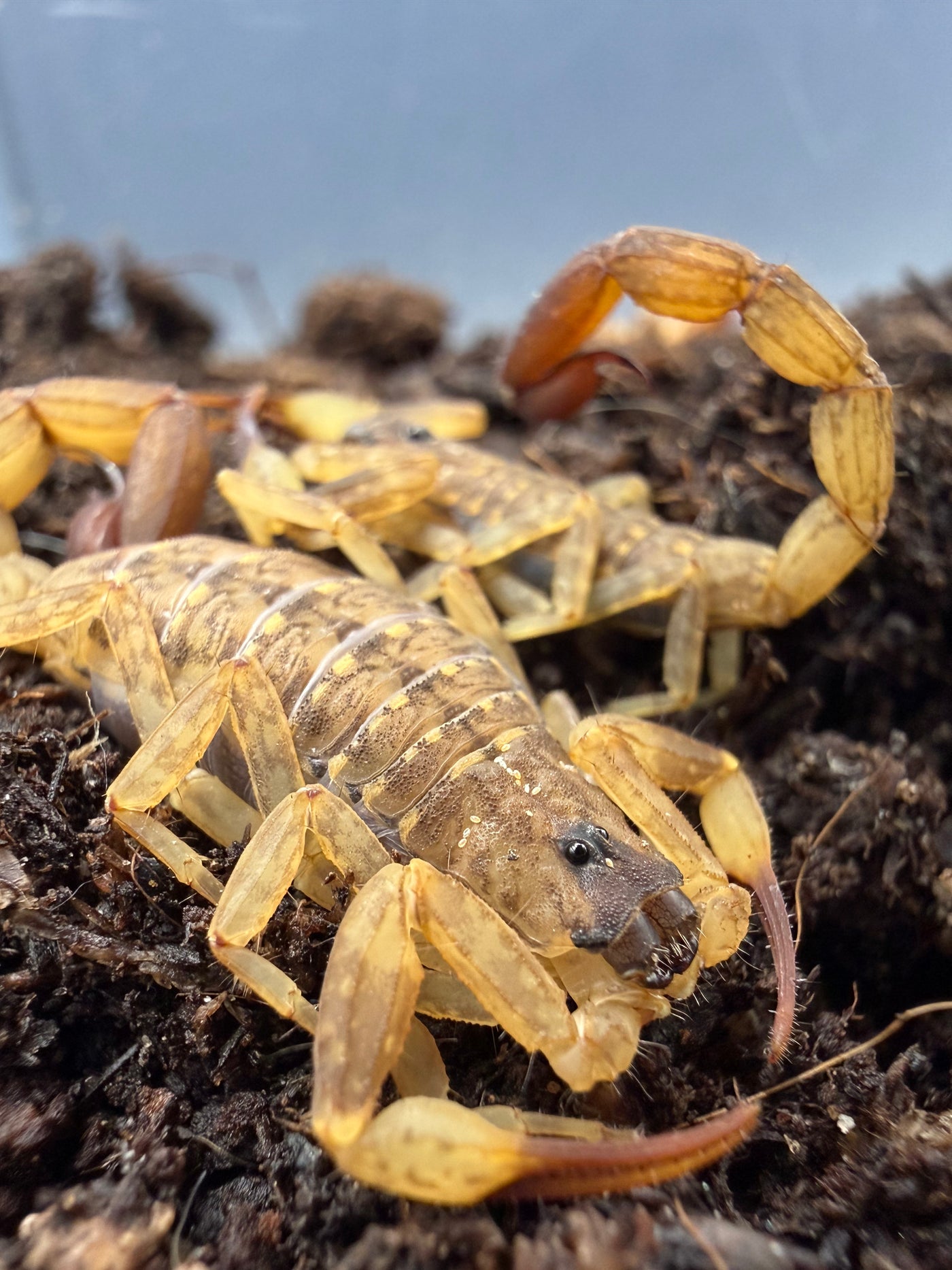
Big Z's Quick Verdict: Small tropical Asian buthids — L. mucronatus is the common one: semi-arboreal bark dwellers, communal-capable, with moderate venom. A 'hot-keeper-lite' bark scorpion. Adults reach about 2–2.5 inches.
| Temp | 75–85°F |
|---|---|
| Humidity | Moderate–High (70-85%) (humid; ventilated; dry perches available) |
| Setup | Tropical Asian buthid (semi-arboreal) |
| Substrate | Lightly moist soil/coco mix; vertical cork bark for perching; ventilated |
| Feeding | Small prey weekly |
| Handling | Do not handle |
Humidity zones: Very Low under 30% - Low 30-60% - Low-Moderate 40-70% - Moderate 60-80% - Moderate-High 70-85% - High 80%+ - Very High 90%+
Current Big Z's catalog: No
Lychas spp.
Keeper Snapshot: Small tropical Asian buthids — L. mucronatus is the common one: semi-arboreal bark dwellers, communal-capable, with moderate venom. A 'hot-keeper-lite' bark scorpion. Adults reach about 2–2.5 inches.
| Temperature | 75–85°F |
|---|---|
| Humidity | Moderate–High (70-85%) (humid; ventilated; dry perches available) |
| Setup Type | Tropical Asian buthid (semi-arboreal) |
| Substrate | Lightly moist soil/coco mix; vertical cork bark for perching; ventilated |
| Feeding | Small prey weekly |
| Care Difficulty | Spice 3 — Intermediate |
| Handling | Do not handle |
Humidity zones: Very Low under 30% - Low 30-60% - Low-Moderate 40-70% - Moderate 60-80% - Moderate-High 70-85% - High 80%+ - Very High 90%+
Fresh drop notes
The numbers live in the care guide. Enclosure size, temps, humidity, feeding schedule, premolt signs, handling boundaries: it's all in the care guide for this exact fella. Start with the full Advanced guide, or click for the quick Open the Simple version →
Lychas spp. - Spice 3 — Intermediate. Baby Buddy — for 2i–3i instars (escape-proof ventilation only); Bark Buddy for juveniles and adults
Lychas spp.
Big Z's Quick Verdict: Small tropical Asian buthids — L. mucronatus is the common one: semi-arboreal bark dwellers, communal-capable, with moderate venom. A 'hot-keeper-lite' bark scorpion. Adults reach about 2–2.5 inches.
| Temp | 75–85°F |
|---|---|
| Humidity | Moderate–High (70-85%) (humid; ventilated; dry perches available) |
| Setup | Tropical Asian buthid (semi-arboreal) |
| Substrate | Lightly moist soil/coco mix; vertical cork bark for perching; ventilated |
| Feeding | Small prey weekly |
| Handling | Do not handle |
Humidity zones: Very Low under 30% - Low 30-60% - Low-Moderate 40-70% - Moderate 60-80% - Moderate-High 70-85% - High 80%+ - Very High 90%+
Current Big Z's catalog: No
Lychas spp.
Keeper Snapshot: Small tropical Asian buthids — L. mucronatus is the common one: semi-arboreal bark dwellers, communal-capable, with moderate venom. A 'hot-keeper-lite' bark scorpion. Adults reach about 2–2.5 inches.
| Temperature | 75–85°F |
|---|---|
| Humidity | Moderate–High (70-85%) (humid; ventilated; dry perches available) |
| Setup Type | Tropical Asian buthid (semi-arboreal) |
| Substrate | Lightly moist soil/coco mix; vertical cork bark for perching; ventilated |
| Feeding | Small prey weekly |
| Care Difficulty | Spice 3 — Intermediate |
| Handling | Do not handle |
Humidity zones: Very Low under 30% - Low 30-60% - Low-Moderate 40-70% - Moderate 60-80% - Moderate-High 70-85% - High 80%+ - Very High 90%+

Tarantula

Solifuge

Tarantula
Sold out - DM Big ZCentipede

Tarantula

Centipede
Sold out - DM Big ZInvertebrate

Centipede