Lil Z's pick of every kid-approved fella plus the safe accessories to go with them. Slow movers, low-defense animals, and the gentle habitat gear (calm decor, soft substrate, kid-friendly hides)...
Spice 1: Kid SafeThe gentlest lane: slow-moving, low-defense, simple care. A solid first pet and a good fit for family setups.Kid friendlyHand-picked for the Kids Zone: low-risk, low-defense fellas a kid can help care for with a grown-up alongside.Burrow Buddy fitThis one's a digger, so it pairs with the deep Burrow Buddy: substrate depth, a tunnel start, and a dark ground-level retreat.
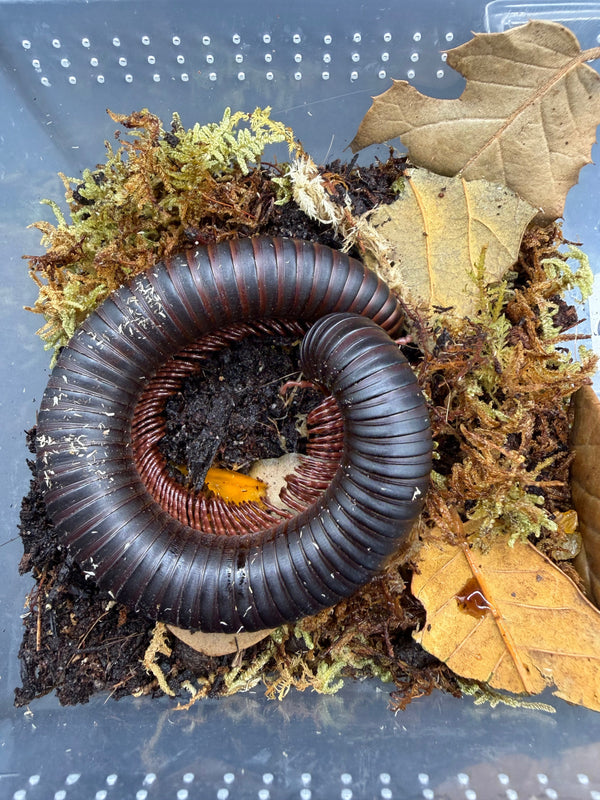
African Giant Millipede (Archispirostreptus gigas) - 5-8 in
Spice 1: Kid SafeThe gentlest lane: slow-moving, low-defense, simple care. A solid first pet and a good fit for family setups.Kid friendlyHand-picked for the Kids Zone: low-risk, low-defense fellas a kid can help care for with a grown-up alongside.Burrow Buddy fitThis one's a digger, so it pairs with the deep Burrow Buddy: substrate depth, a tunnel start, and a dark ground-level retreat.
Spice 1: Kid SafeThe gentlest lane: slow-moving, low-defense, simple care. A solid first pet and a good fit for family setups.Kid friendlyHand-picked for the Kids Zone: low-risk, low-defense fellas a kid can help care for with a grown-up alongside.Baby Buddy fitTiny enough that keeping a close eye on it beats giving it space. Starts in the tiny square Baby Buddy; size up as it grows.
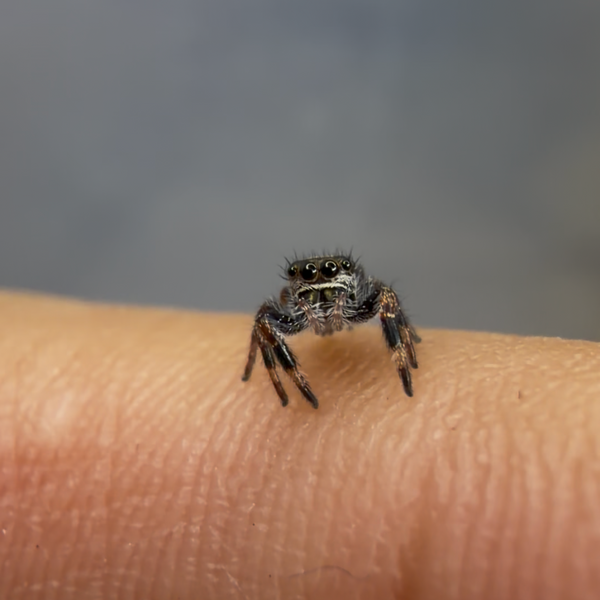
Regal Jumping Spider (Phidippus regius) - 1/16-1/8 in
Spice 1: Kid SafeThe gentlest lane: slow-moving, low-defense, simple care. A solid first pet and a good fit for family setups.Kid friendlyHand-picked for the Kids Zone: low-risk, low-defense fellas a kid can help care for with a grown-up alongside.Bark Buddy fitThis one's a climber, so it pairs with the tall Bark Buddy: vertical space, cork-bark lanes, and shaded retreats up off the floor.
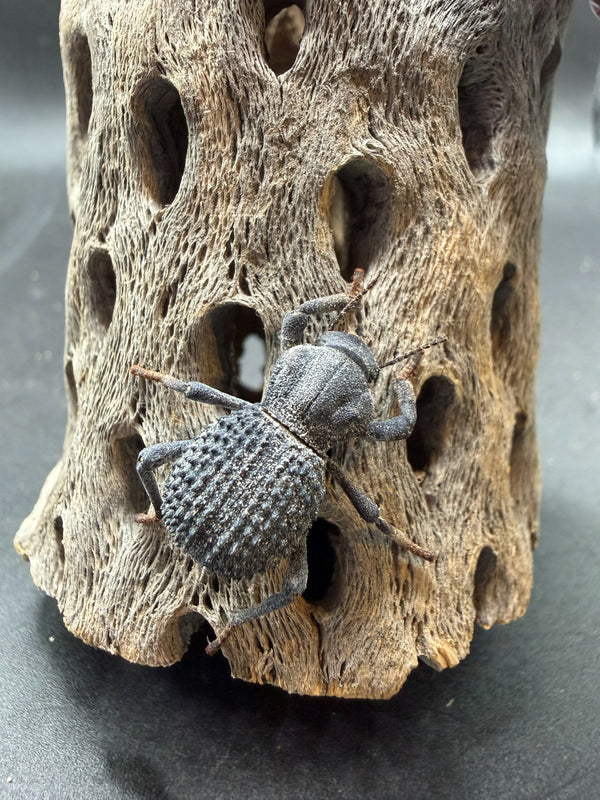
Blue Death Feigning Beetle (Asbolus verrucosus) - 1 in
Spice 1: Kid SafeThe gentlest lane: slow-moving, low-defense, simple care. A solid first pet and a good fit for family setups.Kid friendlyHand-picked for the Kids Zone: low-risk, low-defense fellas a kid can help care for with a grown-up alongside.Baby Buddy fitTiny enough that keeping a close eye on it beats giving it space. Starts in the tiny square Baby Buddy; size up as it grows.
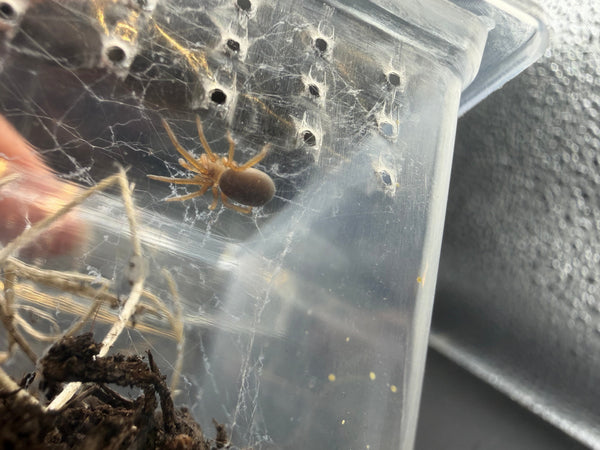
Black Hole Spider (Kukulcania arizonica) - 1/8-1/4 in
Spice 1: Kid SafeThe gentlest lane: slow-moving, low-defense, simple care. A solid first pet and a good fit for family setups.Kid friendlyHand-picked for the Kids Zone: low-risk, low-defense fellas a kid can help care for with a grown-up alongside.Burrow Buddy fitThis one's a digger, so it pairs with the deep Burrow Buddy: substrate depth, a tunnel start, and a dark ground-level retreat.
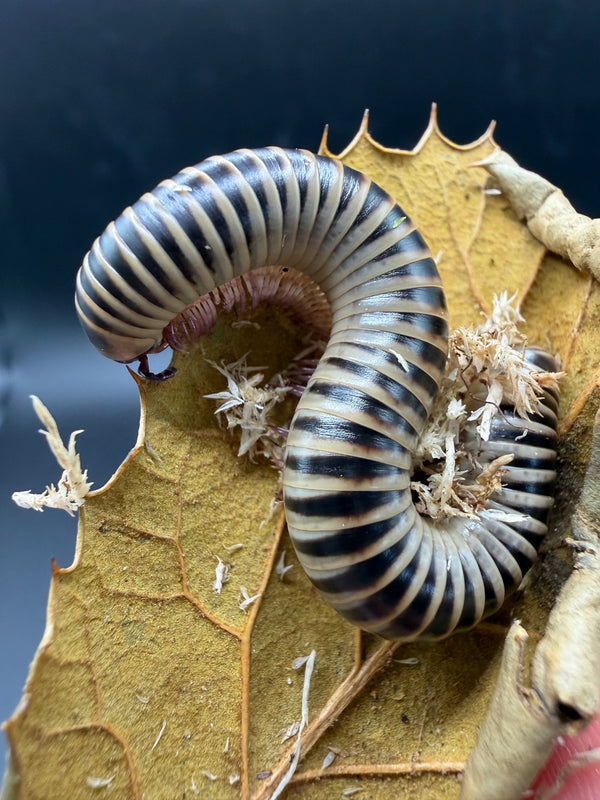
Purple Rainbow Ivory Millipede (Chicobolus spinigerus) - 2-4 in
Spice 1: Kid SafeThe gentlest lane: slow-moving, low-defense, simple care. A solid first pet and a good fit for family setups.Kid friendlyHand-picked for the Kids Zone: low-risk, low-defense fellas a kid can help care for with a grown-up alongside.Baby Buddy fitTiny enough that keeping a close eye on it beats giving it space. Starts in the tiny square Baby Buddy; size up as it grows.
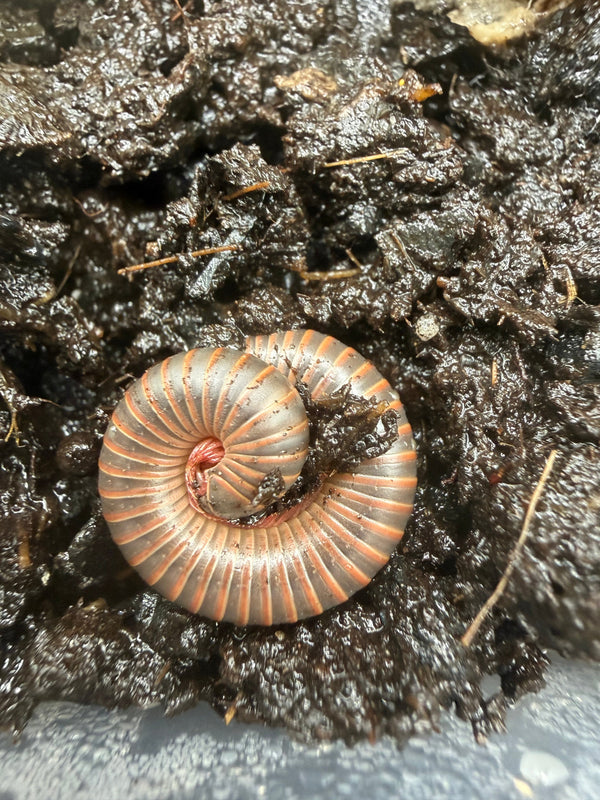
Scarlet Millipede (Trigoniulus coralinus) - 1-2.5 in
Spice 1: Kid SafeThe gentlest lane: slow-moving, low-defense, simple care. A solid first pet and a good fit for family setups.Kid friendlyHand-picked for the Kids Zone: low-risk, low-defense fellas a kid can help care for with a grown-up alongside.Burrow Buddy fitThis one's a digger, so it pairs with the deep Burrow Buddy: substrate depth, a tunnel start, and a dark ground-level retreat.
American Pinkfoot Millipede (Narceus americanus) - 2-4 in
Spice 1: Kid SafeThe gentlest lane: slow-moving, low-defense, simple care. A solid first pet and a good fit for family setups.Kid friendlyHand-picked for the Kids Zone: low-risk, low-defense fellas a kid can help care for with a grown-up alongside.Baby Buddy fitTiny enough that keeping a close eye on it beats giving it space. Starts in the tiny square Baby Buddy; size up as it grows.
Rubber Ducky Pill Millipede (Hyleoglomeris cf. bomba) - 1/4-1/2 in
Spice 1: Kid SafeThe gentlest lane: slow-moving, low-defense, simple care. A solid first pet and a good fit for family setups.Kid friendlyHand-picked for the Kids Zone: low-risk, low-defense fellas a kid can help care for with a grown-up alongside.Burrow Buddy fitThis one's a digger, so it pairs with the deep Burrow Buddy: substrate depth, a tunnel start, and a dark ground-level retreat.
Mozambique Red Fire Millipede (Centrobolus splendidus) - 1.5-3 in
Spice 1: Kid SafeThe gentlest lane: slow-moving, low-defense, simple care. A solid first pet and a good fit for family setups.Kid friendlyHand-picked for the Kids Zone: low-risk, low-defense fellas a kid can help care for with a grown-up alongside.Baby Buddy fitTiny enough that keeping a close eye on it beats giving it space. Starts in the tiny square Baby Buddy; size up as it grows.
Hothouse White Leg Millipede (Leptogoniulus sorornus) - 1+ in
Spice 1: Kid SafeThe gentlest lane: slow-moving, low-defense, simple care. A solid first pet and a good fit for family setups.Kid friendlyHand-picked for the Kids Zone: low-risk, low-defense fellas a kid can help care for with a grown-up alongside.
Spice 1: Kid SafeThe gentlest lane: slow-moving, low-defense, simple care. A solid first pet and a good fit for family setups.Kid friendlyHand-picked for the Kids Zone: low-risk, low-defense fellas a kid can help care for with a grown-up alongside.Baby Buddy fitTiny enough that keeping a close eye on it beats giving it space. Starts in the tiny square Baby Buddy; size up as it grows.
Maui Skunk-Striped Millipede (Spirobollelus immigrans) - 1-2 in
Spice 1: Kid SafeThe gentlest lane: slow-moving, low-defense, simple care. A solid first pet and a good fit for family setups.Kid friendlyHand-picked for the Kids Zone: low-risk, low-defense fellas a kid can help care for with a grown-up alongside.Baby Buddy fitTiny enough that keeping a close eye on it beats giving it space. Starts in the tiny square Baby Buddy; size up as it grows.
Bumblebee Millipede (Anadenobolus monillicornis) - 1/2-1.5 in
Spice 1: Kid SafeThe gentlest lane: slow-moving, low-defense, simple care. A solid first pet and a good fit for family setups.Kid friendlyHand-picked for the Kids Zone: low-risk, low-defense fellas a kid can help care for with a grown-up alongside.Baby Buddy fitTiny enough that keeping a close eye on it beats giving it space. Starts in the tiny square Baby Buddy; size up as it grows.
Rainbow Candy Pill Millipede (Rhopalomeris carnifex) - 1/2-1 in