Home
Beginner tarantula guide

Best Beginner Tarantulas From Big Z's

A no-fluff guide to choosing your first tarantula from Big Z's, setting up the right enclosure before it arrives, and understanding what normal tarantula behavior actually looks like.

The best beginner tarantula from Big Z's is a calm, lower-Spice New World species paired with the correct enclosure before it ships, not the flashiest animal in stock.

The right first tarantula is calm, not flashy

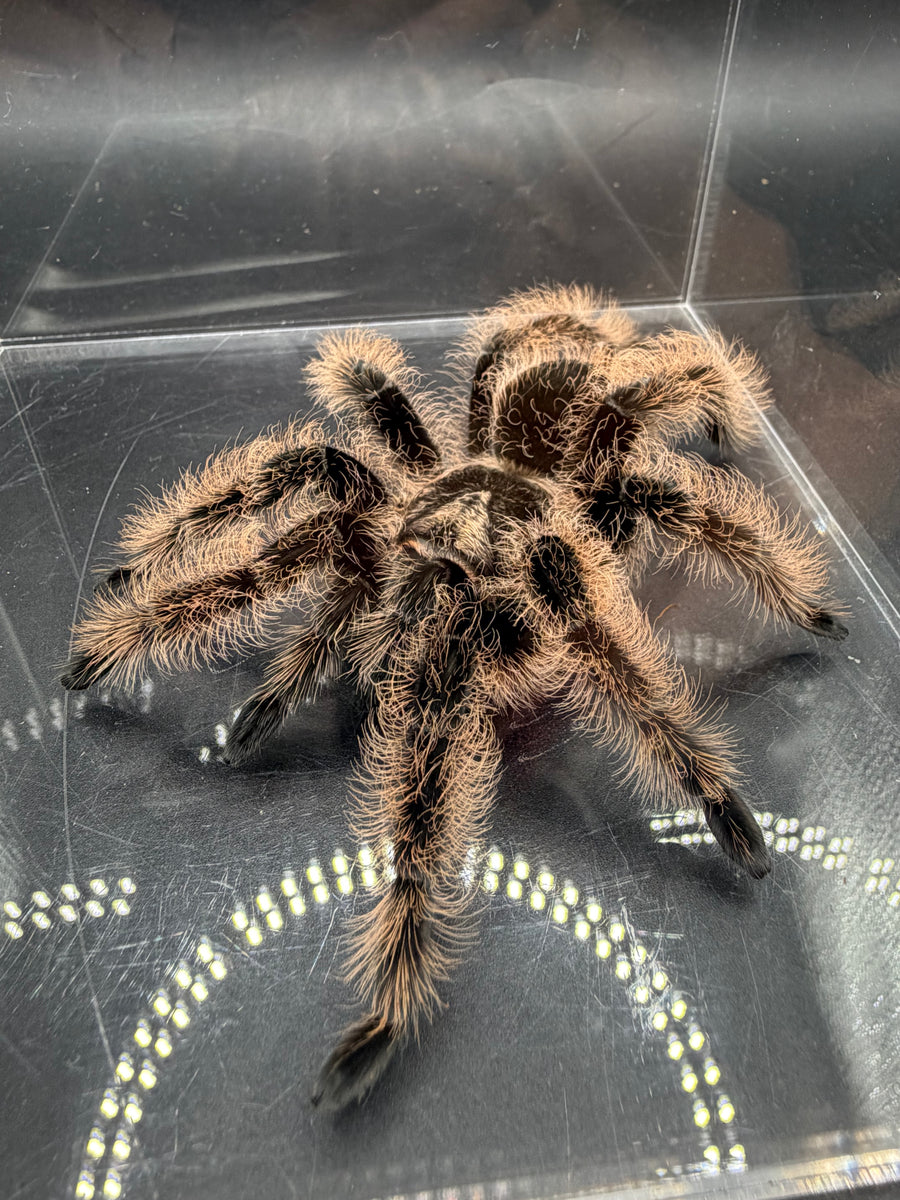
New World terrestrial tarantulas are the most forgiving starting point. They move slowly, tolerate minor husbandry mistakes, and spend most of their time in or near a hide. Pink toe arboreals can work for careful beginners who can provide proper cross-ventilation and a taller enclosure. Big Z's Spice Scale tells you difficulty upfront. For a first tarantula, stay at Spice 1 or 2 and have the enclosure fully set up before the animal ships.

Starting paths

Beginner-friendly tarantula paths

Best first tarantula path

Lower-Spice New World terrestrial tarantula

Best for
Keepers who want a slower, forgiving first tarantula that spends most of its time in or near a hide.
Difficulty
Spice 1-2 for beginner-suitable species. Always check the individual listing.
Setup
Low, secure terrestrial enclosure with 3-4 inches of substrate, a cork tube or flat hide, and a small shallow water dish. Most New World terrestrials do not need a heat lamp.
Avoid if
You want an animal to handle often. Falls from even a few inches can be fatal. Tarantulas are display animals first.
Matched kit
Burrow Buddy terrestrial starter kit.
Beginner arboreal option

Pink toe style arboreal tarantula

Best for
Keepers ready for a slightly more active display animal that builds visible webbing in a vertical setup.
Difficulty
Spice 2 when ventilation and enclosure height are correct. Higher effective difficulty if the enclosure is wrong.
Setup
Tall, cross-ventilated enclosure with cork bark anchor points and vertical space. Lightly mist one wall and allow it to dry between mistings. Do not keep the enclosure wet.
Avoid if
You cannot provide strong top and side ventilation, or you want a slow ground-dwelling animal for your first tarantula.
Matched kit
Bark Buddy style arboreal setup.
Before you buy

What every first-time keeper needs to know

Tarantulas are display animals, not handling pets

Even beginner tarantulas should be treated as display animals. A fall from even a few inches can rupture a tarantula's abdomen and is often fatal. Big Z's care guidance focuses on safe housing, feeding, and observation rather than casual handling. Use a catch cup for any necessary transfers.

Buy the enclosure plan with the animal

Match the enclosure to the tarantula's lifestyle before checkout, not after it arrives. A terrestrial tarantula in a tall arboreal box will pace and stress. An arboreal in a low tub will not build or thrive. Big Z's product pages point toward the right Buddy kit when one fits.

Build a habitat

Understand the molt cycle before it starts

Tarantulas stop eating weeks or months before a molt, seal their hide with silk, and may lay completely on their backs during the molt itself. This is normal. Remove any live prey the moment feeding stops, and do not disturb the enclosure during an active molt. The exoskeleton is soft for several days afterward, so do not attempt to feed or move the tarantula until it is fully hardened and active again.

Feeding basics for new keepers

Offer one appropriately sized prey item at a time, no larger than the tarantula's abdomen. Feed spiderlings and juveniles every 5-7 days. Adults eat every 7-14 days. Remove any uneaten prey within 24 hours. A live cricket or roach left overnight can injure a tarantula, especially one in pre-molt or just post-molt.

FAQ

Beginner tarantula FAQ

What makes a tarantula beginner-friendly?

A beginner-friendly tarantula has forgiving husbandry, a secure enclosure plan, lower escape risk, and a lower Big Z's Spice rating. New World terrestrial species are typically the easiest starting point because they are slow, stay near a hide, and tolerate minor humidity or temperature fluctuation without the defensive response common in Old World species. The exact species matters less than matching the animal's lifestyle to the correct enclosure.

Can beginner tarantulas be handled?

Big Z's does not recommend treating tarantulas as handling pets. Even calmer species can fall, bite, kick urticating hairs, or bolt without warning. A drop from waist height is often fatal. If you need to move a tarantula, use a catch cup and soft brush, not bare hands. Lower Spice means more predictable behavior, not safe casual contact.

What enclosure should I buy for a first tarantula?

Use a secure enclosure matched to the tarantula's lifestyle. Terrestrial species need a lower setup with 3-4 inches of substrate and a hide. Arboreal species need a taller enclosure with climbing structure, cork bark, and strong cross-ventilation. Both need a secure lid with no gaps. Have it fully set up before the animal ships.

How often do I feed a beginner tarantula?

Feed spiderlings and juveniles once every 5-7 days with prey sized no larger than the abdomen. Adults can go 7-14 days between meals and sometimes longer. Never leave live prey in the enclosure overnight. A tarantula that refuses food is not necessarily sick; it may be approaching a molt or simply not hungry. Remove the prey and offer again in a week.

My tarantula hasn't eaten in weeks. Is something wrong?

Usually not. Tarantulas go off food for weeks or months before a molt and sometimes for no clear reason. If the abdomen is still plump and the animal is otherwise active and mobile, this is normal. Signs of actual concern include a shriveled or sunken abdomen, unusual posture, or visible injury. Contact Big Z if something looks wrong beyond a simple feeding strike.

Does my tarantula need a water dish?

Most terrestrial species should have a small, shallow water dish kept clean and refilled when empty. It also helps maintain a light humidity gradient in the enclosure. Arboreal species may ignore a dish but still need moisture available through light misting on one enclosure wall. Let the enclosure dry between mistings to prevent mold and respiratory stress.

How long do beginner tarantulas live?

Female tarantulas commonly live 20-30 years in ideal conditions depending on species. Males live significantly shorter lives, typically 3-7 years. Lifespan is one of the more important things to consider before buying a tarantula. Many beginner-suitable females are long-term commitments, not short-term pets.