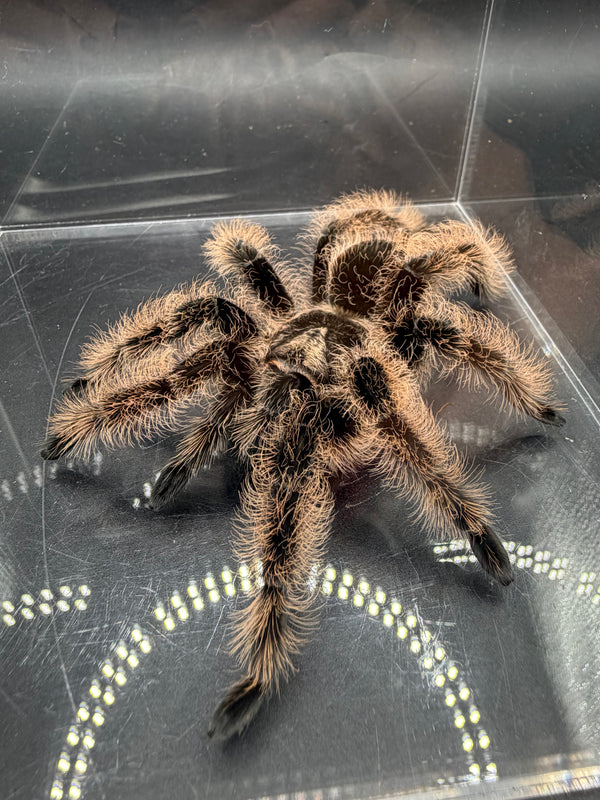
Curly Hair Tarantula (Tliltocatl albopilosus)
Tarantula

Arizona Blonde Tarantula for sale from Big Z's (Aphonopelma chalcodes). Spice-rated keeper notes, care guidance, and live-arrival packing where eligible.
Arizona Blonde from the Tucson locale, sub-adult to adult, unsexed
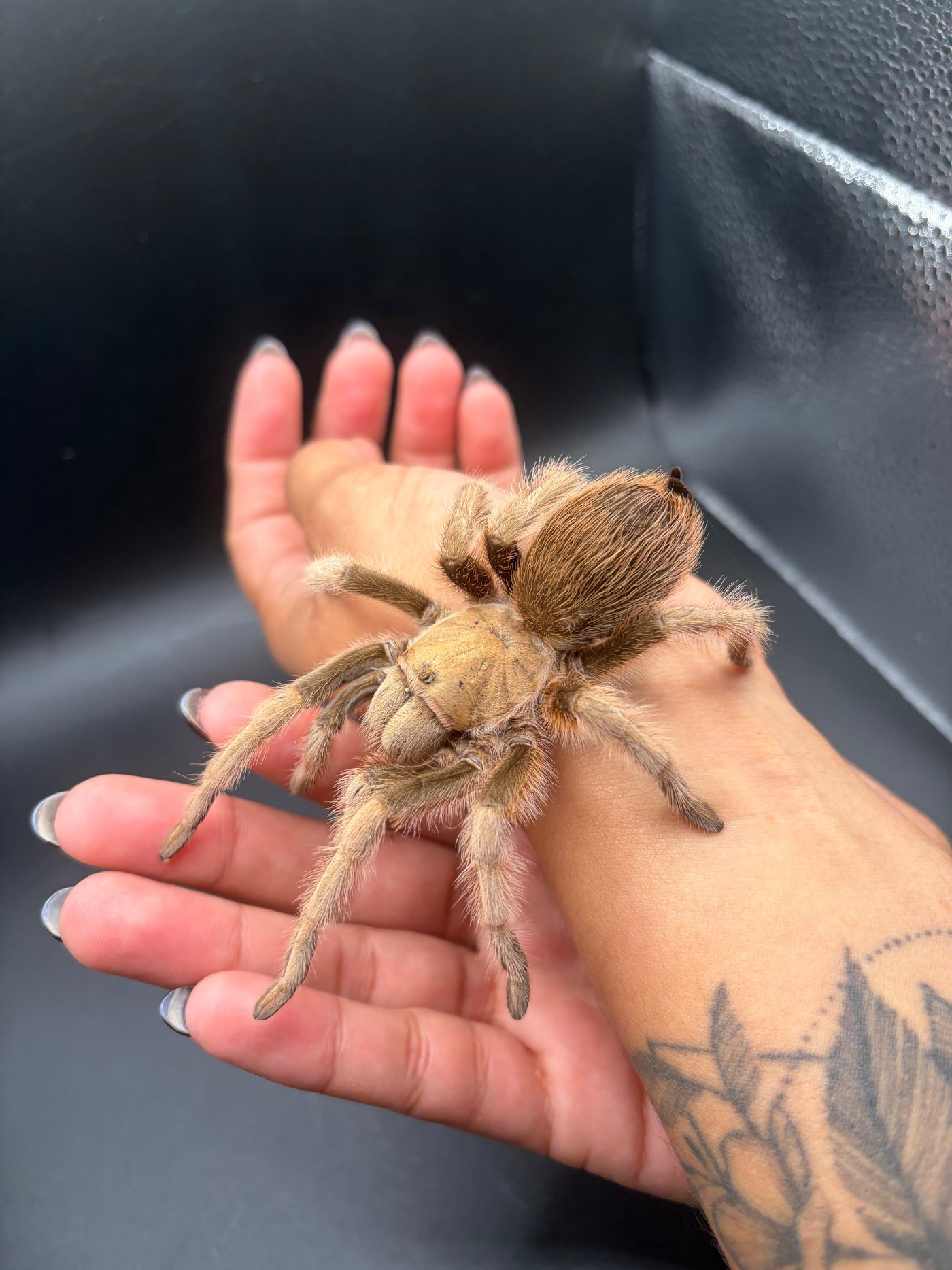
Aphonopelma chalcodes, the Arizona Blonde, is the tarantula most people picture when they hear the word. It is a calm, heavy-bodied desert terrestrial in sandy blonde and gold, and it takes its slow, unhurried time getting there. These are Tucson locale animals at 2.5 to 6 inch leg span, sold unsexed. Sizes vary across that range and the photos are representative rather than the exact animal.
Give it a dry-leaning terrestrial enclosure with enough substrate to burrow, a hide, secure ventilation, and a full water dish. Keep disturbance low through premolt and molt, when it wants to be left alone, and keep handling to a minimum even with a calm animal.
Spice Level 2: Beginner. Ships live on FedEx Overnight. Our mature male, New River morph male and New River morph female are listed separately.
The numbers live in the care guide. Enclosure size, temps, humidity, feeding schedule, premolt signs, handling boundaries: it's all in the care guide for this exact fella. Start with the full Advanced guide, or click for the quick Open the Simple version →
Tarantula
Burrow Buddy fits the listed juvenile size, but the animal may outgrow it at full adult size. Plan for larger custom terrestrial enclosure. Ask Big Z if you need help choosing the next enclosure.
Arizona Blonde Tarantula (Aphonopelma chalcodes) Tucson Locale - Unsexed care guide Read shipping & LAG
Arizona Blonde Tarantula for sale from Big Z's (Aphonopelma chalcodes). Spice-rated keeper notes, care guidance, and live-arrival packing where eligible.
Arizona Blonde from the Tucson locale, sub-adult to adult, unsexed
Aphonopelma chalcodes, the Arizona Blonde, is the tarantula most people picture when they hear the word. It is a calm, heavy-bodied desert terrestrial in sandy blonde and gold, and it takes its slow, unhurried time getting there. These are Tucson locale animals at 2.5 to 6 inch leg span, sold unsexed. Sizes vary across that range and the photos are representative rather than the exact animal.
Give it a dry-leaning terrestrial enclosure with enough substrate to burrow, a hide, secure ventilation, and a full water dish. Keep disturbance low through premolt and molt, when it wants to be left alone, and keep handling to a minimum even with a calm animal.
Spice Level 2: Beginner. Ships live on FedEx Overnight. Our mature male, New River morph male and New River morph female are listed separately.
The numbers live in the care guide. Enclosure size, temps, humidity, feeding schedule, premolt signs, handling boundaries: it's all in the care guide for this exact fella. Start with the full Advanced guide, or click for the quick Open the Simple version →
Aphonopelma spp. - Spice 2: Beginner. Baby Buddy: spiderlings only (escape-proof ventilation; rehouse up before it's cramped); Burrow Buddy: forever home for the truly dwarf Aphonopelma; a grow-out for full-size species (A. chalcodes, A. seemanni and the like); Larger custom terrestrial enclosure for adults of the full-size species
Aphonopelma spp.
Identity confidence: provisional. This is a genus, group, or trade name rather than a confirmed species. Treat it as the closest match we can stand behind, and use the more conservative end of any range.
Big Z's Quick Verdict: The US and Central American desert tarantulas: calm, hardy, and among the longest-lived spiders in the hobby. The only hard part is patience: A. chalcodes females can take a decade-plus to mature. Adults reach about 4.5-6 inches across.
| Temp | 75-88°F (tolerates cool winter dips) |
|---|---|
| Humidity | Low ambient (35-50%), well ventilated; dry substrate, full dish (A. seemanni: one moist corner) |
| Setup | Terrestrial / fossorial (dry) |
| Substrate | Dry sand/topsoil mix; A. seemanni wants 6-8 in for burrowing plus one damp corner |
| Feeding | Offer appropriately sized prey every 7-10 days; known to fast for months |
| Handling | Handling discouraged, and the reason is the hairs and the drop rather than the bite. Aphonopelma carry type I urticating setae in a dense patch on the abdomen, A. chalcodes females flick them when pushed and rear up to show fangs on contact, and a fall can injure or kill the animal. Individual temperament varies more than the species name suggests. If you make contact at all, keep it brief and low over something soft, then wash your hands and keep them away from your eyes. |
Humidity zones: Very Low under 30% - Low 30-60% - Low-Moderate 40-70% - Moderate 60-80% - Moderate-High 70-85% - High 80%+ - Very High 90%+
Current Big Z's catalog: Yes
Aphonopelma spp.
Identity confidence: provisional. This is a genus, group, or trade name rather than a confirmed species. Treat it as the closest match we can stand behind, and use the more conservative end of any range.
Keeper Snapshot: The US and Central American desert tarantulas: calm, hardy, and among the longest-lived spiders in the hobby. The only hard part is patience: A. chalcodes females can take a decade-plus to mature. Adults reach about 4.5-6 inches across.
| Temperature | 75-88°F (tolerates cool winter dips) |
|---|---|
| Humidity | Low ambient (35-50%), well ventilated; dry substrate, full dish (A. seemanni: one moist corner) |
| Setup Type | Terrestrial / fossorial (dry) |
| Substrate | Dry sand/topsoil mix; A. seemanni wants 6-8 in for burrowing plus one damp corner |
| Feeding | Offer appropriately sized prey every 7-10 days; known to fast for months |
| Care Difficulty | Spice 2: Beginner |
| Handling | Handling discouraged, and the reason is the hairs and the drop rather than the bite. Aphonopelma carry type I urticating setae in a dense patch on the abdomen, A. chalcodes females flick them when pushed and rear up to show fangs on contact, and a fall can injure or kill the animal. Individual temperament varies more than the species name suggests. If you make contact at all, keep it brief and low over something soft, then wash your hands and keep them away from your eyes. |
Humidity zones: Very Low under 30% - Low 30-60% - Low-Moderate 40-70% - Moderate 60-80% - Moderate-High 70-85% - High 80%+ - Very High 90%+

Tarantula

Spider

Tarantula

Invertebrate

Tarantula

Tarantula

Scorpion

Tarantula