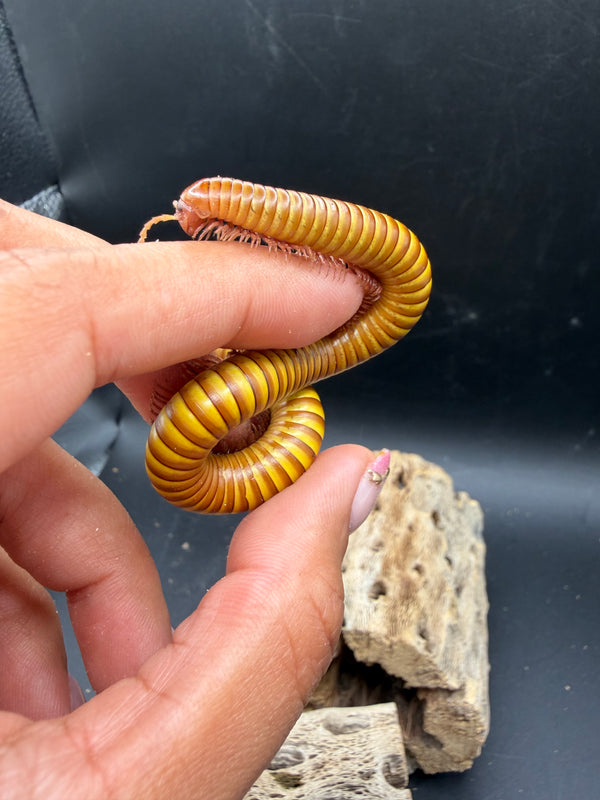
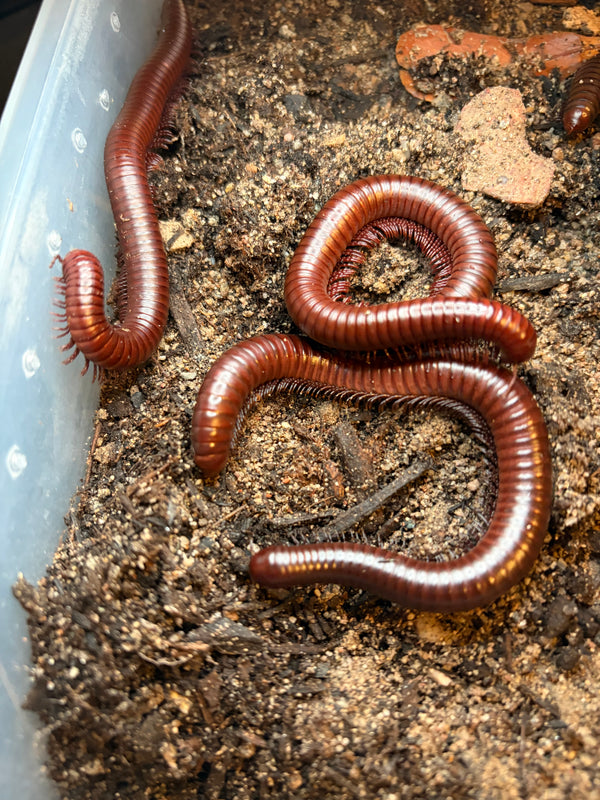
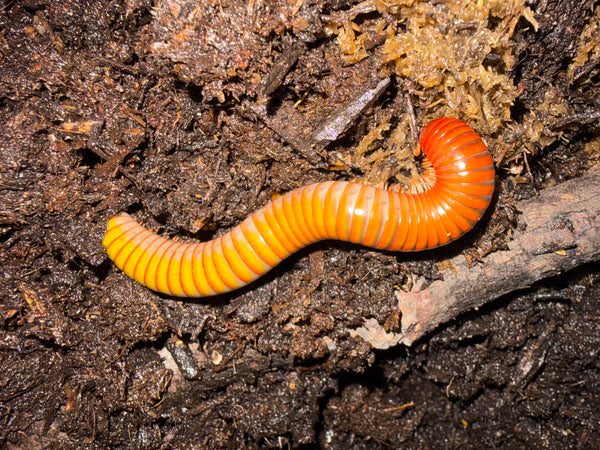
Texas Gold Millipede (Orthoporus ornatus)
Millipede

Pygmy Wood Scorpion for sale from Big Z's (Liocheles australasiae). Spice-rated keeper notes, care guidance, and live-arrival packing where eligible.
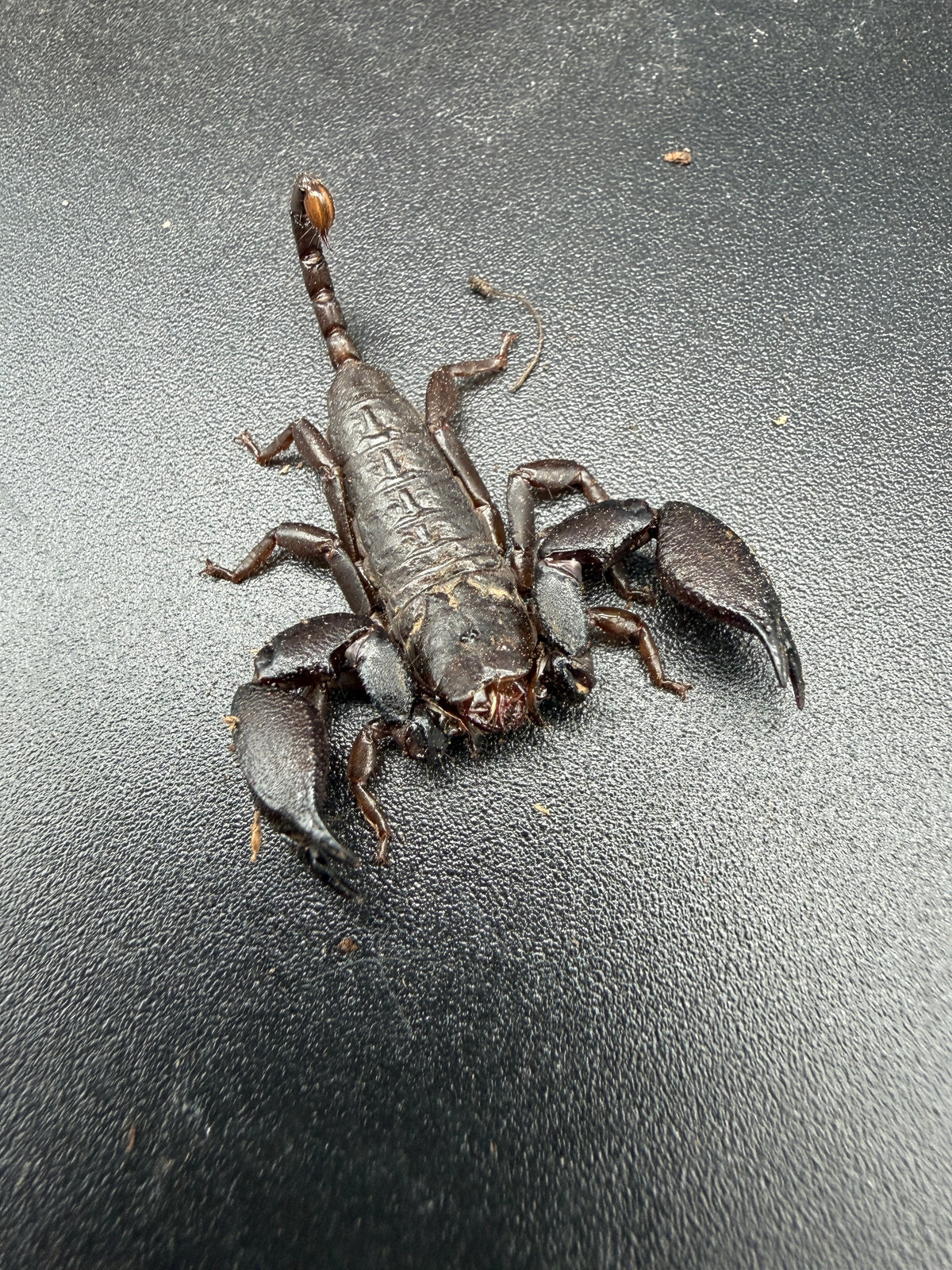
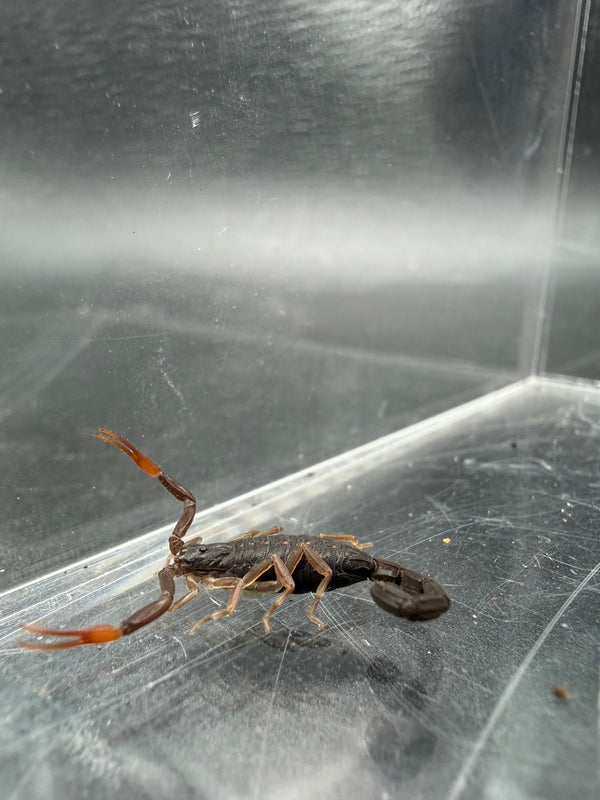
Broad pincers on a very compact scorpion.
The Pygmy Wood Scorpion (Liocheles australasiae), also known as the Dwarf Wood Scorpion, has a glossy dark body, heavy pincers, and a short, slender tail. The proportions give it a distinctive look at this small scale. Bark and decayed-wood refuges are central to its way of living, so the hiding spaces deserve as much attention as the animal itself. These are offered at 1-1.5 inches in length.
Spice Level 3: Intermediate. Our setup follows keeper experience with this species: snug, securely supported cork retreats over damp substrate, with drier cover above and ventilation left open. Offer small, manageable prey and remove leftovers. We recommend housing each scorpion separately and leaving occupied or molting retreats intact. No bare-hand handling; use a catch cup and tools. The Big Z's care guide covers the bark setup, moisture gradient, and feeding in detail.
The numbers live in the care guide. Enclosure size, temps, humidity, feeding schedule, premolt signs, handling boundaries: it's all in the care guide for this exact fella. Start with the full Advanced guide, or click for the quick Open the Simple version →
Scorpion
Pygmy Wood Scorpion (Liocheles australasiae) care guide Read shipping & LAG
Pygmy Wood Scorpion for sale from Big Z's (Liocheles australasiae). Spice-rated keeper notes, care guidance, and live-arrival packing where eligible.
Broad pincers on a very compact scorpion.
The Pygmy Wood Scorpion (Liocheles australasiae), also known as the Dwarf Wood Scorpion, has a glossy dark body, heavy pincers, and a short, slender tail. The proportions give it a distinctive look at this small scale. Bark and decayed-wood refuges are central to its way of living, so the hiding spaces deserve as much attention as the animal itself. These are offered at 1-1.5 inches in length.
Spice Level 3: Intermediate. Our setup follows keeper experience with this species: snug, securely supported cork retreats over damp substrate, with drier cover above and ventilation left open. Offer small, manageable prey and remove leftovers. We recommend housing each scorpion separately and leaving occupied or molting retreats intact. No bare-hand handling; use a catch cup and tools. The Big Z's care guide covers the bark setup, moisture gradient, and feeding in detail.
The numbers live in the care guide. Enclosure size, temps, humidity, feeding schedule, premolt signs, handling boundaries: it's all in the care guide for this exact fella. Start with the full Advanced guide, or click for the quick Open the Simple version →
Liocheles australasiae - Spice 3: Intermediate. Baby Buddy only if its vent gaps retain the scorpion and it supports a complete damp bark retreat; otherwise choose a more suitable secure enclosure.
Liocheles australasiae
Big Z's Quick Verdict: Build snug bark retreats over a damp base, not an open dry display. Use a secure enclosure, feed small manageable prey and leave occupied hides intact. Big Z's recommends housing each scorpion separately.
| Temp | About 77°F (25°C) is a documented Liocheles keeper example, not a tested optimum. Measure near the occupied bark and keep conditions steady; avoid direct sun and unregulated heat. |
|---|---|
| Humidity | No fixed humidity % target. Maintain a damp refuge beneath bark without saturating the floor. Partly buried cork should connect moister soil to drier upper cover; keep ventilation open and check the refuge rather than relying on condensation. |
| Setup | Humid, ventilated bark-crevice enclosure with partly buried cork |
| Substrate | Use firm moisture-holding soil or coir beneath partly buried cork. Provide room to shelter at different moisture levels; this species' keeper guidance emphasizes narrow bark crevices rather than a universal deep-burrow measurement. |
| Feeding | Offer small crickets or roaches that the scorpion can manage. Tiny young can take crushed prey or small freshly killed portions. Remove refused live prey promptly and remaining food by the next day; do not feed during a molt. |
| Handling | No bare-hand handling. Use a catch cup and tools, and check beneath cover before moving it. |
Humidity zones: Very Low under 30% - Low 30-60% - Low-Moderate 40-70% - Moderate 60-80% - Moderate-High 70-85% - High 80%+ - Very High 90%+
Current Big Z's catalog: Yes
Liocheles australasiae
Keeper Snapshot: Build snug bark retreats over a damp base, not an open dry display. Use a secure enclosure, feed small manageable prey and leave occupied hides intact. Big Z's recommends housing each scorpion separately.
| Temperature | About 77°F (25°C) is a documented Liocheles keeper example, not a tested optimum. Measure near the occupied bark and keep conditions steady; avoid direct sun and unregulated heat. |
|---|---|
| Humidity | No fixed humidity % target. Maintain a damp refuge beneath bark without saturating the floor. Partly buried cork should connect moister soil to drier upper cover; keep ventilation open and check the refuge rather than relying on condensation. |
| Setup Type | Humid, ventilated bark-crevice enclosure with partly buried cork |
| Substrate | Use firm moisture-holding soil or coir beneath partly buried cork. Provide room to shelter at different moisture levels; this species' keeper guidance emphasizes narrow bark crevices rather than a universal deep-burrow measurement. |
| Feeding | Offer small crickets or roaches that the scorpion can manage. Tiny young can take crushed prey or small freshly killed portions. Remove refused live prey promptly and remaining food by the next day; do not feed during a molt. |
| Care Difficulty | Spice 3: Intermediate |
| Handling | No bare-hand handling. Use a catch cup and tools, and check beneath cover before moving it. |
Humidity zones: Very Low under 30% - Low 30-60% - Low-Moderate 40-70% - Moderate 60-80% - Moderate-High 70-85% - High 80%+ - Very High 90%+

Millipede

Scorpion

Tarantula

Spider

Millipede

Tarantula

Arachnid

Millipede