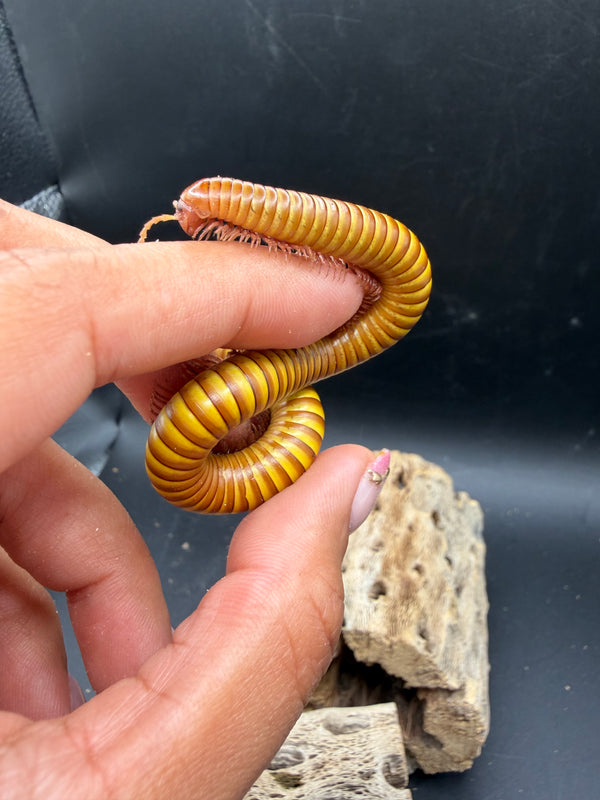
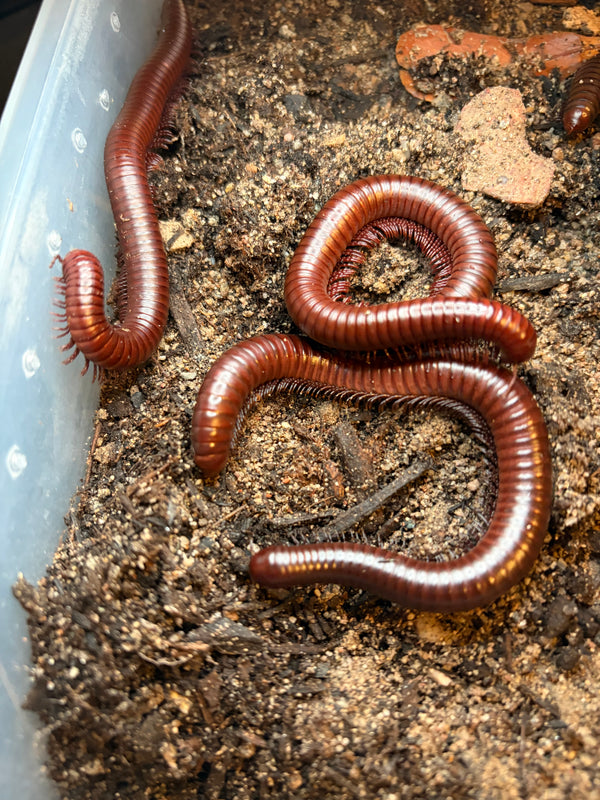
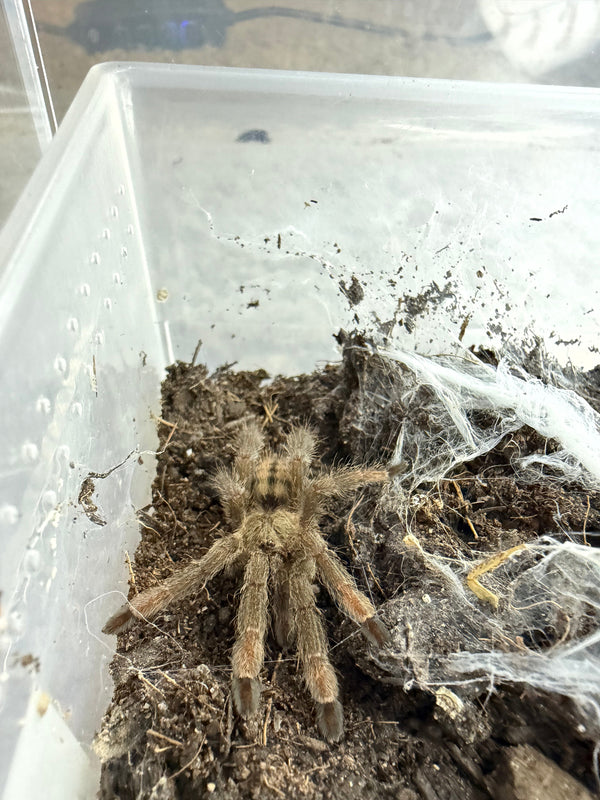
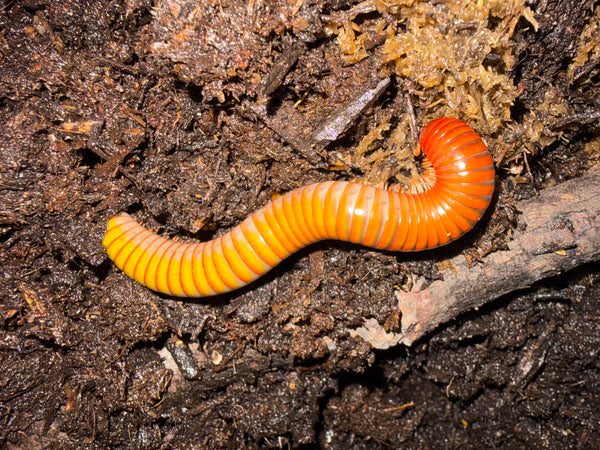
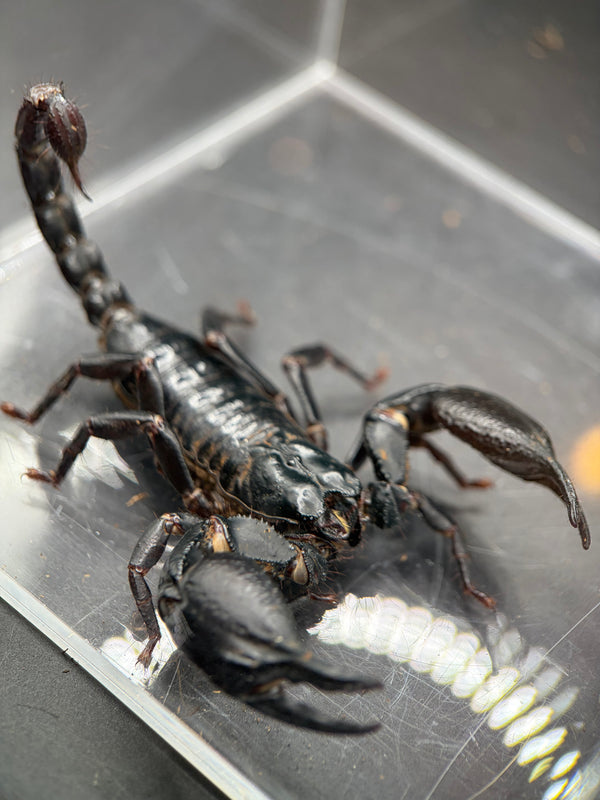
Texas Gold Millipede (Orthoporus ornatus)
Millipede

Brazilian Blue Tarantula for sale from Big Z's (Lasiocyano sazimai). Spice-rated keeper notes, care guidance, and live-arrival packing where eligible.
Electric blue, without going Old World for it
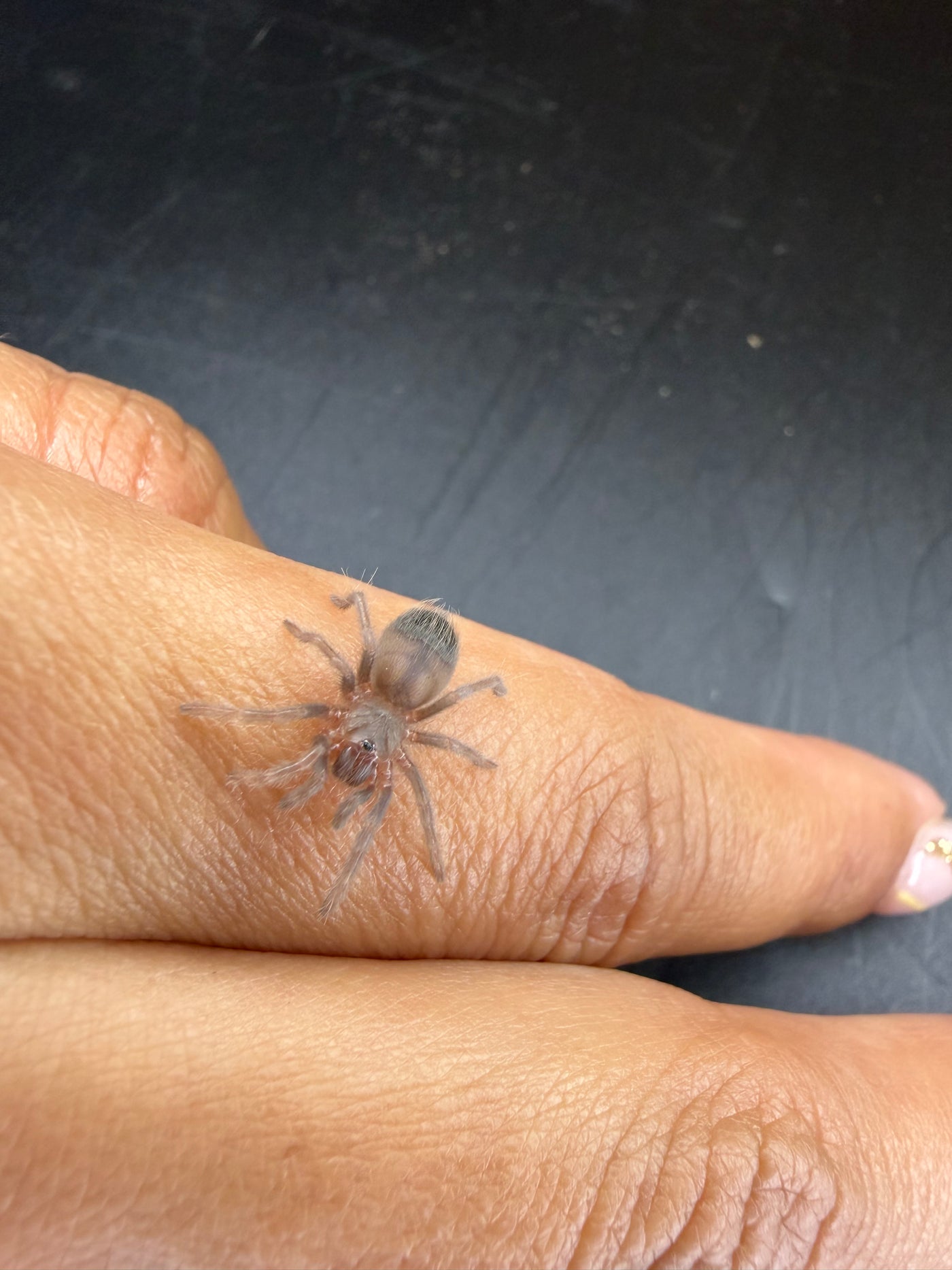
Lasiocyano sazimai (you may know it by its old name, Pterinopelma sazimai) is the Brazilian Blue: a New World terrestrial from the rocky highland outcrops of Brazil that matures into one of the bluest tarantulas in the entire hobby. Slings look drab and unpromising, then molt by molt the metallic blue floods in.
Here is the appeal: you get that jaw-dropping blue with New World genetics. A hardy spider, a relaxed-ish disposition, and a feeding response like a coin slot. Great pick for a keeper who wants a showpiece color animal but is not ready to commit to a fast, defensive Old World. Two things keep it just past true-beginner, though: it is more skittish and bolt-prone than the classic rock-dwellers, and slings dry out easily, so the early-stage moisture gradient actually matters. Urticating hairs present; not a handling spider, just an approachable, gorgeous one to keep and display.
The numbers live in the care guide. Enclosure size, temps, humidity, feeding schedule, premolt signs, handling boundaries: it's all in the care guide for this exact fella. Start with the full Advanced guide, or click for the quick Open the Simple version →
Tarantula
Burrow Buddy fits the listed juvenile size, but the animal may outgrow it at around 2" DLS. Plan for larger adult terrestrial with a hide; matures near 5–6" DLS. Ask Big Z if you need help choosing the next enclosure.
Brazilian Blue Tarantula (Lasiocyano sazimai) care guide Read shipping & LAG
Brazilian Blue Tarantula for sale from Big Z's (Lasiocyano sazimai). Spice-rated keeper notes, care guidance, and live-arrival packing where eligible.
Electric blue, without going Old World for it
Lasiocyano sazimai (you may know it by its old name, Pterinopelma sazimai) is the Brazilian Blue: a New World terrestrial from the rocky highland outcrops of Brazil that matures into one of the bluest tarantulas in the entire hobby. Slings look drab and unpromising, then molt by molt the metallic blue floods in.
Here is the appeal: you get that jaw-dropping blue with New World genetics. A hardy spider, a relaxed-ish disposition, and a feeding response like a coin slot. Great pick for a keeper who wants a showpiece color animal but is not ready to commit to a fast, defensive Old World. Two things keep it just past true-beginner, though: it is more skittish and bolt-prone than the classic rock-dwellers, and slings dry out easily, so the early-stage moisture gradient actually matters. Urticating hairs present; not a handling spider, just an approachable, gorgeous one to keep and display.
The numbers live in the care guide. Enclosure size, temps, humidity, feeding schedule, premolt signs, handling boundaries: it's all in the care guide for this exact fella. Start with the full Advanced guide, or click for the quick Open the Simple version →
Lasiocyano sazimai - Spice 3: Intermediate. Baby Buddy: spiderlings only (escape-proof ventilation; rehouse up before it's cramped); Burrow Buddy: grow-out for juveniles; Larger custom terrestrial enclosure for the adult (at full size the Burrow Buddy's 48 in² floor is a stepping stone, not a forever home)
Lasiocyano sazimai
Big Z's Quick Verdict: A stunning blue terrestrial that appreciates ventilation and a slightly more natural moisture gradient.
| Temp | 72-80°F |
|---|---|
| Humidity | Low-Moderate ambient (50-65%) with good airflow; dry surface, damp lower pocket, full dish |
| Setup | Terrestrial/opportunistic burrower |
| Substrate | Dry-to-lightly-moist soil mix with hide |
| Feeding | Slings 2×/week; juveniles every 7-10 days; adults every 2-3 weeks |
| Handling | Not recommended |
Humidity zones: Very Low under 30% - Low 30-60% - Low-Moderate 40-70% - Moderate 60-80% - Moderate-High 70-85% - High 80%+ - Very High 90%+
Current Big Z's catalog: Yes
Lasiocyano sazimai
Keeper Snapshot: A stunning blue terrestrial that appreciates ventilation and a slightly more natural moisture gradient.
| Temperature | 72-80°F |
|---|---|
| Humidity | Low-Moderate ambient (50-65%) with good airflow; dry surface, damp lower pocket, full dish |
| Setup Type | Terrestrial/opportunistic burrower |
| Substrate | Dry-to-lightly-moist soil mix with hide |
| Feeding | Slings 2×/week; juveniles every 7-10 days; adults every 2-3 weeks |
| Care Difficulty | Spice 3: Intermediate |
| Handling | Not recommended |
Humidity zones: Very Low under 30% - Low 30-60% - Low-Moderate 40-70% - Moderate 60-80% - Moderate-High 70-85% - High 80%+ - Very High 90%+

Millipede

Scorpion

Spider

Millipede

Tarantula

Arachnid

Millipede

Scorpion