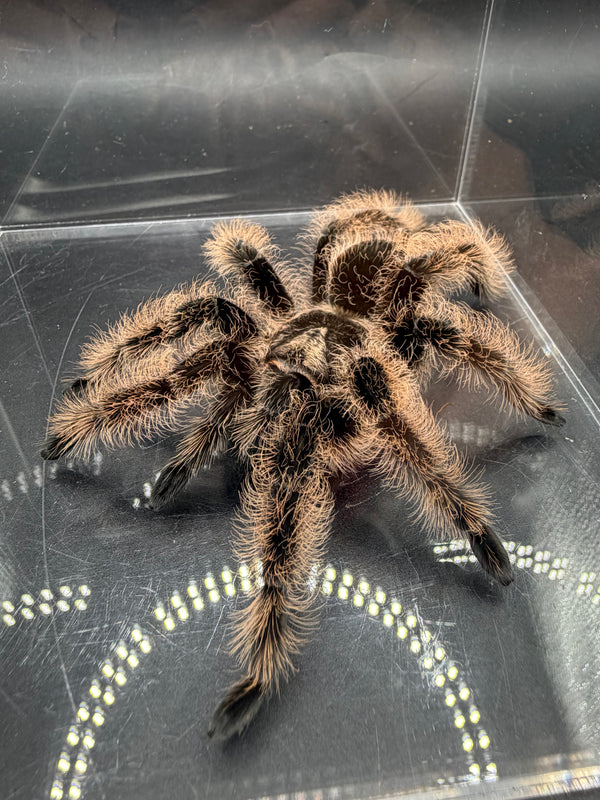
Curly Hair Tarantula (Tliltocatl albopilosus)
Tarantula

Stripe Knee Tarantula for sale from Big Z's (Aphonopelma seemanni). Spice-rated keeper notes, care guidance, and live-arrival packing where eligible.
Crisp painted stripes on a spider built to dig for its life
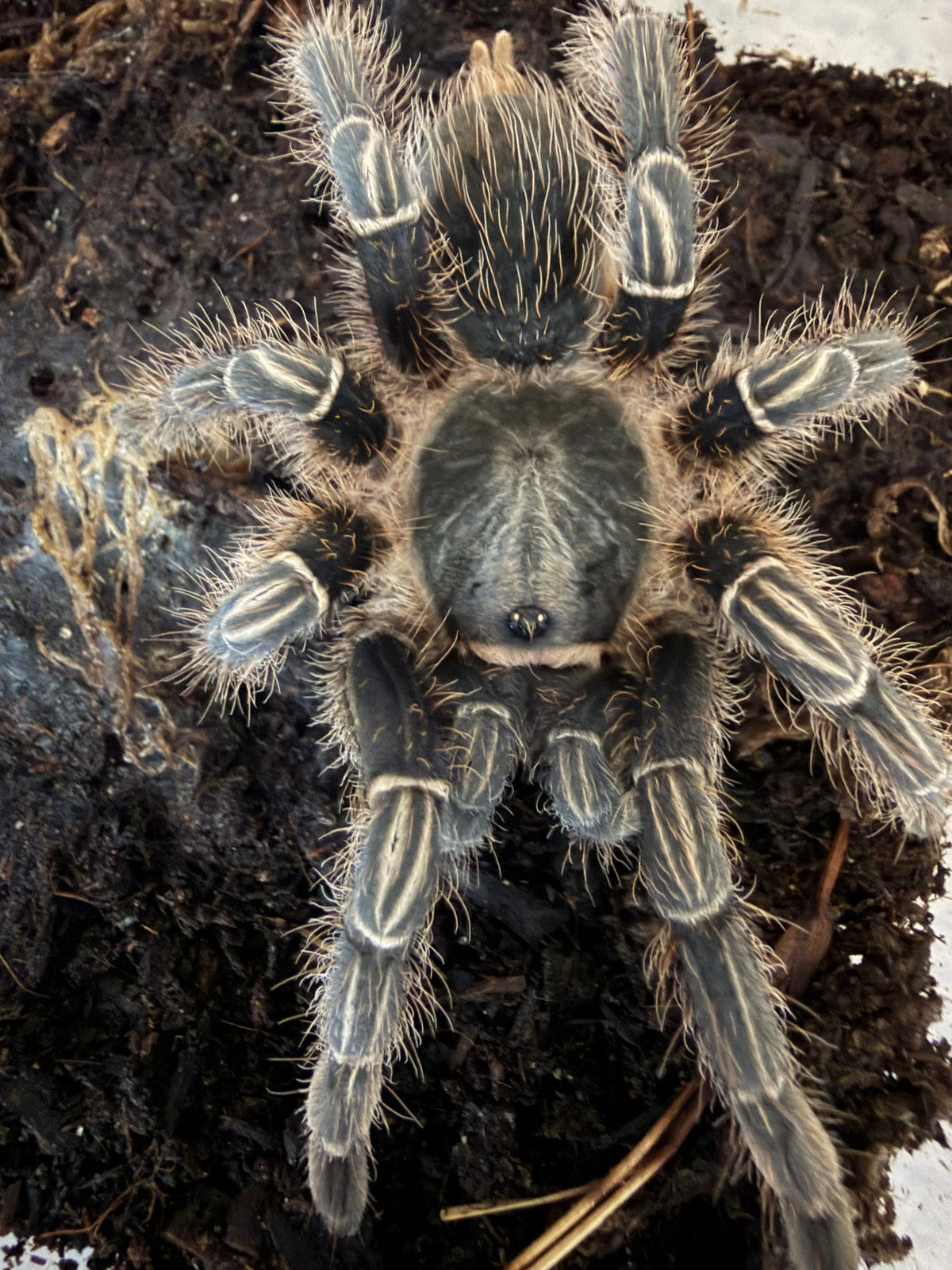
Aphonopelma seemanni, the Stripe Knee Tarantula, is a hardy Central American terrestrial wearing clean pale banding down each dark leg. Those crisp stripes ride on a heavy, ground-hugging build, and this spider wants to put that build to work. Give it real depth and it will excavate a proper burrow instead of loitering on a flat display floor.
Beginner friendly, but it keeps you honest: it can be skittish and quick to bolt during rehousing, and it kicks urticating hairs, so keep handling off the table and take extra care at transfer time. The setup is simple and specific. Give it 5 to 8 inches of burrowable substrate with a slightly damp lower layer, a hide, and a water dish, then let it dig. The matched care guide has the full dig-depth build.
The numbers live in the care guide. Enclosure size, temps, humidity, feeding schedule, premolt signs, handling boundaries: it's all in the care guide for this exact fella. Start with the full Advanced guide, or click for the quick Open the Simple version →
Tarantula
Stripe Knee Tarantula (Aphonopelma seemanni) care guide Read shipping & LAG
Stripe Knee Tarantula for sale from Big Z's (Aphonopelma seemanni). Spice-rated keeper notes, care guidance, and live-arrival packing where eligible.
Crisp painted stripes on a spider built to dig for its life
Aphonopelma seemanni, the Stripe Knee Tarantula, is a hardy Central American terrestrial wearing clean pale banding down each dark leg. Those crisp stripes ride on a heavy, ground-hugging build, and this spider wants to put that build to work. Give it real depth and it will excavate a proper burrow instead of loitering on a flat display floor.
Beginner friendly, but it keeps you honest: it can be skittish and quick to bolt during rehousing, and it kicks urticating hairs, so keep handling off the table and take extra care at transfer time. The setup is simple and specific. Give it 5 to 8 inches of burrowable substrate with a slightly damp lower layer, a hide, and a water dish, then let it dig. The matched care guide has the full dig-depth build.
The numbers live in the care guide. Enclosure size, temps, humidity, feeding schedule, premolt signs, handling boundaries: it's all in the care guide for this exact fella. Start with the full Advanced guide, or click for the quick Open the Simple version →
Aphonopelma seemanni - Spice 2: Beginner. Baby Buddy: conditional small-spiderling fit, with secure ventilation and adequate substrate.; Burrow Buddy: conditional grow-out fit; use a larger/deeper custom build when burrow or movement space is limited.
Aphonopelma seemanni
Big Z's Quick Verdict: Give this striped-knee tarantula room to dig, a secure retreat and a dependable water dish. Keep a damp area below the surface while leaving drier ground available. Feed to the spider's condition and leave it alone when it seals its burrow.
| Temp | 68-76°F (20-24°C), from The Tarantula Collective's A. seemanni keeper guide. Treat this as a captive-care range rather than a tested tolerance limit. |
|---|---|
| Humidity | No fixed humidity % target. Keep a damp corner extending into the lower substrate, allow most of the surface to dry, and keep the water dish full. Add water along the wall away from the occupied burrow; never flood the retreat. |
| Setup | Low terrestrial enclosure with deep burrowing substrate and a damp retreat |
| Substrate | Use firm, diggable soil/coir substrate, roughly half to two-thirds of enclosure height as a keeper starting point. Allow a complete covered burrow and limit open fall height; do not trade burrow depth for a tall empty display. |
| Feeding | Offer manageable crickets or roaches, conservatively no longer than the abdomen. Tiny slings may take small pre-killed portions. Adjust meals to feeding response and abdomen condition; reduce or pause when well-fed or refusing. Remove refused live prey promptly; clear any remaining food by the following day. Never leave live prey with a molting animal. |
| Handling | Handling is discouraged. Use a catch cup for transfers and keep hands out of the enclosure during maintenance. |
Humidity zones: Very Low under 30% - Low 30-60% - Low-Moderate 40-70% - Moderate 60-80% - Moderate-High 70-85% - High 80%+ - Very High 90%+
Current Big Z's catalog: Yes
Aphonopelma seemanni
Keeper Snapshot: Give this striped-knee tarantula room to dig, a secure retreat and a dependable water dish. Keep a damp area below the surface while leaving drier ground available. Feed to the spider's condition and leave it alone when it seals its burrow.
| Temperature | 68-76°F (20-24°C), from The Tarantula Collective's A. seemanni keeper guide. Treat this as a captive-care range rather than a tested tolerance limit. |
|---|---|
| Humidity | No fixed humidity % target. Keep a damp corner extending into the lower substrate, allow most of the surface to dry, and keep the water dish full. Add water along the wall away from the occupied burrow; never flood the retreat. |
| Setup Type | Low terrestrial enclosure with deep burrowing substrate and a damp retreat |
| Substrate | Use firm, diggable soil/coir substrate, roughly half to two-thirds of enclosure height as a keeper starting point. Allow a complete covered burrow and limit open fall height; do not trade burrow depth for a tall empty display. |
| Feeding | Offer manageable crickets or roaches, conservatively no longer than the abdomen. Tiny slings may take small pre-killed portions. Adjust meals to feeding response and abdomen condition; reduce or pause when well-fed or refusing. Remove refused live prey promptly; clear any remaining food by the following day. Never leave live prey with a molting animal. |
| Care Difficulty | Spice 2: Beginner |
| Handling | Handling is discouraged. Use a catch cup for transfers and keep hands out of the enclosure during maintenance. |
Humidity zones: Very Low under 30% - Low 30-60% - Low-Moderate 40-70% - Moderate 60-80% - Moderate-High 70-85% - High 80%+ - Very High 90%+

Tarantula

Spider

Tarantula

Invertebrate

Tarantula

Tarantula

Scorpion

Tarantula