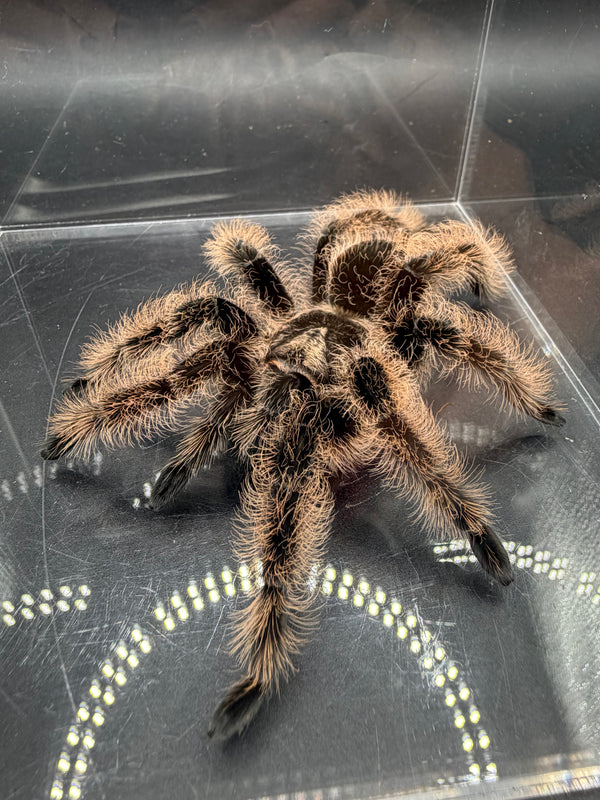
Curly Hair Tarantula (Tliltocatl albopilosus)
Tarantula

Giant Desert Hairy Scorpion for sale from Big Z's (Hadrurus arizonensis). Spice-rated keeper notes, care guidance, and live-arrival packing where eligible.
North America’s giant: fuzzy, golden, and built for the dunes
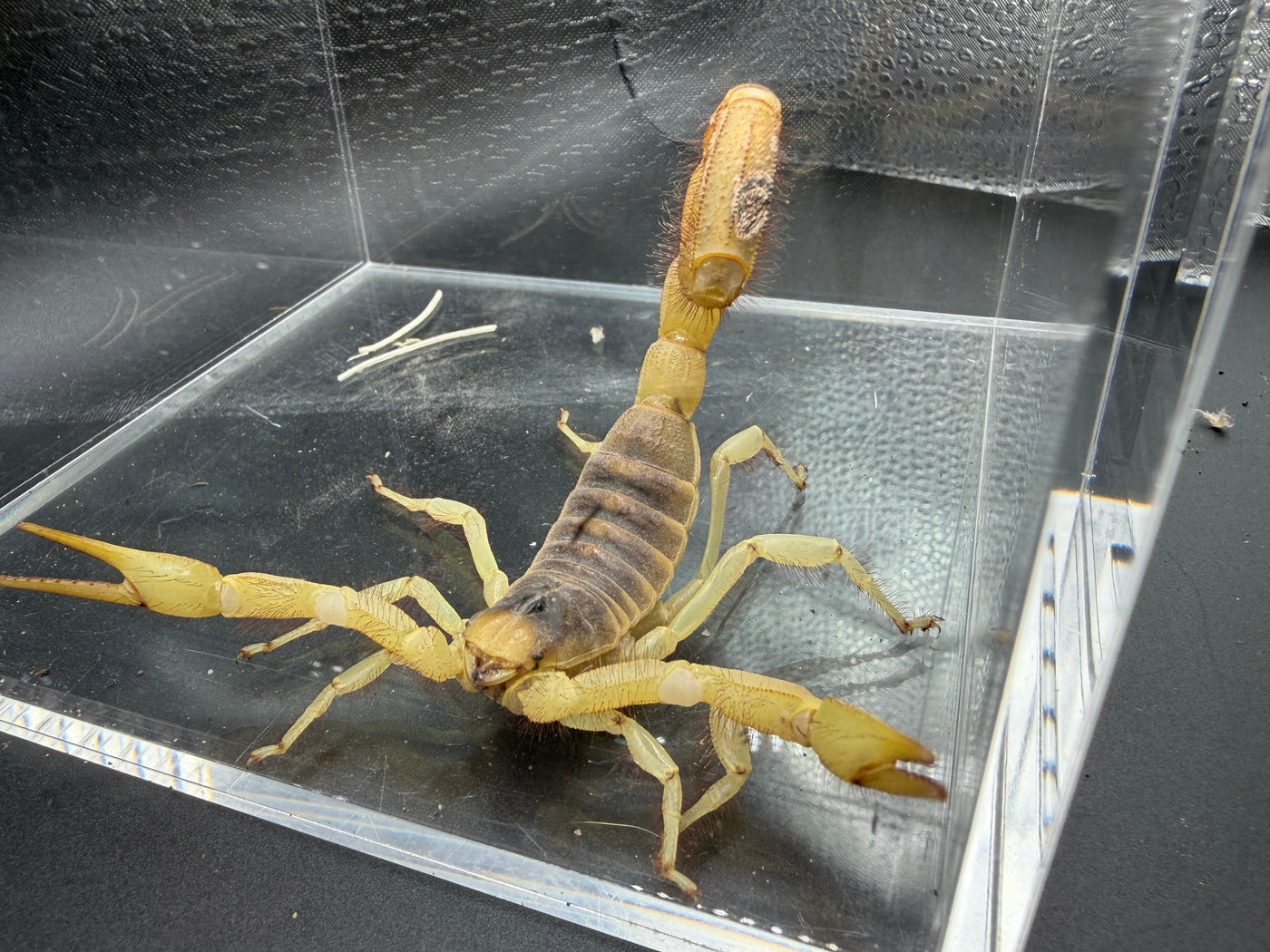
The Giant Desert Hairy Scorpion, Hadrurus arizonensis, is the largest scorpion in North America: a 5-to-6-inch beast with olive-gold body, dark back, and a coat of fine sensory hairs it uses to feel prey moving across the sand. It comes from the Mojave and Sonoran deserts and digs spiraling burrows deep enough to disappear into.
Defensive posture, big tail, but only a mild-to-moderate sting; its size does most of the intimidation. Glows greenish-white under UV. It needs a deep, dry, packable setup and very little fuss; the number-one mistake is keeping it too humid. Big presence, simple care; the care guide has the arid build dialed in.
The numbers live in the care guide. Enclosure size, temps, humidity, feeding schedule, premolt signs, handling boundaries: it's all in the care guide for this exact fella. Start with the full Advanced guide, or click for the quick Open the Simple version →
Scorpion
Giant Desert Hairy Scorpion (Hadrurus arizonensis) care guide Read shipping & LAG
Giant Desert Hairy Scorpion for sale from Big Z's (Hadrurus arizonensis). Spice-rated keeper notes, care guidance, and live-arrival packing where eligible.
North America’s giant: fuzzy, golden, and built for the dunes
The Giant Desert Hairy Scorpion, Hadrurus arizonensis, is the largest scorpion in North America: a 5-to-6-inch beast with olive-gold body, dark back, and a coat of fine sensory hairs it uses to feel prey moving across the sand. It comes from the Mojave and Sonoran deserts and digs spiraling burrows deep enough to disappear into.
Defensive posture, big tail, but only a mild-to-moderate sting; its size does most of the intimidation. Glows greenish-white under UV. It needs a deep, dry, packable setup and very little fuss; the number-one mistake is keeping it too humid. Big presence, simple care; the care guide has the arid build dialed in.
The numbers live in the care guide. Enclosure size, temps, humidity, feeding schedule, premolt signs, handling boundaries: it's all in the care guide for this exact fella. Start with the full Advanced guide, or click for the quick Open the Simple version →
Hadrurus arizonensis - Spice 2: Beginner. Baby Buddy: for 2i-3i instars (escape-proof ventilation only); Burrow Buddy: as a grow-out for juveniles; Larger terrestrial setup with deep substrate for full-grown adults (a 5-7 in deep burrower)
Hadrurus arizonensis
Big Z's Quick Verdict: A large desert burrower that needs dry conditions and deep diggable substrate: adults reach about 5-6 inches, North America's largest scorpion.
| Temp | 80-95°F |
|---|---|
| Humidity | Very low ambient (30-40%), heavily ventilated; dry throughout, dish only |
| Setup | Desert fossorial/terrestrial |
| Substrate | Deep dry sand/soil mix |
| Feeding | Crickets or roaches weekly |
| Handling | Not recommended |
Humidity zones: Very Low under 30% - Low 30-60% - Low-Moderate 40-70% - Moderate 60-80% - Moderate-High 70-85% - High 80%+ - Very High 90%+
Current Big Z's catalog: Yes
Hadrurus arizonensis
Keeper Snapshot: A large desert burrower that needs dry conditions and deep diggable substrate: adults reach about 5-6 inches, North America's largest scorpion.
| Temperature | 80-95°F |
|---|---|
| Humidity | Very low ambient (30-40%), heavily ventilated; dry throughout, dish only |
| Setup Type | Desert fossorial/terrestrial |
| Substrate | Deep dry sand/soil mix |
| Feeding | Crickets or roaches weekly |
| Care Difficulty | Spice 2: Beginner |
| Handling | Not recommended |
Humidity zones: Very Low under 30% - Low 30-60% - Low-Moderate 40-70% - Moderate 60-80% - Moderate-High 70-85% - High 80%+ - Very High 90%+

Tarantula

Spider

Tarantula

Invertebrate

Tarantula

Tarantula

Tarantula

Spider