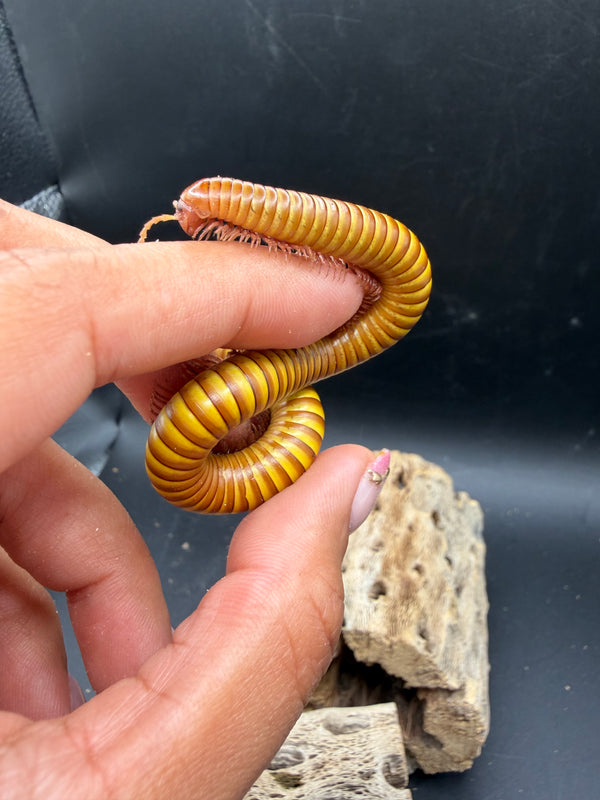
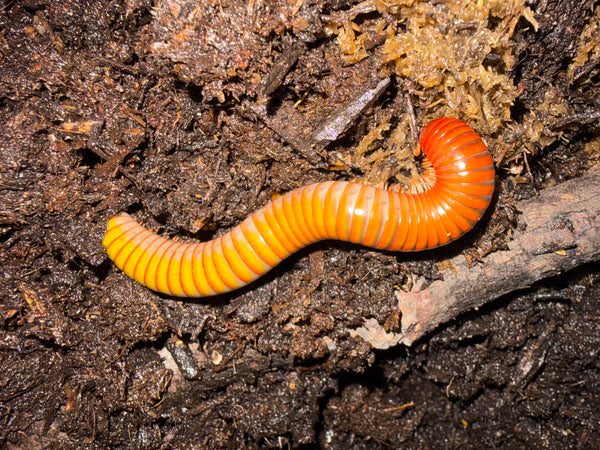
Texas Gold Millipede (Orthoporus ornatus)
Millipede

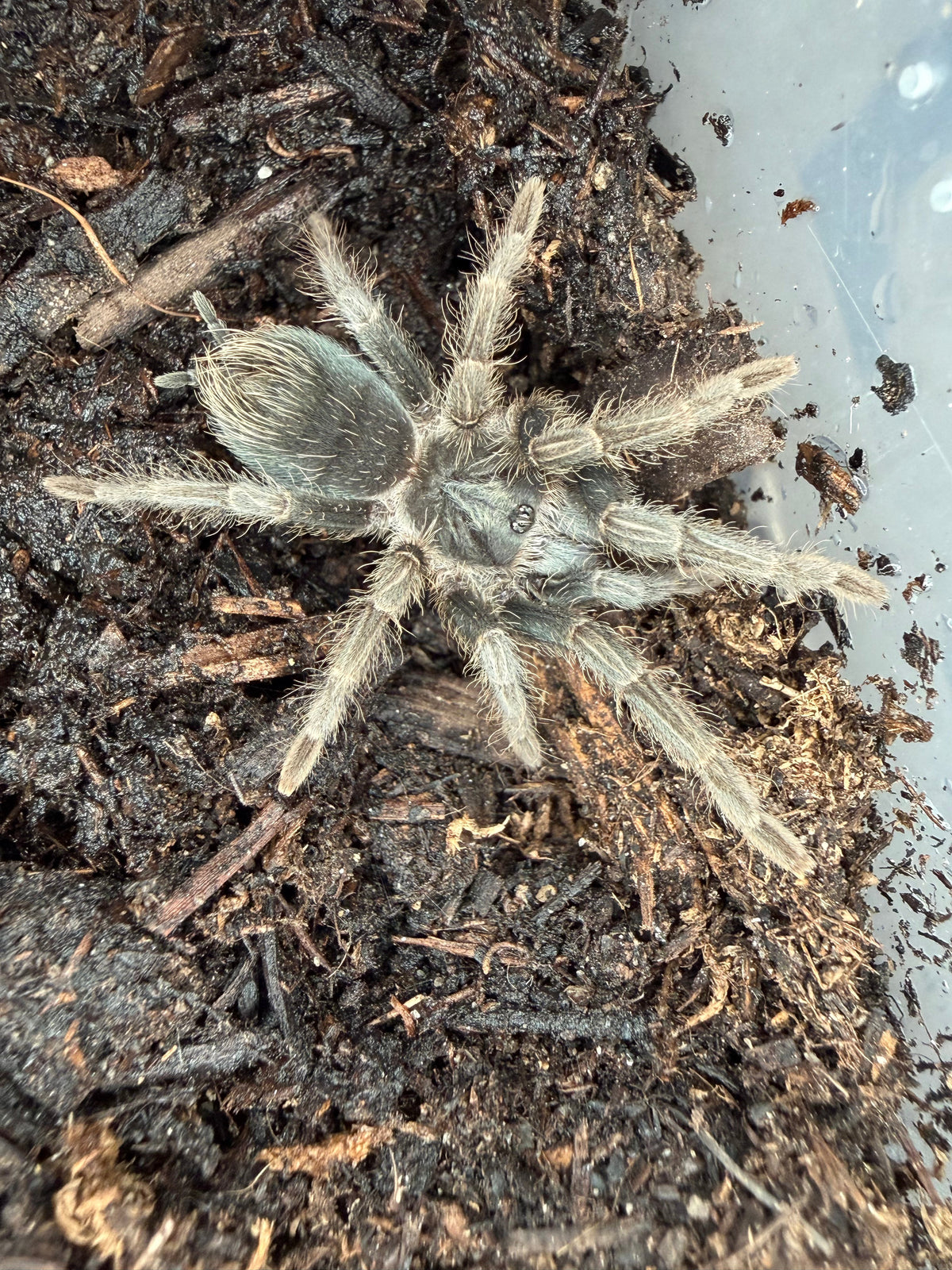
Haitian Brown Tarantula for sale from Big Z's (Phormictopus cancerides). Spice-rated keeper notes, care guidance, and live-arrival packing where eligible.
A Caribbean heavyweight that grows faster than almost anything else on the shelf.
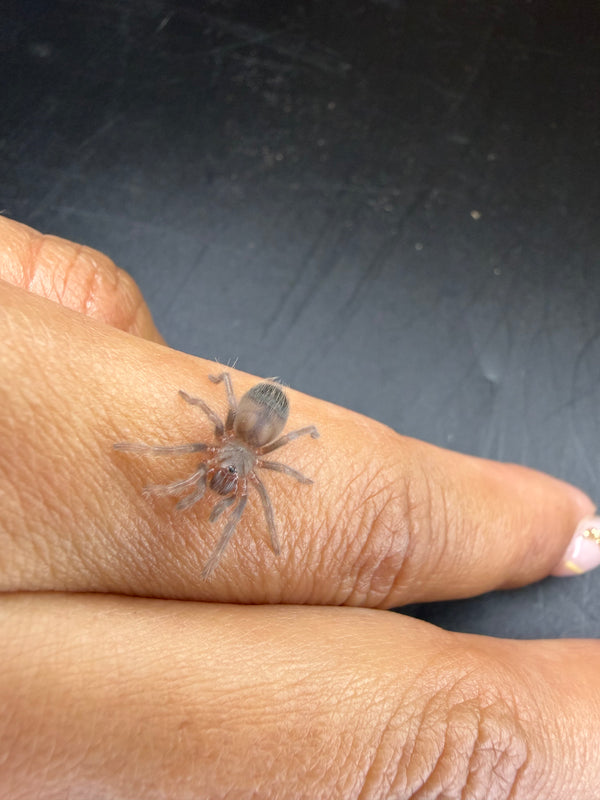
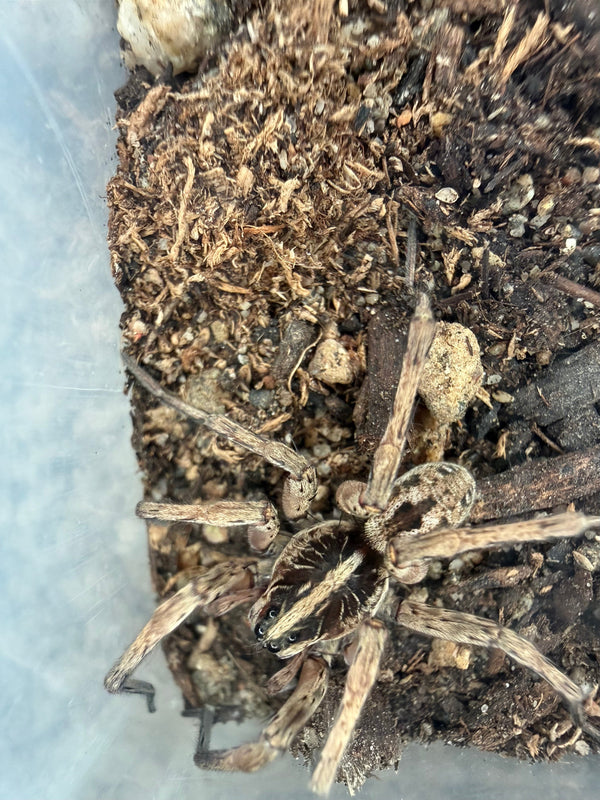
Phormictopus cancerides, the Haitian Brown, is a large terrestrial from Hispaniola built on the same plan as the big New World birdeaters but with more attitude packed into it. Juveniles carry a bronzed brown sheen that deepens with every molt, and this genus is famous for rocketing through instars: a spider you buy small does not stay small for long. Adults reach roughly 7 to 8 inches across, with a hair-trigger feeding response that never really switches off.
This is the edgiest of the New World giants. It is skittish, quick for its bulk, and genuinely willing to bite, so all maintenance goes through tools rather than hands. Husbandry itself is straightforward: a soil and coco mix deep enough for an opportunistic burrow, moist while it is young and drier with one humid corner as it grows, low cross ventilation on two opposite walls, and a water dish with pebbles in it at every stage. Rehouse on schedule, because slings outgrow a small damp cup fast. Spice Level 3: Intermediate. The full build is in the matched Big Z's care guide.
The numbers live in the care guide. Enclosure size, temps, humidity, feeding schedule, premolt signs, handling boundaries: it's all in the care guide for this exact fella. Start with the full Advanced guide, or click for the quick Open the Simple version →
Tarantula
Haitian Brown Tarantula (Phormictopus cancerides) care guide Read shipping & LAG
Haitian Brown Tarantula for sale from Big Z's (Phormictopus cancerides). Spice-rated keeper notes, care guidance, and live-arrival packing where eligible.
A Caribbean heavyweight that grows faster than almost anything else on the shelf.
Phormictopus cancerides, the Haitian Brown, is a large terrestrial from Hispaniola built on the same plan as the big New World birdeaters but with more attitude packed into it. Juveniles carry a bronzed brown sheen that deepens with every molt, and this genus is famous for rocketing through instars: a spider you buy small does not stay small for long. Adults reach roughly 7 to 8 inches across, with a hair-trigger feeding response that never really switches off.
This is the edgiest of the New World giants. It is skittish, quick for its bulk, and genuinely willing to bite, so all maintenance goes through tools rather than hands. Husbandry itself is straightforward: a soil and coco mix deep enough for an opportunistic burrow, moist while it is young and drier with one humid corner as it grows, low cross ventilation on two opposite walls, and a water dish with pebbles in it at every stage. Rehouse on schedule, because slings outgrow a small damp cup fast. Spice Level 3: Intermediate. The full build is in the matched Big Z's care guide.
The numbers live in the care guide. Enclosure size, temps, humidity, feeding schedule, premolt signs, handling boundaries: it's all in the care guide for this exact fella. Start with the full Advanced guide, or click for the quick Open the Simple version →
Phormictopus spp. - Spice 3: Intermediate. Baby Buddy: spiderlings only (escape-proof ventilation; rehouse up before it's cramped); Burrow Buddy: grow-out for juveniles; Large custom terrestrial enclosure for the adult: a full-grown Phormictopus (6-7 in+) needs real floor space, not a 48 in² footprint
Phormictopus spp.
Identity confidence: provisional. This is a genus, group, or trade name rather than a confirmed species. Treat it as the closest match we can stand behind, and use the more conservative end of any range.
Big Z's Quick Verdict: The fast-growing Caribbean giants: the most high-strung of the New World 'big' terrestrials: more skittish and defensive than a Pamphobeteus, with a hair-trigger feeding response and a real willingness to bite. Slings rocket up even faster than Pamphobeteus. Adults reach about 7-8 inches across.
| Temp | 72-82°F |
|---|---|
| Humidity | Moderate ambient (55-70%) with cross ventilation; moist for slings, drier with a humid corner as adults |
| Setup | Large terrestrial / opportunistic burrower |
| Substrate | Soil/coco mix, 4-6 in; moist for slings, drier with a damp corner for adults |
| Feeding | Hair-trigger feeder: slings 2-3×/week, adults every 1-2 weeks |
| Handling | Not recommended |
Humidity zones: Very Low under 30% - Low 30-60% - Low-Moderate 40-70% - Moderate 60-80% - Moderate-High 70-85% - High 80%+ - Very High 90%+
Current Big Z's catalog: No
Phormictopus spp.
Identity confidence: provisional. This is a genus, group, or trade name rather than a confirmed species. Treat it as the closest match we can stand behind, and use the more conservative end of any range.
Keeper Snapshot: The fast-growing Caribbean giants: the most high-strung of the New World 'big' terrestrials: more skittish and defensive than a Pamphobeteus, with a hair-trigger feeding response and a real willingness to bite. Slings rocket up even faster than Pamphobeteus. Adults reach about 7-8 inches across.
| Temperature | 72-82°F |
|---|---|
| Humidity | Moderate ambient (55-70%) with cross ventilation; moist for slings, drier with a humid corner as adults |
| Setup Type | Large terrestrial / opportunistic burrower |
| Substrate | Soil/coco mix, 4-6 in; moist for slings, drier with a damp corner for adults |
| Feeding | Hair-trigger feeder: slings 2-3×/week, adults every 1-2 weeks |
| Care Difficulty | Spice 3: Intermediate |
| Handling | Not recommended |
Humidity zones: Very Low under 30% - Low 30-60% - Low-Moderate 40-70% - Moderate 60-80% - Moderate-High 70-85% - High 80%+ - Very High 90%+

Millipede

Scorpion

Tarantula

Spider

Millipede

Tarantula

Arachnid

Millipede