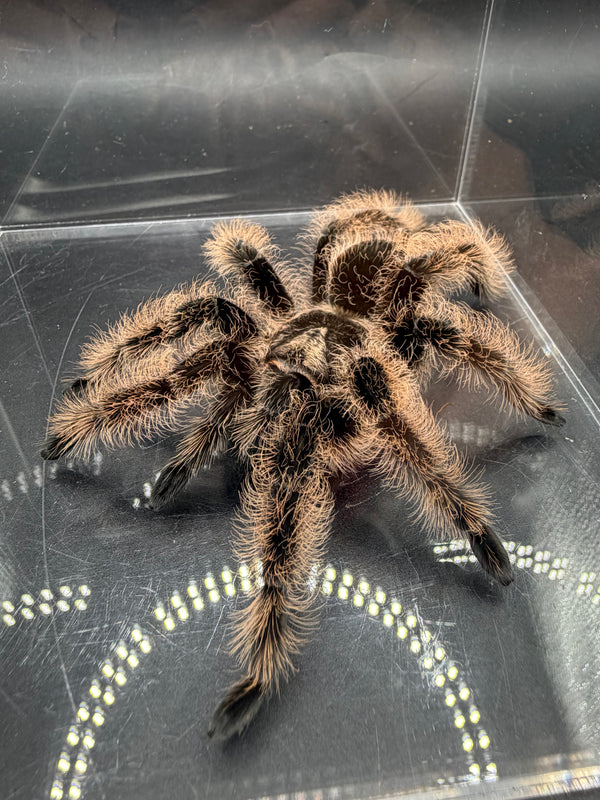
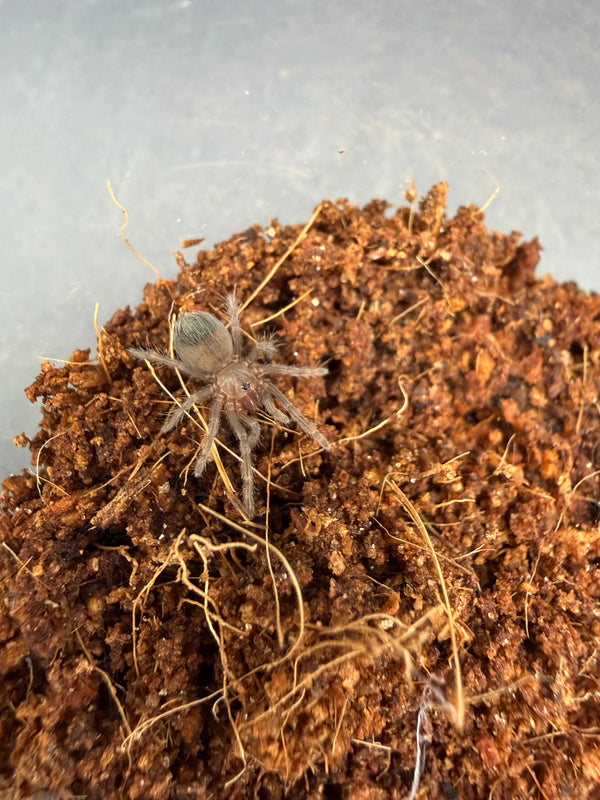
Sold out - DM Big ZCurly Hair Tarantula (Tliltocatl albopilosus)
Tarantula

Tarantula
This fella needs ground cover and diggable depth first, so the best checkout pair is a deep Buddy with a starter hide.
Burrow Buddy fits this fella as a juvenile, but they will outgrow it at around 2" DLS. Plan for a larger adult terrestrial with a hide; matures near 5" DLS and stays put for years. DM Big Z anytime if you want help speccing the next step.
Hardy beginner pick with simple care. Pair with the matched habitat kit and the printable care guide.
The desert rose that does things on its own schedule, now in red
The Chilean Rose Hair is the original gateway tarantula: a dusty rose-and-grey eight-incher from the Atacama fringe, one of the driest places on Earth. This is the RCF (Red Color Form), the morph that dials the warmth up into a genuine rosy-red flush across the carapace and leg hair. It needs almost nothing: a dish of water, a hide, room temperature. That is the whole spec sheet.
What it has instead of fuss is personality. Rose hairs are famous for sitting motionless for weeks, refusing food for months at a stretch (totally normal; they are built for famine), then suddenly redecorating the entire enclosure overnight. Unbothered, unhurried, quietly bulletproof, and slow to grow into a multi-decade animal. The internet calls it the “pet rock that occasionally moves,” and means it as the highest praise.
The numbers live in the care guide. Enclosure size, temps, humidity, feeding schedule, premolt signs, handling boundaries: it's all in the care guide for this exact fella. Start with the full Advanced guide, or click for the quick Open the Simple version →
Grammostola rosea RCF - Spice 2 — Beginner. Baby Buddy — spiderlings only (escape-proof ventilation; rehouse up before it's cramped); Burrow Buddy — grow-out for juveniles, and the kit a freshly-rehoused juvenile or sub-adult settles straight into (it ships with the right depth of dry substrate, a hide, and a water dish — basically the whole rosie spec sheet out of the box); Larger custom terrestrial enclosure for the adult — a 5–6 in rosie outgrows the Burrow Buddy's 48 in² floor; give it more horizontal room, a cork hide, and a water dish
Grammostola rosea RCF
Big Z's Quick Verdict: The original beginner tarantula — a dusty rose-and-grey terrestrial from the Atacama-edge scrub of Chile, and this is the Red Color Form, the rosier-red morph. Adults reach about 5–6 inches across; females are very long-lived (routinely 20+ and reportedly 30+ years with good care), males roughly 4–6. Care is genuinely minimal — dry substrate, a water dish, room temperature — the catch is patience: rosies are famous for months-long fasts and an on-again/off-again feeding response, and an individual's temperament can flip between molts.
| Temp | 70–80°F |
|---|---|
| Humidity | Low (30-60%) |
| Setup | Dry terrestrial |
| Substrate | Bone-dry soil/coco mix, 2–4 in, with a cork hide |
| Feeding | Slings weekly; adults just a few prey items a month — long fasts are normal |
| Handling | Discouraged |
Humidity zones: Very Low under 30% - Low 30-60% - Low-Moderate 40-70% - Moderate 60-80% - Moderate-High 70-85% - High 80%+ - Very High 90%+
Current Big Z's catalog: Yes
Grammostola rosea RCF
Keeper Snapshot: The original beginner tarantula — a dusty rose-and-grey terrestrial from the Atacama-edge scrub of Chile, and this is the Red Color Form, the rosier-red morph. Adults reach about 5–6 inches across; females are very long-lived (routinely 20+ and reportedly 30+ years with good care), males roughly 4–6. Care is genuinely minimal — dry substrate, a water dish, room temperature — the catch is patience: rosies are famous for months-long fasts and an on-again/off-again feeding response, and an individual's temperament can flip between molts.
| Temperature | 70–80°F |
|---|---|
| Humidity | Low (30-60%) |
| Setup Type | Dry terrestrial |
| Substrate | Bone-dry soil/coco mix, 2–4 in, with a cork hide |
| Feeding | Slings weekly; adults just a few prey items a month — long fasts are normal |
| Care Difficulty | Spice 2 — Beginner |
| Handling | Discouraged |
Humidity zones: Very Low under 30% - Low 30-60% - Low-Moderate 40-70% - Moderate 60-80% - Moderate-High 70-85% - High 80%+ - Very High 90%+
The desert rose that does things on its own schedule, now in red
The Chilean Rose Hair is the original gateway tarantula: a dusty rose-and-grey eight-incher from the Atacama fringe, one of the driest places on Earth. This is the RCF (Red Color Form), the morph that dials the warmth up into a genuine rosy-red flush across the carapace and leg hair. It needs almost nothing: a dish of water, a hide, room temperature. That is the whole spec sheet.
What it has instead of fuss is personality. Rose hairs are famous for sitting motionless for weeks, refusing food for months at a stretch (totally normal; they are built for famine), then suddenly redecorating the entire enclosure overnight. Unbothered, unhurried, quietly bulletproof, and slow to grow into a multi-decade animal. The internet calls it the “pet rock that occasionally moves,” and means it as the highest praise.
The numbers live in the care guide. Enclosure size, temps, humidity, feeding schedule, premolt signs, handling boundaries: it's all in the care guide for this exact fella. Start with the full Advanced guide, or click for the quick Open the Simple version →
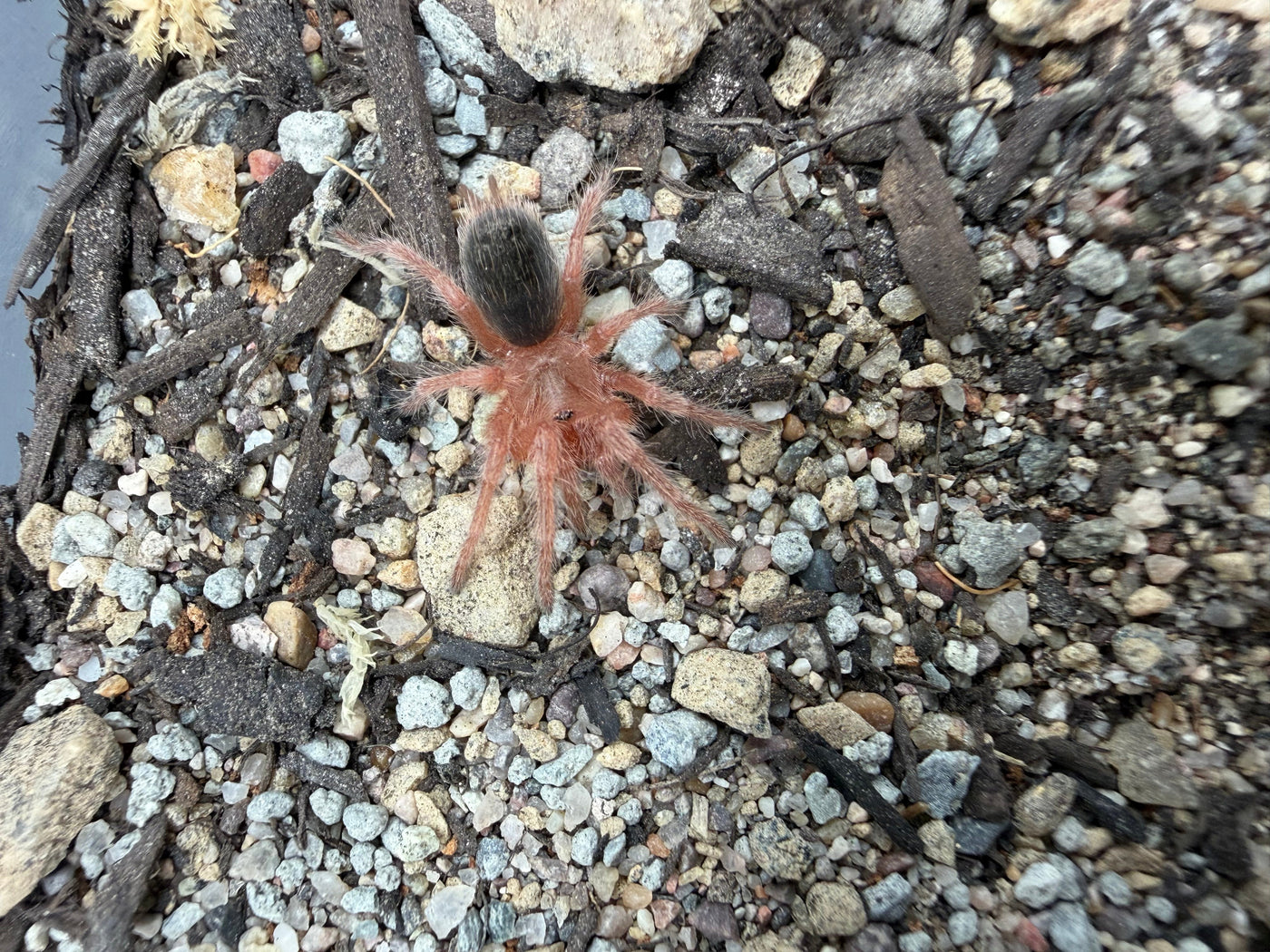
Grammostola rosea RCF - Spice 2 — Beginner. Baby Buddy — spiderlings only (escape-proof ventilation; rehouse up before it's cramped); Burrow Buddy — grow-out for juveniles, and the kit a freshly-rehoused juvenile or sub-adult settles straight into (it ships with the right depth of dry substrate, a hide, and a water dish — basically the whole rosie spec sheet out of the box); Larger custom terrestrial enclosure for the adult — a 5–6 in rosie outgrows the Burrow Buddy's 48 in² floor; give it more horizontal room, a cork hide, and a water dish
Grammostola rosea RCF
Big Z's Quick Verdict: The original beginner tarantula — a dusty rose-and-grey terrestrial from the Atacama-edge scrub of Chile, and this is the Red Color Form, the rosier-red morph. Adults reach about 5–6 inches across; females are very long-lived (routinely 20+ and reportedly 30+ years with good care), males roughly 4–6. Care is genuinely minimal — dry substrate, a water dish, room temperature — the catch is patience: rosies are famous for months-long fasts and an on-again/off-again feeding response, and an individual's temperament can flip between molts.
| Temp | 70–80°F |
|---|---|
| Humidity | Low (30-60%) |
| Setup | Dry terrestrial |
| Substrate | Bone-dry soil/coco mix, 2–4 in, with a cork hide |
| Feeding | Slings weekly; adults just a few prey items a month — long fasts are normal |
| Handling | Discouraged |
Humidity zones: Very Low under 30% - Low 30-60% - Low-Moderate 40-70% - Moderate 60-80% - Moderate-High 70-85% - High 80%+ - Very High 90%+
Current Big Z's catalog: Yes
Grammostola rosea RCF
Keeper Snapshot: The original beginner tarantula — a dusty rose-and-grey terrestrial from the Atacama-edge scrub of Chile, and this is the Red Color Form, the rosier-red morph. Adults reach about 5–6 inches across; females are very long-lived (routinely 20+ and reportedly 30+ years with good care), males roughly 4–6. Care is genuinely minimal — dry substrate, a water dish, room temperature — the catch is patience: rosies are famous for months-long fasts and an on-again/off-again feeding response, and an individual's temperament can flip between molts.
| Temperature | 70–80°F |
|---|---|
| Humidity | Low (30-60%) |
| Setup Type | Dry terrestrial |
| Substrate | Bone-dry soil/coco mix, 2–4 in, with a cork hide |
| Feeding | Slings weekly; adults just a few prey items a month — long fasts are normal |
| Care Difficulty | Spice 2 — Beginner |
| Handling | Discouraged |
Humidity zones: Very Low under 30% - Low 30-60% - Low-Moderate 40-70% - Moderate 60-80% - Moderate-High 70-85% - High 80%+ - Very High 90%+
Sold out - DM Big ZTarantula
Flash Sale −10%
Tarantula

Spider

Tarantula
Sold out - DM Big ZMillipede
Tarantula
Flash Sale −10%
Scorpion
Flash Sale −14%
Scorpion