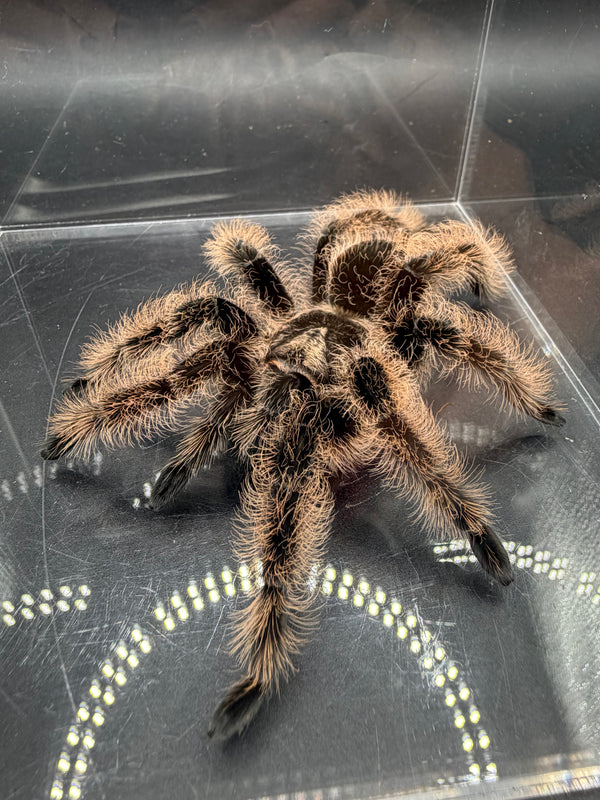
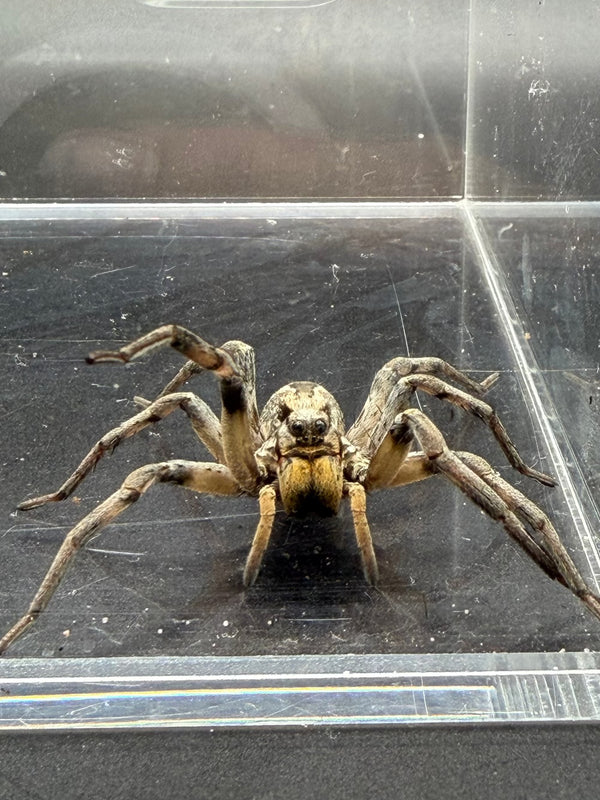
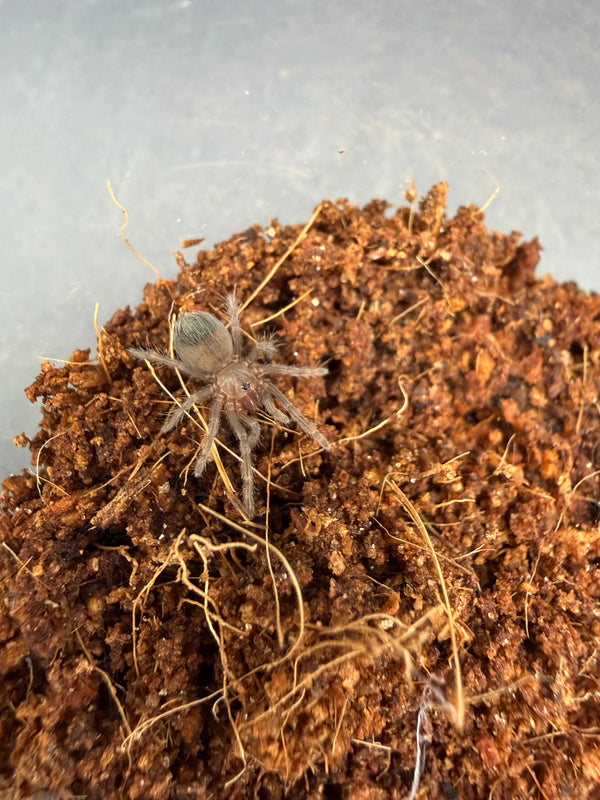
Curly Hair Tarantula (Tliltocatl albopilosus) - 3-4 in
Tarantula

Invertebrate
Eastern Lubber Grasshopper for sale from Big Z's (Romalea microptera). Spice-rated keeper notes, care guidance, and live-arrival packing where eligible.
Big, loud, and armed with a chemical stink bomb
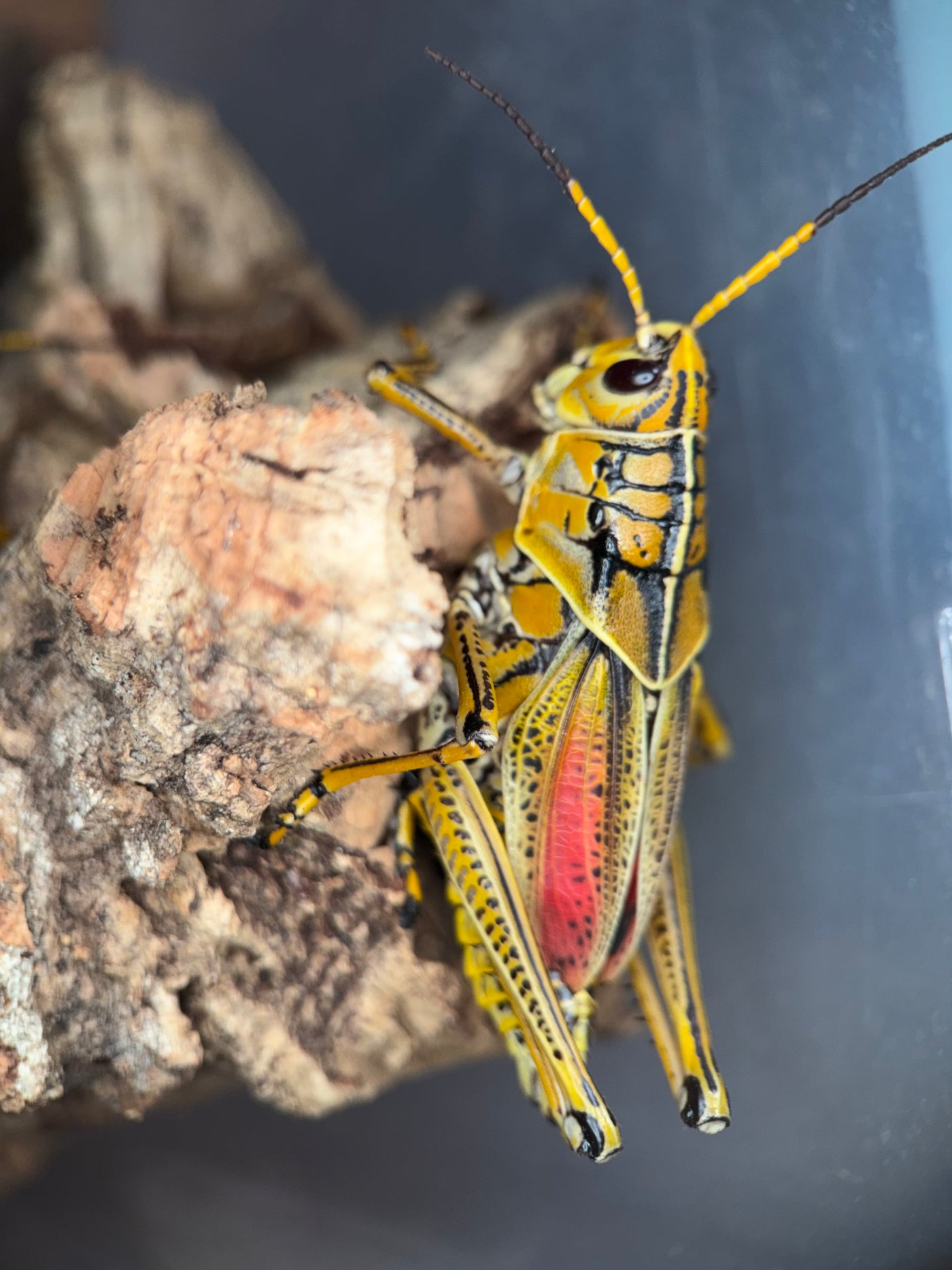
Romalea microptera, the Eastern Lubber Grasshopper (still sold under the older name Romalea guttata), is one of the largest and most striking grasshoppers in North America. This heavy-bodied, nearly flightless Southeastern native lumbers along in bold yellow, orange, and black, a walking warning label at 2.5 to 3.5 inches. Nymphs start out glossy black with a thin colored stripe, then molt into that classic bright adult over the season. No venom, no real bite, just pure slow-motion presence.
Cross it and you get the full show: a loud hiss and a foul, foamy spray of irritating chemicals. Handle gently only, wash your hands after, and keep it away from your face. Important: it is toxic if eaten, so keep it well clear of dogs, cats, birds, and reptiles, out of reach of small children, and never use it as a feeder. Care is beginner-friendly, Spice 2: keep it warm, dry, and well ventilated with some climbing height and a varied diet of fresh leafy greens and plant matter. A bold, low-fuss display bug for keepers who want size and color without a bite. Read the care guide before you bring one home.
The numbers live in the care guide. Enclosure size, temps, humidity, feeding schedule, premolt signs, handling boundaries: it's all in the care guide for this exact fella. Start with the full Advanced guide, or click for the quick Open the Simple version →
Browse the simple and advanced guide library for matching setup notes, care difficulty, and handling boundaries.
View in Care Guides libraryEastern Lubber Grasshopper for sale from Big Z's (Romalea microptera). Spice-rated keeper notes, care guidance, and live-arrival packing where eligible.
Big, loud, and armed with a chemical stink bomb
Romalea microptera, the Eastern Lubber Grasshopper (still sold under the older name Romalea guttata), is one of the largest and most striking grasshoppers in North America. This heavy-bodied, nearly flightless Southeastern native lumbers along in bold yellow, orange, and black, a walking warning label at 2.5 to 3.5 inches. Nymphs start out glossy black with a thin colored stripe, then molt into that classic bright adult over the season. No venom, no real bite, just pure slow-motion presence.
Cross it and you get the full show: a loud hiss and a foul, foamy spray of irritating chemicals. Handle gently only, wash your hands after, and keep it away from your face. Important: it is toxic if eaten, so keep it well clear of dogs, cats, birds, and reptiles, out of reach of small children, and never use it as a feeder. Care is beginner-friendly, Spice 2: keep it warm, dry, and well ventilated with some climbing height and a varied diet of fresh leafy greens and plant matter. A bold, low-fuss display bug for keepers who want size and color without a bite. Read the care guide before you bring one home.
The numbers live in the care guide. Enclosure size, temps, humidity, feeding schedule, premolt signs, handling boundaries: it's all in the care guide for this exact fella. Start with the full Advanced guide, or click for the quick Open the Simple version →
Browse the simple and advanced guide library for matching setup notes, care difficulty, and handling boundaries.
View in Care Guides library
Tarantula

Spider

Tarantula
Tarantula
Invertebrate
Tarantula
Flash Sale −20%
Tarantula
Flash Sale −10%
Tarantula