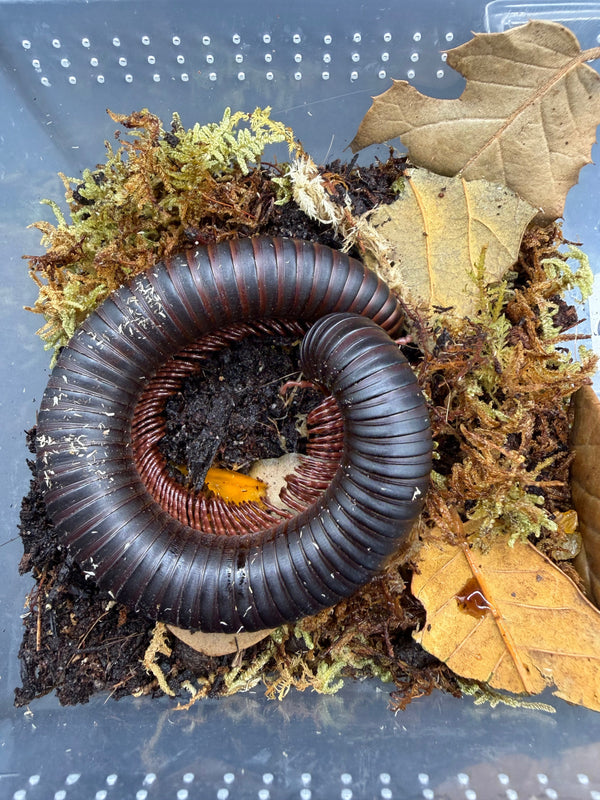
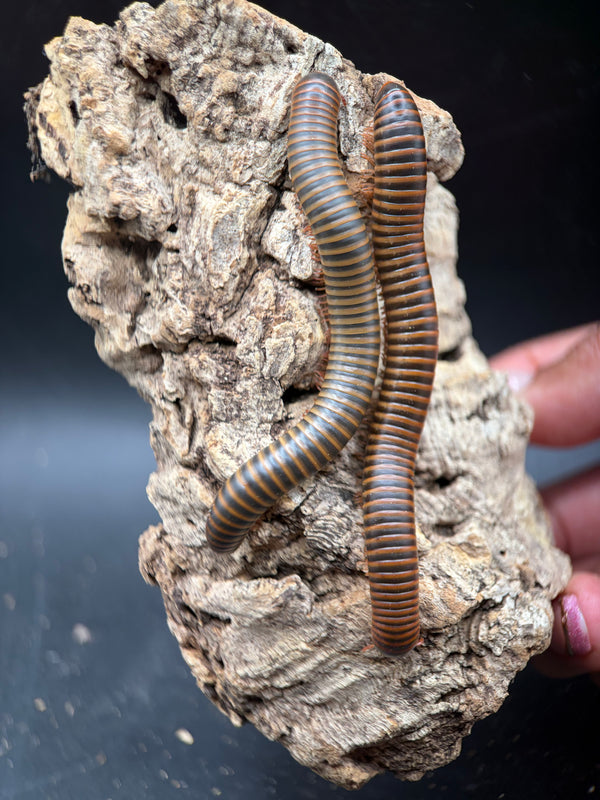
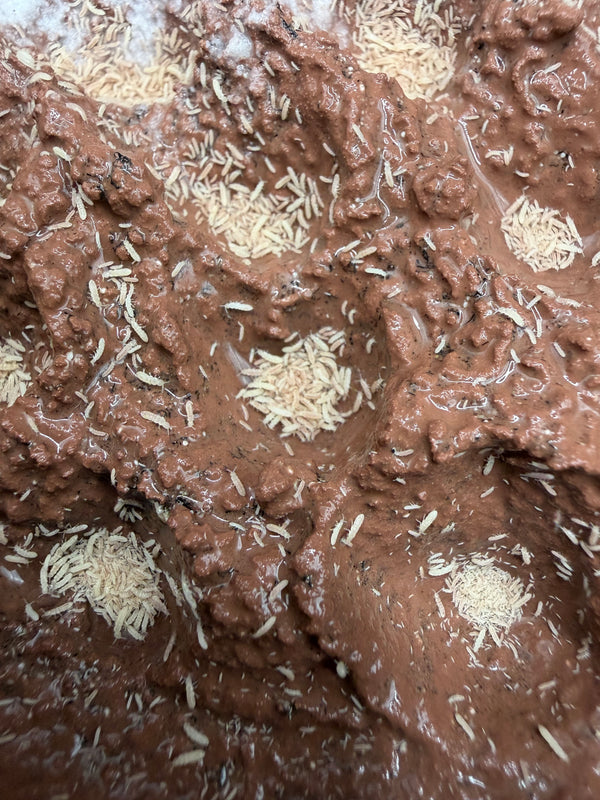
African Giant Millipede (Archispirostreptus gigas) - 5-8 in
Millipede

Spider
Widow Jumping Spider for sale from Big Z's (Phidippus ardens). Spice-rated keeper notes, care guidance, and live-arrival packing where eligible.
A scary name on a jewel-bright jumper that wouldn't hurt a fly it wasn't eating
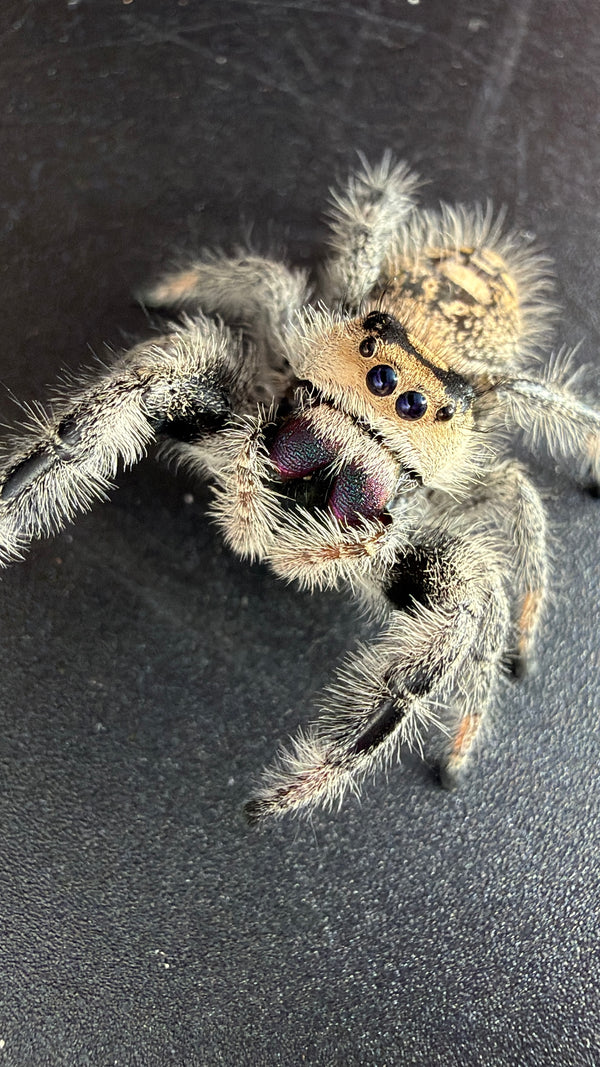
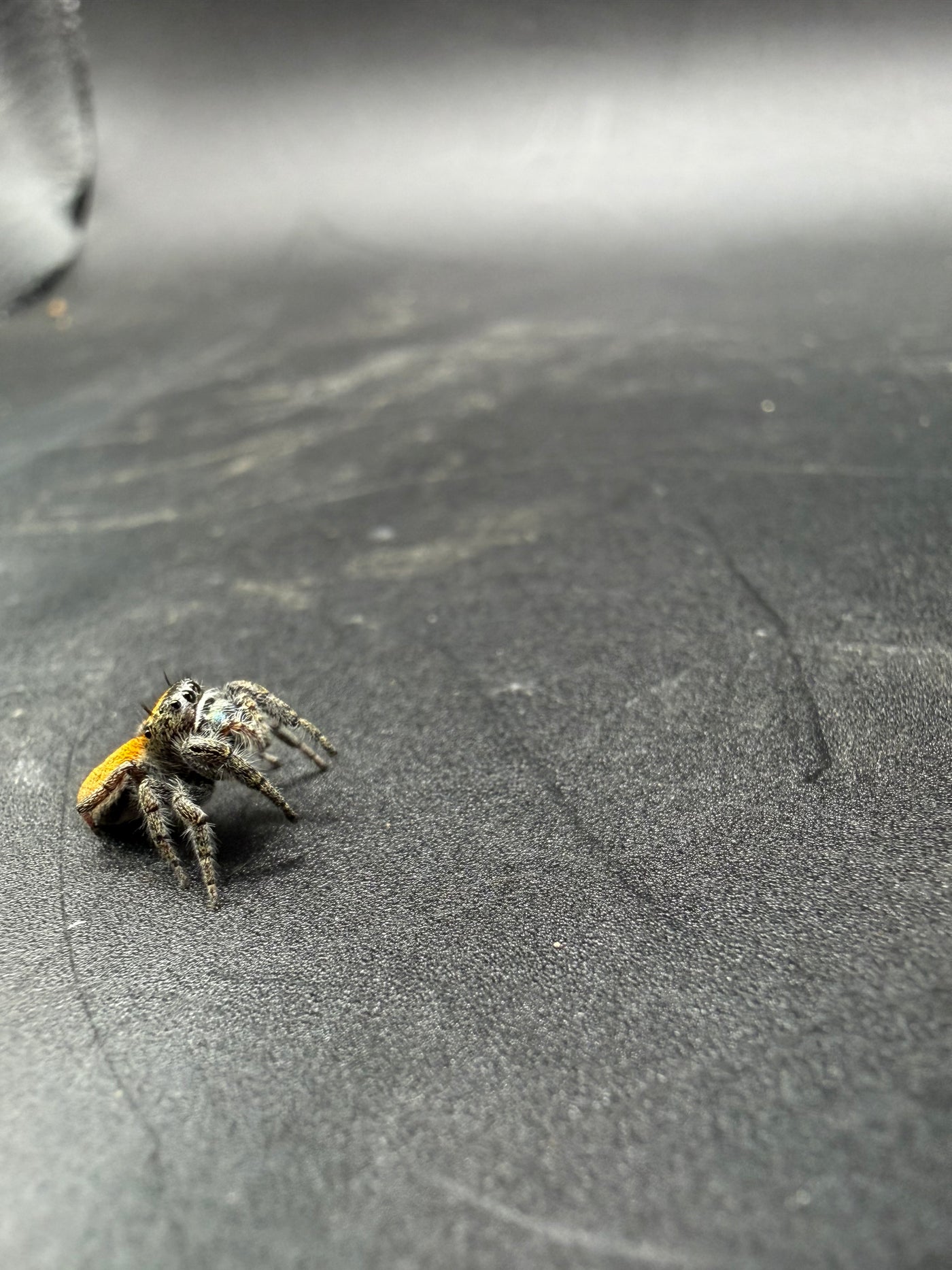
Phidippus ardens, the Widow Jumping Spider, is a small red-and-black jumper from the western and southwestern US, running about 1/4 to 1/2 inch. Picture a deep red abdomen inked with black, big forward eyes, and the full color vision the family is famous for. The "widow" name is all about that look and has nothing to do with true widow spiders (Latrodectus): it carries none of that risk. What you get instead is the curious, head-tilting personality that makes jumpers such a joy to watch.
This one is shy rather than defensive, family-friendly and gently handleable, with a bite that is rare and trivial. Captive-bred and a touch more delicate than a regal as a sling, so it wants attentive feeding on flightless fruit flies and cooler, temperate room temps: skip the heat. Set it up in a small, tall vertical enclosure with climbing anchors up top and a secure fine-mesh lid, because it is fast and will find any gap. Beginner-friendly and Spice 1, but read the care guide before you bring one home.
The numbers live in the care guide. Enclosure size, temps, humidity, feeding schedule, premolt signs, handling boundaries: it's all in the care guide for this exact fella. Start with the full Advanced guide, or click for the quick Open the Simple version →
Browse the simple and advanced guide library for matching setup notes, care difficulty, and handling boundaries.
View in Care Guides libraryWidow Jumping Spider for sale from Big Z's (Phidippus ardens). Spice-rated keeper notes, care guidance, and live-arrival packing where eligible.
A scary name on a jewel-bright jumper that wouldn't hurt a fly it wasn't eating
Phidippus ardens, the Widow Jumping Spider, is a small red-and-black jumper from the western and southwestern US, running about 1/4 to 1/2 inch. Picture a deep red abdomen inked with black, big forward eyes, and the full color vision the family is famous for. The "widow" name is all about that look and has nothing to do with true widow spiders (Latrodectus): it carries none of that risk. What you get instead is the curious, head-tilting personality that makes jumpers such a joy to watch.
This one is shy rather than defensive, family-friendly and gently handleable, with a bite that is rare and trivial. Captive-bred and a touch more delicate than a regal as a sling, so it wants attentive feeding on flightless fruit flies and cooler, temperate room temps: skip the heat. Set it up in a small, tall vertical enclosure with climbing anchors up top and a secure fine-mesh lid, because it is fast and will find any gap. Beginner-friendly and Spice 1, but read the care guide before you bring one home.
The numbers live in the care guide. Enclosure size, temps, humidity, feeding schedule, premolt signs, handling boundaries: it's all in the care guide for this exact fella. Start with the full Advanced guide, or click for the quick Open the Simple version →
Browse the simple and advanced guide library for matching setup notes, care difficulty, and handling boundaries.
View in Care Guides library
Millipede

Millipede

Spider

Millipede
Millipede
Millipede
Millipede

Clean-up Crew