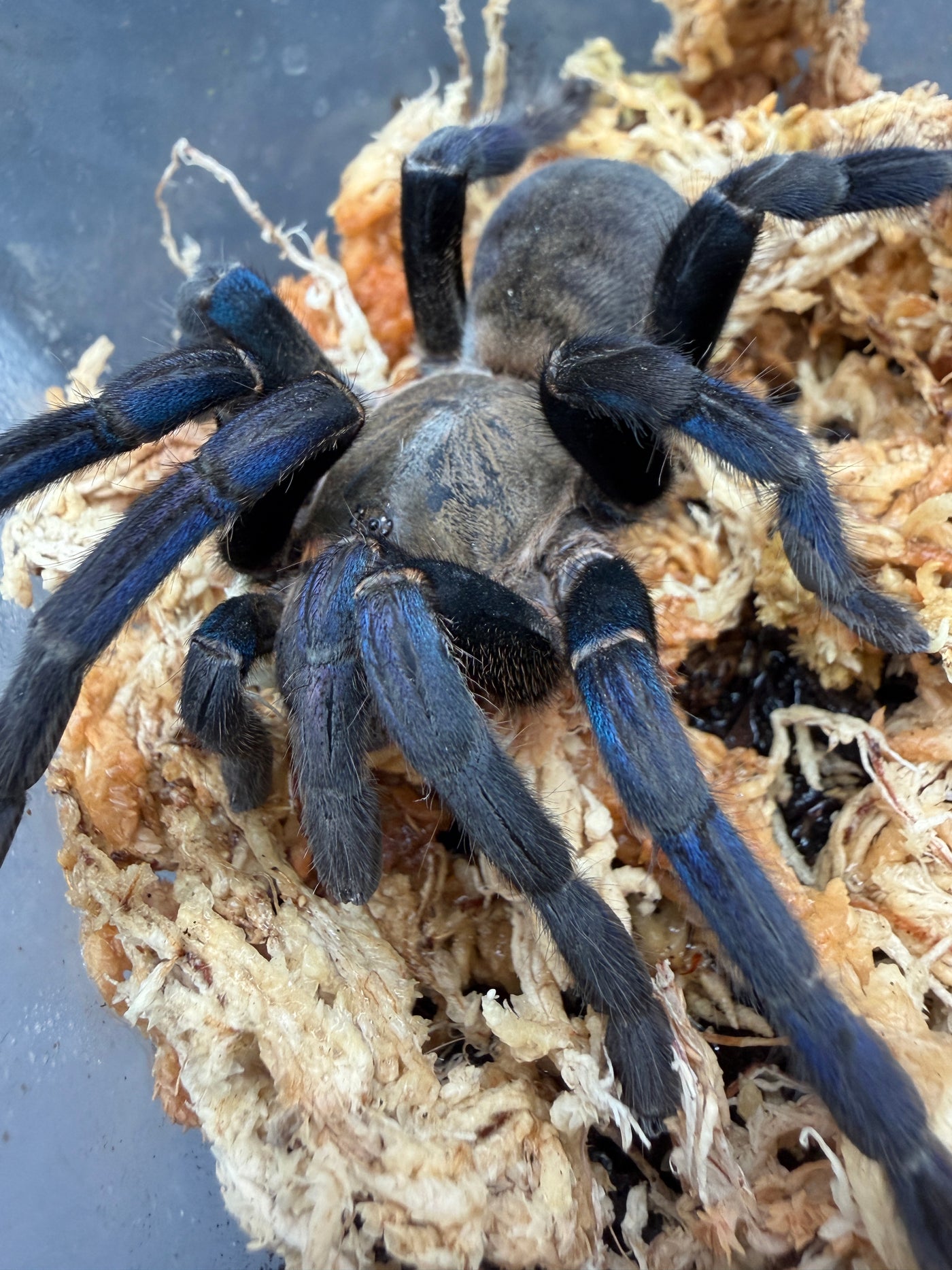
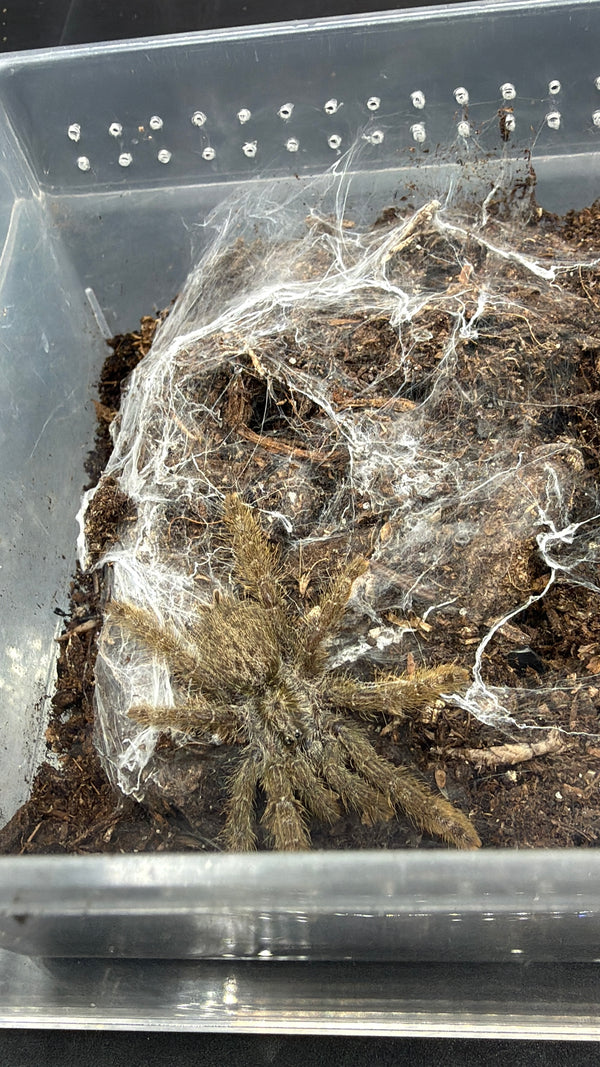
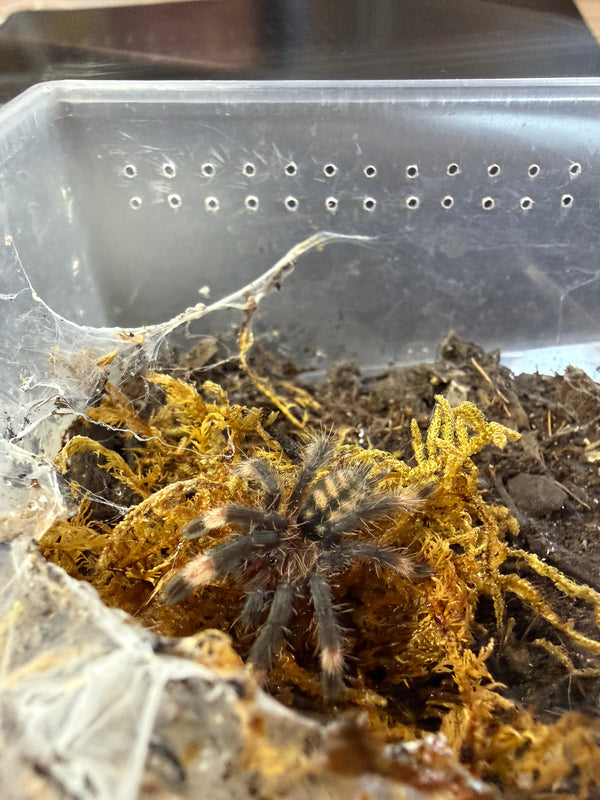
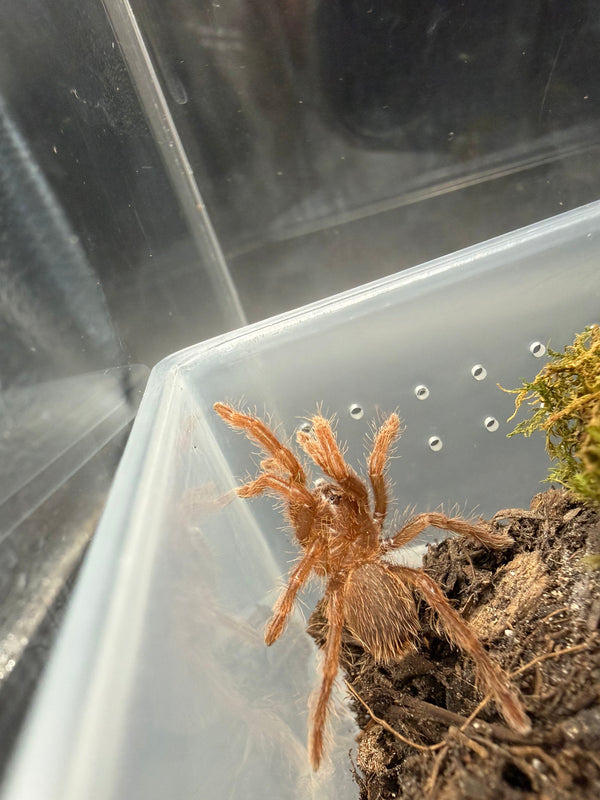
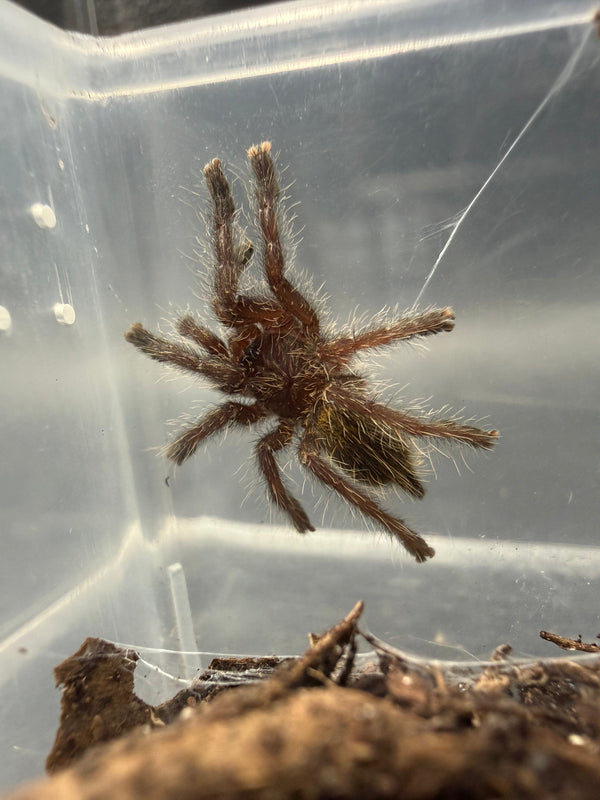
Electric Blue Tarantula (Chilobrachys natanicharum)
Tarantula

Cobalt Blue Tarantula for sale from Big Z's (Melopoeus lividus). Spice-rated keeper notes, care guidance, and live-arrival packing where eligible.
The blue is worth waiting for.
The Cobalt Blue Tarantula (Melopoeus lividus) pairs intensely blue, iridescent legs with a muted carapace and a stocky build. This is a burrowing tarantula, so the enclosure needs to work just as well below the surface as it does above it. A glimpse at the entrance of an established retreat is part of the appeal. These are offered at a 3-4 inch leg span.
Spice Level 4: Advanced. Build around deep, firm substrate and cork cover, with a lightly damp lower layer, a drier exposed surface, and a shallow water dish. Keep ventilation open and leave established tunnels intact. This is a no-handling animal: have tools and a catch cup ready before opening the enclosure. The Big Z's care guide covers the burrow setup, feeding, and how to leave the spider undisturbed through a molt.
The numbers live in the care guide. Enclosure size, temps, humidity, feeding schedule, premolt signs, handling boundaries: it's all in the care guide for this exact fella. Start with the full Advanced guide, or click for the quick Open the Simple version →
Tarantula
Cobalt Blue Tarantula (Melopoeus lividus) care guide Read shipping & LAG
Cobalt Blue Tarantula for sale from Big Z's (Melopoeus lividus). Spice-rated keeper notes, care guidance, and live-arrival packing where eligible.
The blue is worth waiting for.
The Cobalt Blue Tarantula (Melopoeus lividus) pairs intensely blue, iridescent legs with a muted carapace and a stocky build. This is a burrowing tarantula, so the enclosure needs to work just as well below the surface as it does above it. A glimpse at the entrance of an established retreat is part of the appeal. These are offered at a 3-4 inch leg span.
Spice Level 4: Advanced. Build around deep, firm substrate and cork cover, with a lightly damp lower layer, a drier exposed surface, and a shallow water dish. Keep ventilation open and leave established tunnels intact. This is a no-handling animal: have tools and a catch cup ready before opening the enclosure. The Big Z's care guide covers the burrow setup, feeding, and how to leave the spider undisturbed through a molt.
The numbers live in the care guide. Enclosure size, temps, humidity, feeding schedule, premolt signs, handling boundaries: it's all in the care guide for this exact fella. Start with the full Advanced guide, or click for the quick Open the Simple version →
Melopoeus lividus - Spice 4: Advanced. Baby Buddy: conditional small-spiderling fit, with secure ventilation and adequate substrate.; Burrow Buddy: conditional grow-out fit; use a larger/deeper custom build when burrow or movement space is limited.
Melopoeus lividus
Big Z's Quick Verdict: Build the retreat first: deep, firm substrate, cork cover, a water dish and secure ventilation. Keep the lower soil lightly damp and leave the spider's tunnels intact.
| Temp | 68-78°F (20-26°C), from The Tarantula Collective's Cobalt Blue keeper guide. This is a captive-care range, not a tested tolerance limit. |
|---|---|
| Humidity | No fixed humidity % target. Keep the lower substrate lightly damp without standing water, allow the exposed surface to become drier, and provide a shallow water dish. Water slowly down an edge away from the occupied retreat; keep ventilation open. |
| Setup | Deep burrowing enclosure with cork cover, web anchors and secure ventilation |
| Substrate | Use firm, diggable soil/coir substrate. A small sling enclosure can be about two-thirds filled; larger burrowing setups commonly use half to three-quarters fill. Choose a container that still leaves usable room above the substrate. |
| Feeding | Offer manageable crickets or roaches, conservatively no longer than the abdomen. Tiny slings may take small pre-killed portions. Adjust meals to feeding response and abdomen condition; reduce or pause when well-fed or refusing. Remove refused live prey promptly; clear any remaining food by the following day. Never leave live prey with a molting animal. |
| Handling | No handling. Prepare a catch cup before opening the enclosure and use tools for maintenance. |
Humidity zones: Very Low under 30% - Low 30-60% - Low-Moderate 40-70% - Moderate 60-80% - Moderate-High 70-85% - High 80%+ - Very High 90%+
Current Big Z's catalog: Yes
Melopoeus lividus
Keeper Snapshot: Build the retreat first: deep, firm substrate, cork cover, a water dish and secure ventilation. Keep the lower soil lightly damp and leave the spider's tunnels intact.
| Temperature | 68-78°F (20-26°C), from The Tarantula Collective's Cobalt Blue keeper guide. This is a captive-care range, not a tested tolerance limit. |
|---|---|
| Humidity | No fixed humidity % target. Keep the lower substrate lightly damp without standing water, allow the exposed surface to become drier, and provide a shallow water dish. Water slowly down an edge away from the occupied retreat; keep ventilation open. |
| Setup Type | Deep burrowing enclosure with cork cover, web anchors and secure ventilation |
| Substrate | Use firm, diggable soil/coir substrate. A small sling enclosure can be about two-thirds filled; larger burrowing setups commonly use half to three-quarters fill. Choose a container that still leaves usable room above the substrate. |
| Feeding | Offer manageable crickets or roaches, conservatively no longer than the abdomen. Tiny slings may take small pre-killed portions. Adjust meals to feeding response and abdomen condition; reduce or pause when well-fed or refusing. Remove refused live prey promptly; clear any remaining food by the following day. Never leave live prey with a molting animal. |
| Care Difficulty | Spice 4: Advanced |
| Handling | No handling. Prepare a catch cup before opening the enclosure and use tools for maintenance. |
Humidity zones: Very Low under 30% - Low 30-60% - Low-Moderate 40-70% - Moderate 60-80% - Moderate-High 70-85% - High 80%+ - Very High 90%+

Tarantula

Tarantula

Tarantula

Tarantula

Scorpion

Tarantula

Tarantula

Tarantula