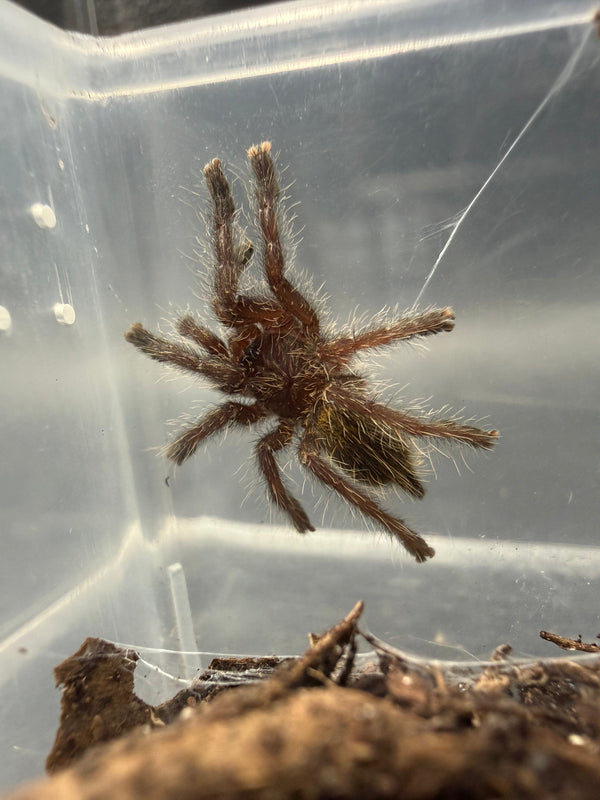
Indian Ornamental Tarantula (Poecilotheria regalis)
Tarantula

Electric Blue Tarantula for sale from Big Z's (Chilobrachys natanicharum). Spice-rated keeper notes, care guidance, and live-arrival packing where eligible.
Metallic blue legs disappearing down a silk-lined tunnel you built for it.
Chilobrachys natanicharum is the Thai species the hobby carried for years as Chilobrachys sp. "Electric Blue" before it was formally described, and the trade name stuck because it is accurate: mature animals show a hard metallic blue across the legs with a violet cast on the carapace. Choose the 0.75-inch captive-bred sling or the 2-3-inch wild-caught variant, measured by leg span. Colour develops over successive molts. Adults reach roughly 5 to 6.5 inches across.
This is a deep fossorial spider and a heavy webber, which is an unusual combination: it digs a proper burrow and then silks over the surface as well, so most of what you see is architecture rather than spider. Give it 8 inches or more of packed substrate it can tunnel through, plenty of anchor points, and a secure lid. It is fast, Old World, and strictly no-handling, with rehousing done through a container rather than by hand. Spice Level 4: Advanced. The matched Big Z's care guide covers the deep burrow build.
The numbers live in the care guide. Enclosure size, temps, humidity, feeding schedule, premolt signs, handling boundaries: it's all in the care guide for this exact fella. Start with the full Advanced guide, or click for the quick Open the Simple version →
Tarantula
Electric Blue Tarantula (Chilobrachys natanicharum) care guide Read shipping & LAG
Electric Blue Tarantula for sale from Big Z's (Chilobrachys natanicharum). Spice-rated keeper notes, care guidance, and live-arrival packing where eligible.
Metallic blue legs disappearing down a silk-lined tunnel you built for it.
Chilobrachys natanicharum is the Thai species the hobby carried for years as Chilobrachys sp. "Electric Blue" before it was formally described, and the trade name stuck because it is accurate: mature animals show a hard metallic blue across the legs with a violet cast on the carapace. Choose the 0.75-inch captive-bred sling or the 2-3-inch wild-caught variant, measured by leg span. Colour develops over successive molts. Adults reach roughly 5 to 6.5 inches across.
This is a deep fossorial spider and a heavy webber, which is an unusual combination: it digs a proper burrow and then silks over the surface as well, so most of what you see is architecture rather than spider. Give it 8 inches or more of packed substrate it can tunnel through, plenty of anchor points, and a secure lid. It is fast, Old World, and strictly no-handling, with rehousing done through a container rather than by hand. Spice Level 4: Advanced. The matched Big Z's care guide covers the deep burrow build.
The numbers live in the care guide. Enclosure size, temps, humidity, feeding schedule, premolt signs, handling boundaries: it's all in the care guide for this exact fella. Start with the full Advanced guide, or click for the quick Open the Simple version →
Chilobrachys spp. - Spice 4: Advanced. Baby Buddy: conditional small-spiderling fit, with secure ventilation and adequate substrate.; Burrow Buddy: conditional grow-out fit; use a larger/deeper custom build when burrow or movement space is limited.
Chilobrachys spp.
Identity confidence: provisional. This is a genus, group, or trade name rather than a confirmed species. Treat it as the closest match we can stand behind, and use the more conservative end of any range.
Big Z's Quick Verdict: Build the retreat first: deep, firm substrate, cork cover, a water dish and secure ventilation. Keep the lower soil lightly damp and leave the spider's tunnels intact.
| Temp | For Electric Blue, 70-78°F (21-26°C) follows The Tarantula Collective's keeper range. Other Chilobrachys may differ; this genus guide does not establish a temperature limit for every species. |
|---|---|
| Humidity | No fixed humidity % target. Keep the lower substrate lightly damp without standing water, allow the exposed surface to become drier, and provide a shallow water dish. Water slowly down an edge away from the occupied retreat; keep ventilation open. |
| Setup | Deep burrowing enclosure with cork cover, web anchors and secure ventilation |
| Substrate | Use firm, diggable soil/coir substrate. A small sling enclosure can be about two-thirds filled; larger burrowing setups commonly use half to three-quarters fill. Choose a container that still leaves usable room above the substrate. |
| Feeding | Offer manageable crickets or roaches, conservatively no longer than the abdomen. Tiny slings may take small pre-killed portions. Adjust meals to feeding response and abdomen condition; reduce or pause when well-fed or refusing. Remove refused live prey promptly; clear any remaining food by the following day. Never leave live prey with a molting animal. |
| Handling | No handling. Prepare a catch cup before opening the enclosure and use tools for maintenance. |
Humidity zones: Very Low under 30% - Low 30-60% - Low-Moderate 40-70% - Moderate 60-80% - Moderate-High 70-85% - High 80%+ - Very High 90%+
Current Big Z's catalog: Yes
Chilobrachys spp.
Identity confidence: provisional. This is a genus, group, or trade name rather than a confirmed species. Treat it as the closest match we can stand behind, and use the more conservative end of any range.
Keeper Snapshot: Build the retreat first: deep, firm substrate, cork cover, a water dish and secure ventilation. Keep the lower soil lightly damp and leave the spider's tunnels intact.
| Temperature | For Electric Blue, 70-78°F (21-26°C) follows The Tarantula Collective's keeper range. Other Chilobrachys may differ; this genus guide does not establish a temperature limit for every species. |
|---|---|
| Humidity | No fixed humidity % target. Keep the lower substrate lightly damp without standing water, allow the exposed surface to become drier, and provide a shallow water dish. Water slowly down an edge away from the occupied retreat; keep ventilation open. |
| Setup Type | Deep burrowing enclosure with cork cover, web anchors and secure ventilation |
| Substrate | Use firm, diggable soil/coir substrate. A small sling enclosure can be about two-thirds filled; larger burrowing setups commonly use half to three-quarters fill. Choose a container that still leaves usable room above the substrate. |
| Feeding | Offer manageable crickets or roaches, conservatively no longer than the abdomen. Tiny slings may take small pre-killed portions. Adjust meals to feeding response and abdomen condition; reduce or pause when well-fed or refusing. Remove refused live prey promptly; clear any remaining food by the following day. Never leave live prey with a molting animal. |
| Care Difficulty | Spice 4: Advanced |
| Handling | No handling. Prepare a catch cup before opening the enclosure and use tools for maintenance. |
Humidity zones: Very Low under 30% - Low 30-60% - Low-Moderate 40-70% - Moderate 60-80% - Moderate-High 70-85% - High 80%+ - Very High 90%+

Tarantula

Tarantula

Tarantula

Tarantula

Scorpion

Tarantula

Tarantula

Tarantula