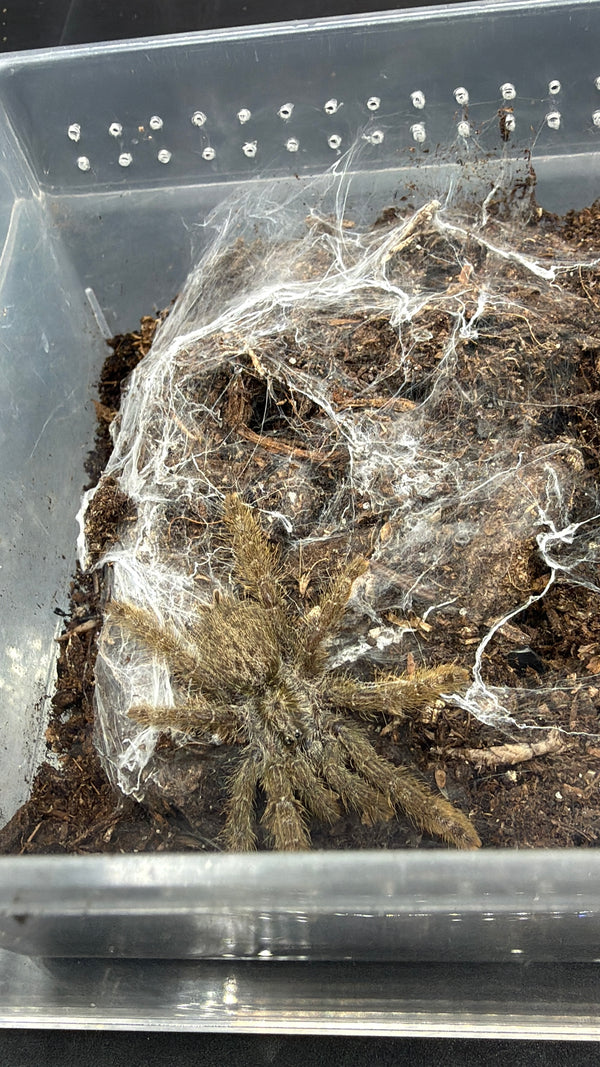
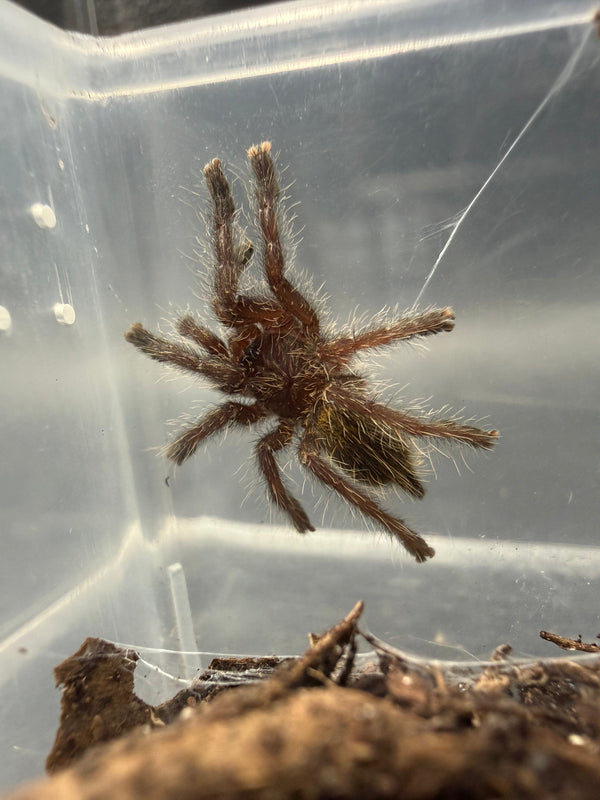
Electric Blue Tarantula (Chilobrachys natanicharum)
Tarantula

King Baboon Tarantula for sale from Big Z's (Pelinobius muticus). Spice-rated keeper notes, care guidance, and live-arrival packing where eligible.
East Africa's deep-digging heavyweight, starting out the size of a fingernail.
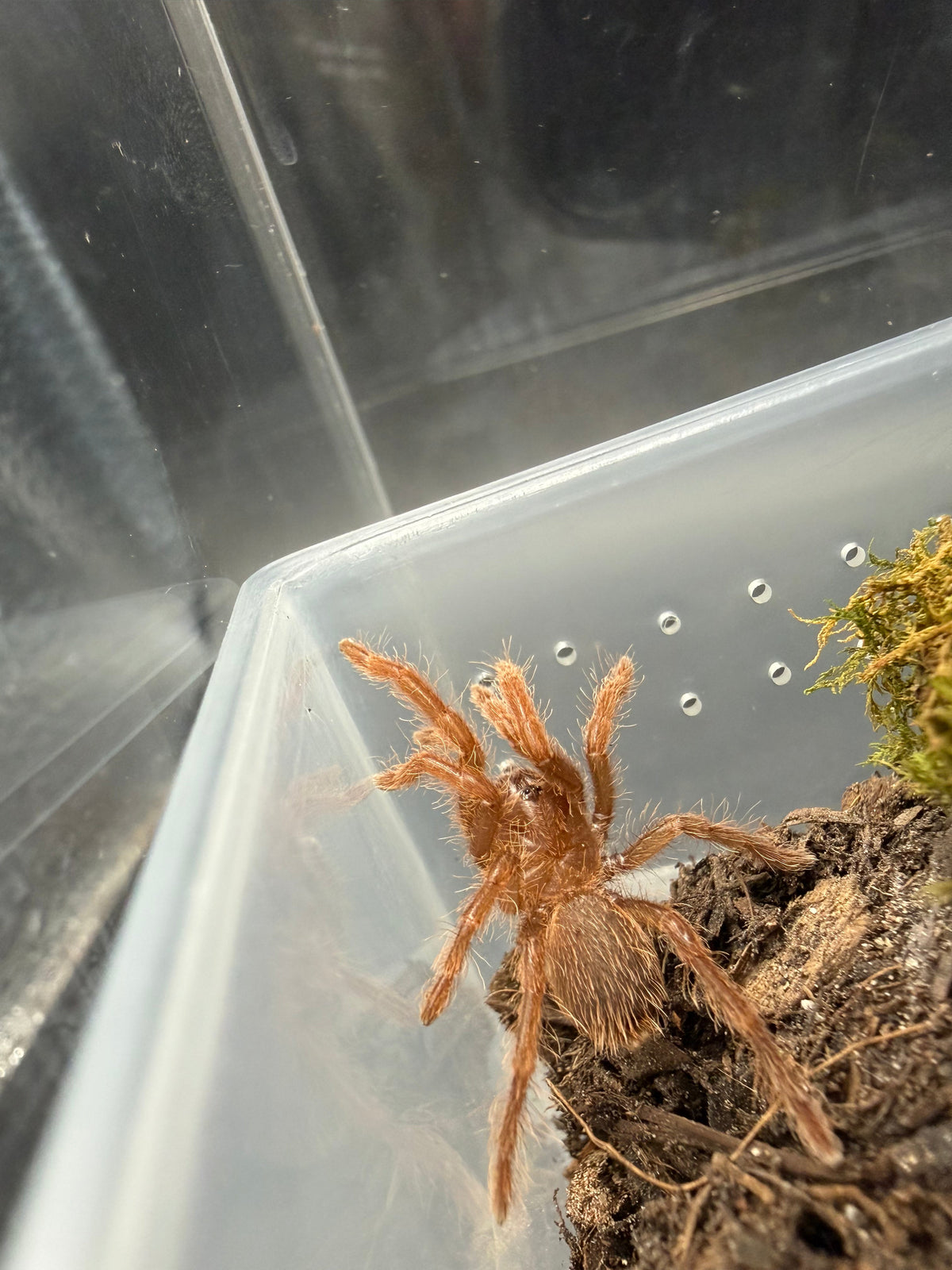
Pelinobius muticus, the King Baboon, is the classic Old World fossorial: a thick-legged, rust-orange East African tarantula that spends most of its life at the bottom of a burrow it dug itself. It is a famously slow grower, which is exactly why a 0.75 to 1 inch sling is worth starting early. These arrived at that size, unsexed.
Spice Level 4: Advanced. Defensive, quick to threat-posture, and a strict no-handling animal that is known for stridulating audibly when annoyed. What it actually wants is depth: substrate deep enough to build a real burrow, kept dry, with a starter hole to get it going. Expect to see it rarely and to respect it constantly. The Big Z's care guide has the full setup.
The numbers live in the care guide. Enclosure size, temps, humidity, feeding schedule, premolt signs, handling boundaries: it's all in the care guide for this exact fella. Start with the full Advanced guide, or click for the quick Open the Simple version →
Tarantula
King Baboon Tarantula (Pelinobius muticus) care guide Read shipping & LAG
King Baboon Tarantula for sale from Big Z's (Pelinobius muticus). Spice-rated keeper notes, care guidance, and live-arrival packing where eligible.
East Africa's deep-digging heavyweight, starting out the size of a fingernail.
Pelinobius muticus, the King Baboon, is the classic Old World fossorial: a thick-legged, rust-orange East African tarantula that spends most of its life at the bottom of a burrow it dug itself. It is a famously slow grower, which is exactly why a 0.75 to 1 inch sling is worth starting early. These arrived at that size, unsexed.
Spice Level 4: Advanced. Defensive, quick to threat-posture, and a strict no-handling animal that is known for stridulating audibly when annoyed. What it actually wants is depth: substrate deep enough to build a real burrow, kept dry, with a starter hole to get it going. Expect to see it rarely and to respect it constantly. The Big Z's care guide has the full setup.
The numbers live in the care guide. Enclosure size, temps, humidity, feeding schedule, premolt signs, handling boundaries: it's all in the care guide for this exact fella. Start with the full Advanced guide, or click for the quick Open the Simple version →
Pelinobius muticus - Spice 4: Advanced. Baby Buddy only for very small slings; Burrow Buddy as a short juvenile grow-out; Deep custom fossorial enclosure for serious juveniles and adults
Pelinobius muticus
Big Z's Quick Verdict: A legendary old-world burrower: huge, defensive, slow-growing, and best kept as a tunnel-and-ambush display animal. The setup is simple; the safety protocol is not optional.
| Temp | 74-82°F |
|---|---|
| Humidity | Moderate ambient (60-75%) with cross ventilation at substrate level; damp lower layer, dry surface |
| Setup | Old World deep fossorial tarantula |
| Substrate | Very deep packable soil/coco mix with a pre-started burrow |
| Feeding | Juveniles weekly; adults every 2-4 weeks depending on body condition |
| Handling | NEVER |
Humidity zones: Very Low under 30% - Low 30-60% - Low-Moderate 40-70% - Moderate 60-80% - Moderate-High 70-85% - High 80%+ - Very High 90%+
Current Big Z's catalog: No
Pelinobius muticus
Keeper Snapshot: A legendary old-world burrower: huge, defensive, slow-growing, and best kept as a tunnel-and-ambush display animal. The setup is simple; the safety protocol is not optional.
| Temperature | 74-82°F |
|---|---|
| Humidity | Moderate ambient (60-75%) with cross ventilation at substrate level; damp lower layer, dry surface |
| Setup Type | Old World deep fossorial tarantula |
| Substrate | Very deep packable soil/coco mix with a pre-started burrow |
| Feeding | Juveniles weekly; adults every 2-4 weeks depending on body condition |
| Care Difficulty | Spice 4: Advanced |
| Handling | NEVER |
Humidity zones: Very Low under 30% - Low 30-60% - Low-Moderate 40-70% - Moderate 60-80% - Moderate-High 70-85% - High 80%+ - Very High 90%+

Tarantula

Tarantula

Tarantula

Tarantula

Tarantula

Scorpion

Tarantula

Tarantula