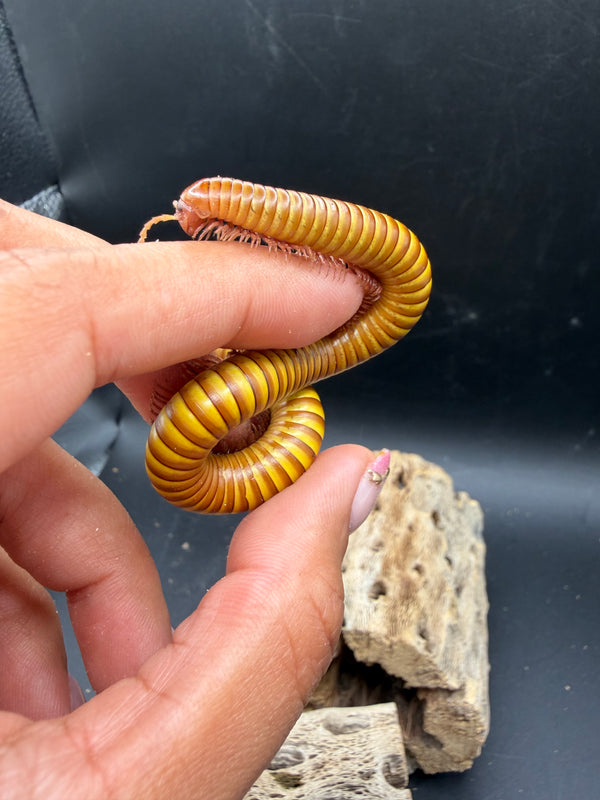
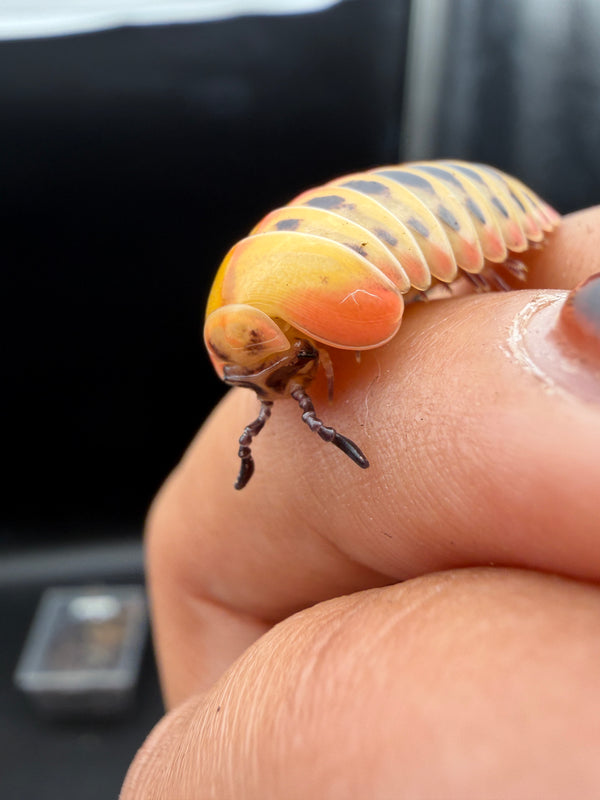
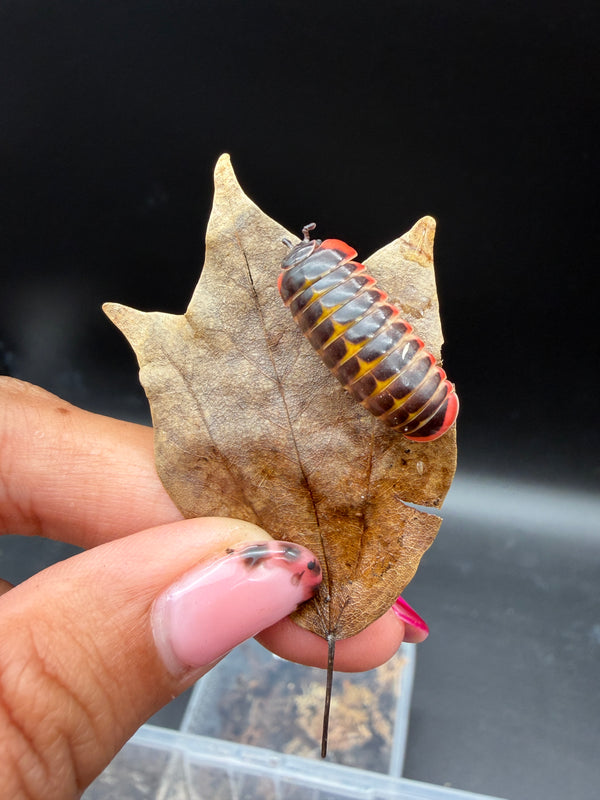
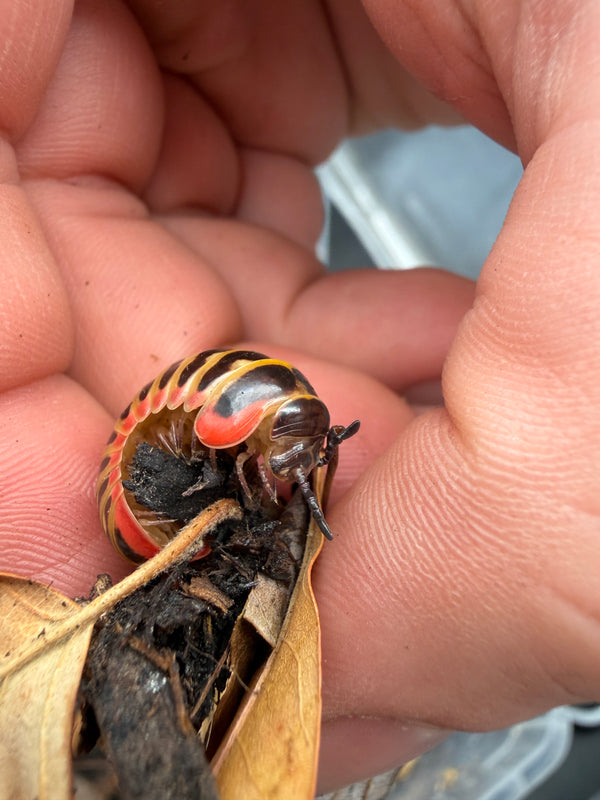
Texas Gold Millipede (Orthoporus ornatus)
Millipede

Brazilian Black and White Tarantula for sale from Big Z's (Nhandu coloratovillosus). Spice-rated keeper notes, care guidance, and live-arrival packing where eligible.
A big Brazilian terrestrial that grows fast and never learns to be shy about it.
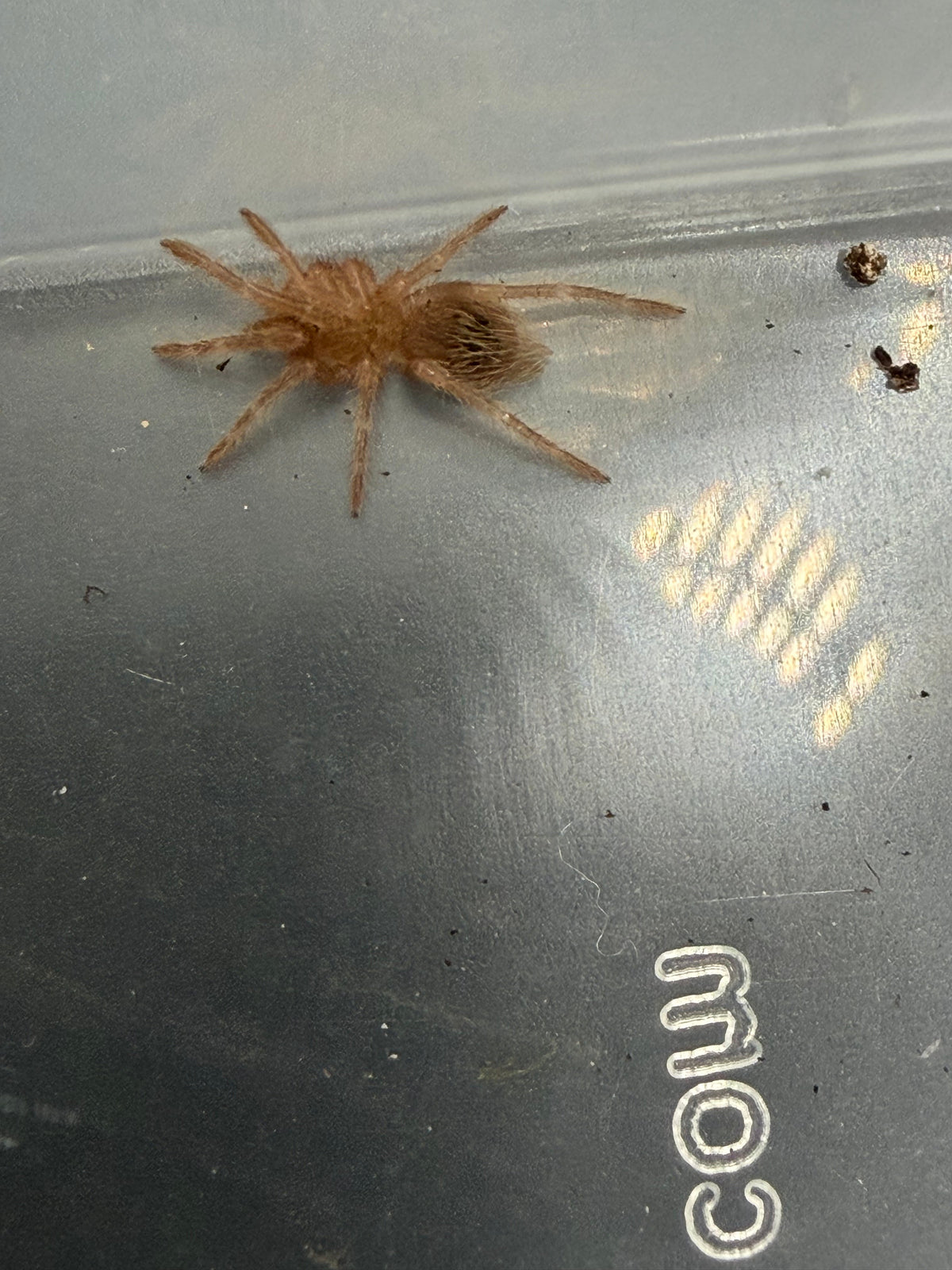
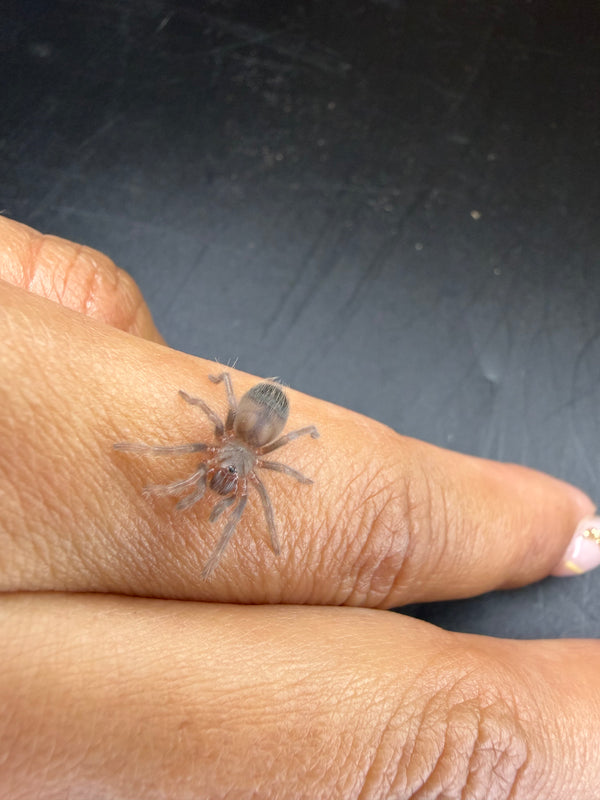
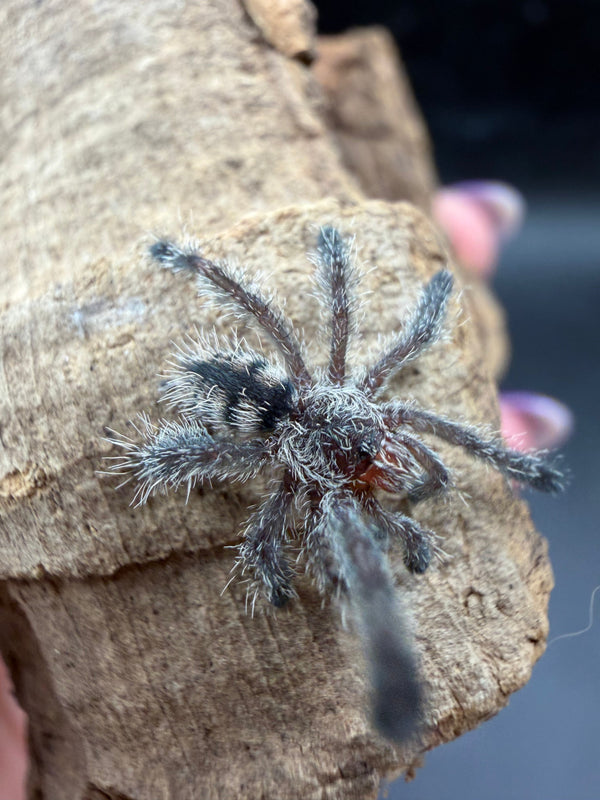
Nhandu coloratovillosus, the Brazilian Black and White, builds toward a high-contrast adult: dark legs broken by pale banding, a red-toned abdomen fringe, and a heavy body that fills a wide enclosure. At 0.5 inches these are early slings with the pattern still to come. Grown spiders reach roughly 6.5 to 7.5 inches across, and this genus gets there quickly.
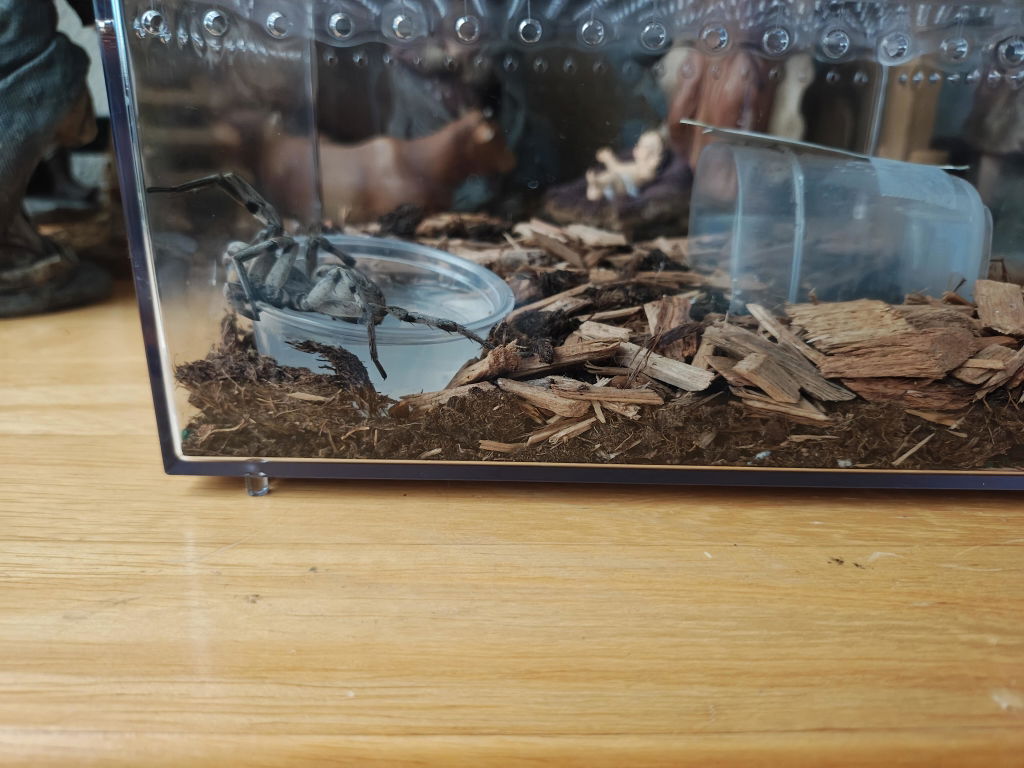
The husbandry is easy and the temperament is why it sits where it does. N. coloratovillosus in particular is quick to throw a threat pose, will repeat-strike, and flicks urticating hair readily, so this is a look-don't-touch spider and a tool-only rehouse. Give it a wide terrestrial floor with substrate deep enough for an opportunistic burrow, a hide, and a water dish, then step back and let it eat. Spice Level 3: Intermediate. The matched Big Z's care guide covers the grow-out schedule.
The numbers live in the care guide. Enclosure size, temps, humidity, feeding schedule, premolt signs, handling boundaries: it's all in the care guide for this exact fella. Start with the full Advanced guide, or click for the quick Open the Simple version →
Tarantula
Brazilian Black and White Tarantula (Nhandu coloratovillosus) care guide Read shipping & LAG
Brazilian Black and White Tarantula for sale from Big Z's (Nhandu coloratovillosus). Spice-rated keeper notes, care guidance, and live-arrival packing where eligible.
A big Brazilian terrestrial that grows fast and never learns to be shy about it.
Nhandu coloratovillosus, the Brazilian Black and White, builds toward a high-contrast adult: dark legs broken by pale banding, a red-toned abdomen fringe, and a heavy body that fills a wide enclosure. At 0.5 inches these are early slings with the pattern still to come. Grown spiders reach roughly 6.5 to 7.5 inches across, and this genus gets there quickly.
The husbandry is easy and the temperament is why it sits where it does. N. coloratovillosus in particular is quick to throw a threat pose, will repeat-strike, and flicks urticating hair readily, so this is a look-don't-touch spider and a tool-only rehouse. Give it a wide terrestrial floor with substrate deep enough for an opportunistic burrow, a hide, and a water dish, then step back and let it eat. Spice Level 3: Intermediate. The matched Big Z's care guide covers the grow-out schedule.
The numbers live in the care guide. Enclosure size, temps, humidity, feeding schedule, premolt signs, handling boundaries: it's all in the care guide for this exact fella. Start with the full Advanced guide, or click for the quick Open the Simple version →
Nhandu spp. - Spice 3: Intermediate. Baby Buddy: spiderlings only, escape-proof ventilation; rehouse up before it's cramped.; Burrow Buddy: grow-out for juveniles.; Larger custom terrestrial enclosure: adults need far more floor space than a small starter tank.
Nhandu spp.
Identity confidence: provisional. This is a genus, group, or trade name rather than a confirmed species. Treat it as the closest match we can stand behind, and use the more conservative end of any range.
Big Z's Quick Verdict: Big, fast-growing Brazilian terrestrials: hardy but more defensive than an Acanthoscurria, quick to threat-pose, strike, and flick hairs. Care is easy; temperament is why this sits at intermediate. Adults reach about 6.5-7.5 inches across.
| Temp | 72-82°F |
|---|---|
| Humidity | 60-75%, cross-vent; partly moist substrate, drier surface |
| Setup | Terrestrial / opportunistic burrower |
| Substrate | Soil/coco, 4-6 in, partly moist; N. chromatus burrows more |
| Feeding | Slings 2x weekly, juveniles weekly, adults every 1-2 weeks |
| Handling | Not recommended, defensive genus |
Humidity zones: Very Low under 30% - Low 30-60% - Low-Moderate 40-70% - Moderate 60-80% - Moderate-High 70-85% - High 80%+ - Very High 90%+
Current Big Z's catalog: No
Nhandu spp.
Identity confidence: provisional. This is a genus, group, or trade name rather than a confirmed species. Treat it as the closest match we can stand behind, and use the more conservative end of any range.
Keeper Snapshot: Big, fast-growing Brazilian terrestrials: hardy but more defensive than an Acanthoscurria, quick to threat-pose, strike, and flick hairs. Care is easy; temperament is why this sits at intermediate. Adults reach about 6.5-7.5 inches across.
| Temperature | 72-82°F |
|---|---|
| Humidity | 60-75%, cross-vent; partly moist substrate, drier surface |
| Setup Type | Terrestrial / opportunistic burrower |
| Substrate | Soil/coco, 4-6 in, partly moist; N. chromatus burrows more |
| Feeding | Slings 2x weekly, juveniles weekly, adults every 1-2 weeks |
| Care Difficulty | Spice 3: Intermediate |
| Handling | Not recommended, defensive genus |
Humidity zones: Very Low under 30% - Low 30-60% - Low-Moderate 40-70% - Moderate 60-80% - Moderate-High 70-85% - High 80%+ - Very High 90%+

Millipede

Scorpion

Tarantula

Millipede

Tarantula

Millipede

Tarantula
Live animal in this order. Pick one now so we pack and document it right, then choose the matching option at checkout.
We hand the box to FedEx that morning and email tracking the same day. Different day? Close this and change it in your cart.
Tick the box and type your initials to continue.
Your choice is recorded on the order. Coverage is governed by the Live Arrival Guarantee, Shipping Policy and Refund & Return Policy.