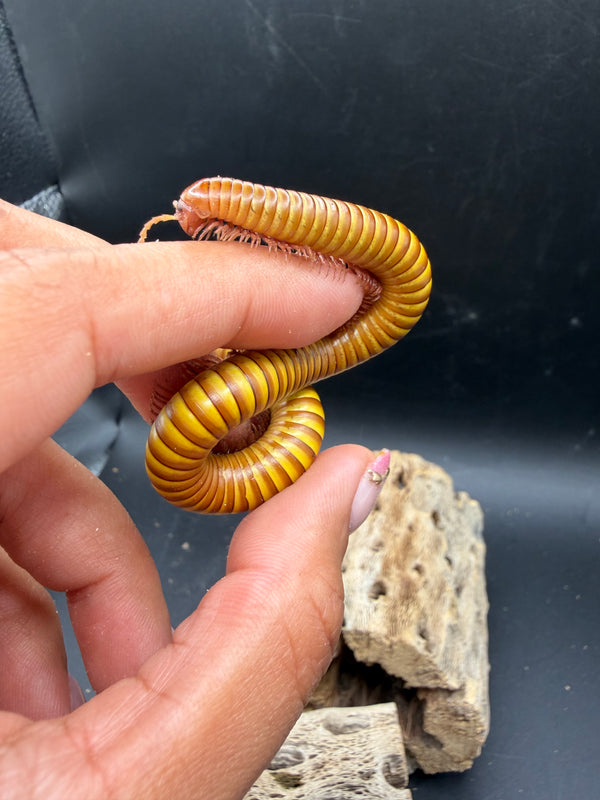
Texas Gold Millipede (Orthoporus ornatus)
Millipede

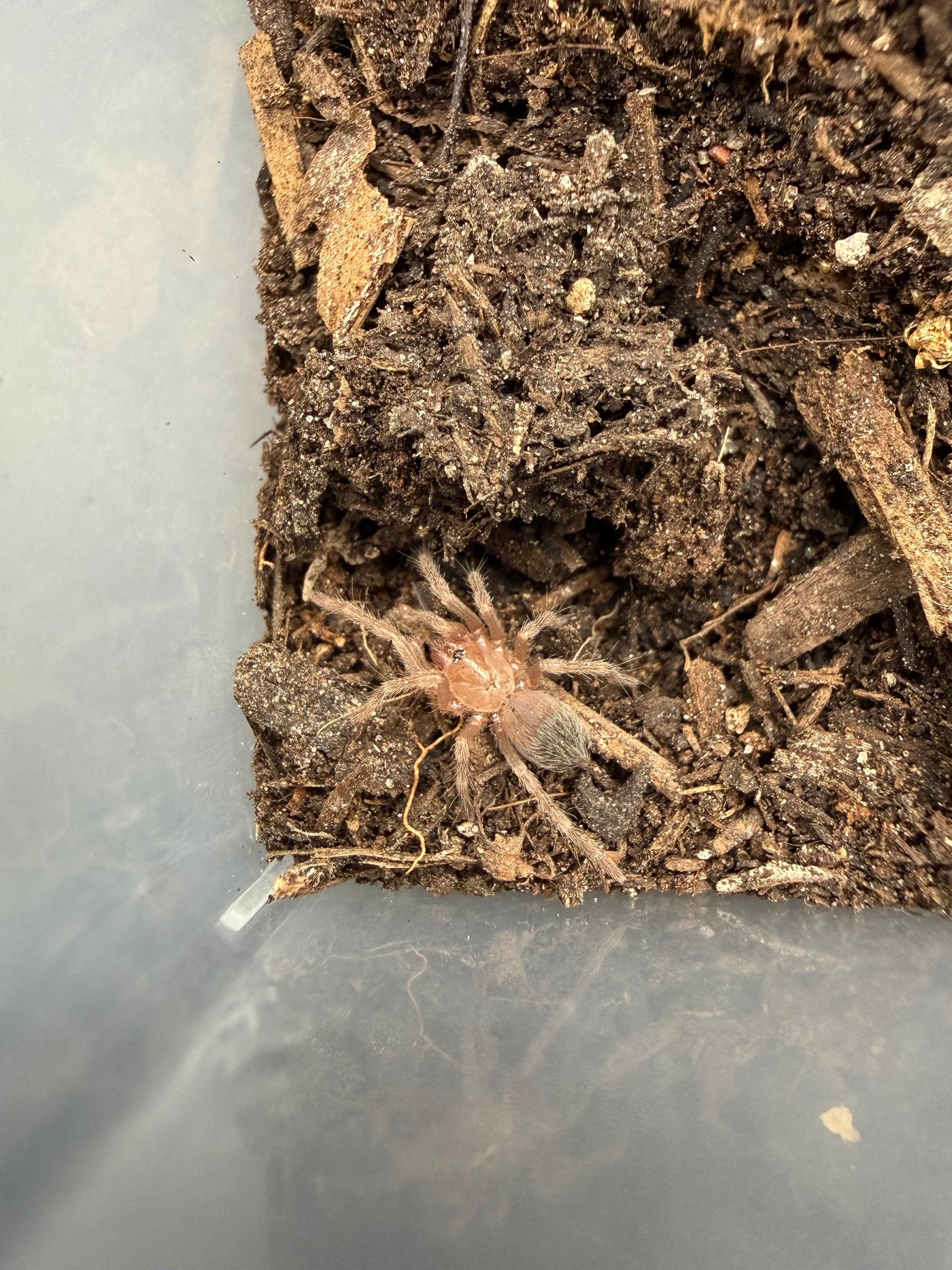
Salmon Pink Bird Eater Tarantula for sale from Big Z's (Lasiodora parahybana). Spice-rated keeper notes, care guidance, and live-arrival packing where eligible.
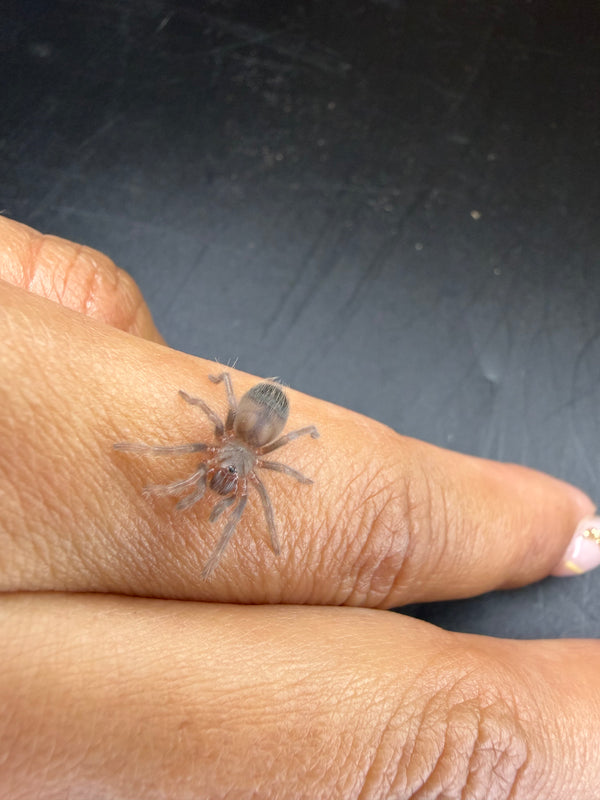
Half an inch now. One of the largest tarantulas on earth later.
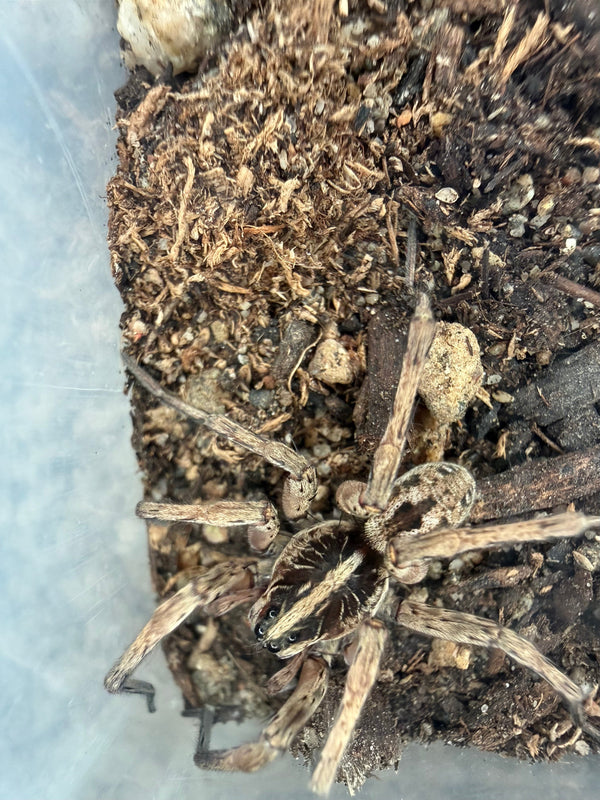
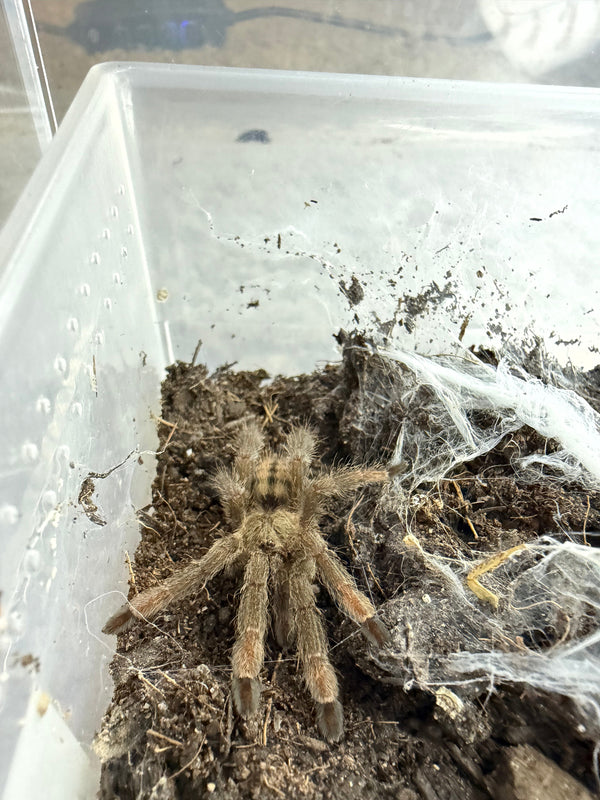
Lasiodora parahybana, the Salmon Pink Bird Eater, is Brazilian, and by leg span it sits among the largest tarantulas in the world. It is also a fast grower by hobby standards. The common name comes from the salmon-coloured setae. These arrived at 0.5 inches, the stage right before the growth curve gets interesting.
Plan for a large terrestrial from the start: floor space rather than height, a hide, and moderate moisture in the substrate. The enclosure that suits a half-inch sling will not suit it for long.
Spice Level 3: Intermediate. It flicks urticating hair freely, and handling is not recommended. Read the matched Big Z's care guide before it arrives.
The numbers live in the care guide. Enclosure size, temps, humidity, feeding schedule, premolt signs, handling boundaries: it's all in the care guide for this exact fella. Start with the full Advanced guide, or click for the quick Open the Simple version →
Tarantula
Salmon Pink Bird Eater Tarantula (Lasiodora parahybana) care guide Read shipping & LAG
Salmon Pink Bird Eater Tarantula for sale from Big Z's (Lasiodora parahybana). Spice-rated keeper notes, care guidance, and live-arrival packing where eligible.
Half an inch now. One of the largest tarantulas on earth later.
Lasiodora parahybana, the Salmon Pink Bird Eater, is Brazilian, and by leg span it sits among the largest tarantulas in the world. It is also a fast grower by hobby standards. The common name comes from the salmon-coloured setae. These arrived at 0.5 inches, the stage right before the growth curve gets interesting.
Plan for a large terrestrial from the start: floor space rather than height, a hide, and moderate moisture in the substrate. The enclosure that suits a half-inch sling will not suit it for long.
Spice Level 3: Intermediate. It flicks urticating hair freely, and handling is not recommended. Read the matched Big Z's care guide before it arrives.
The numbers live in the care guide. Enclosure size, temps, humidity, feeding schedule, premolt signs, handling boundaries: it's all in the care guide for this exact fella. Start with the full Advanced guide, or click for the quick Open the Simple version →
Lasiodora spp. - Spice 3: Intermediate. Baby Buddy for slings; Burrow Buddy for juveniles; Large custom enclosure for adults
Lasiodora spp.
Identity confidence: provisional. This is a genus, group, or trade name rather than a confirmed species. Treat it as the closest match we can stand behind, and use the more conservative end of any range.
Big Z's Quick Verdict: The 'LP': Lasiodora parahybana, the Brazilian salmon pink, one of the largest and most popular tarantulas in the hobby: 8-10 inches across, a fast grower, and a 'garbage-disposal' feeding response. Bold and hardy, but the urticating hairs are more irritating than a Brachypelma's and a fall can rupture that big abdomen.
| Temp | 75-82°F |
|---|---|
| Humidity | Moderate ambient (60-75%) with cross ventilation; moist-leaning substrate, large dish, overflow corner |
| Setup | Large terrestrial |
| Substrate | Soil/coco mix, 4-6 in, on the moist side of medium; slightly damper for slings |
| Feeding | Voracious: slings 2-3×/week, subadults weekly, adults a half-dozen crickets every 2 weeks; don't power-feed into obesity |
| Handling | Not recommended |
Humidity zones: Very Low under 30% - Low 30-60% - Low-Moderate 40-70% - Moderate 60-80% - Moderate-High 70-85% - High 80%+ - Very High 90%+
Current Big Z's catalog: No
Lasiodora spp.
Identity confidence: provisional. This is a genus, group, or trade name rather than a confirmed species. Treat it as the closest match we can stand behind, and use the more conservative end of any range.
Keeper Snapshot: The 'LP': Lasiodora parahybana, the Brazilian salmon pink, one of the largest and most popular tarantulas in the hobby: 8-10 inches across, a fast grower, and a 'garbage-disposal' feeding response. Bold and hardy, but the urticating hairs are more irritating than a Brachypelma's and a fall can rupture that big abdomen.
| Temperature | 75-82°F |
|---|---|
| Humidity | Moderate ambient (60-75%) with cross ventilation; moist-leaning substrate, large dish, overflow corner |
| Setup Type | Large terrestrial |
| Substrate | Soil/coco mix, 4-6 in, on the moist side of medium; slightly damper for slings |
| Feeding | Voracious: slings 2-3×/week, subadults weekly, adults a half-dozen crickets every 2 weeks; don't power-feed into obesity |
| Care Difficulty | Spice 3: Intermediate |
| Handling | Not recommended |
Humidity zones: Very Low under 30% - Low 30-60% - Low-Moderate 40-70% - Moderate 60-80% - Moderate-High 70-85% - High 80%+ - Very High 90%+

Millipede

Scorpion

Tarantula

Spider

Millipede

Tarantula

Arachnid

Millipede