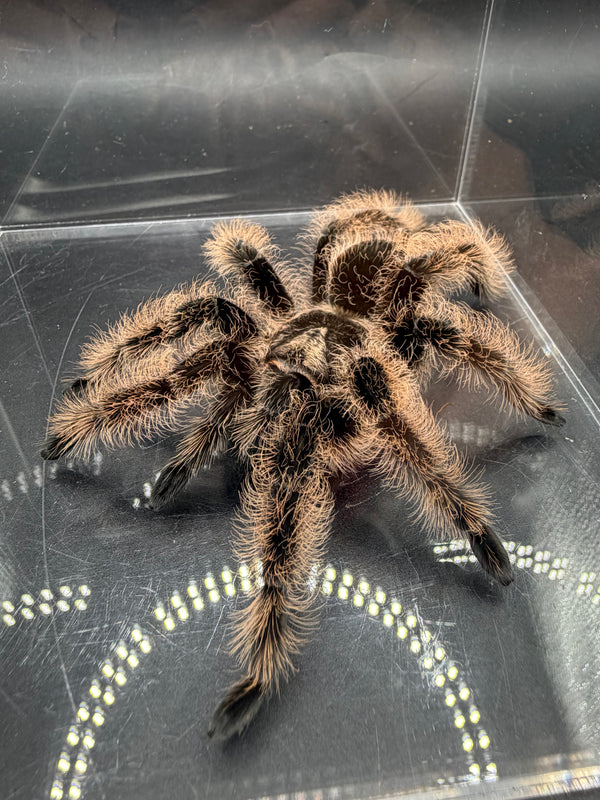
Curly Hair Tarantula (Tliltocatl albopilosus) - 3-4 in
Tarantula

Invertebrate
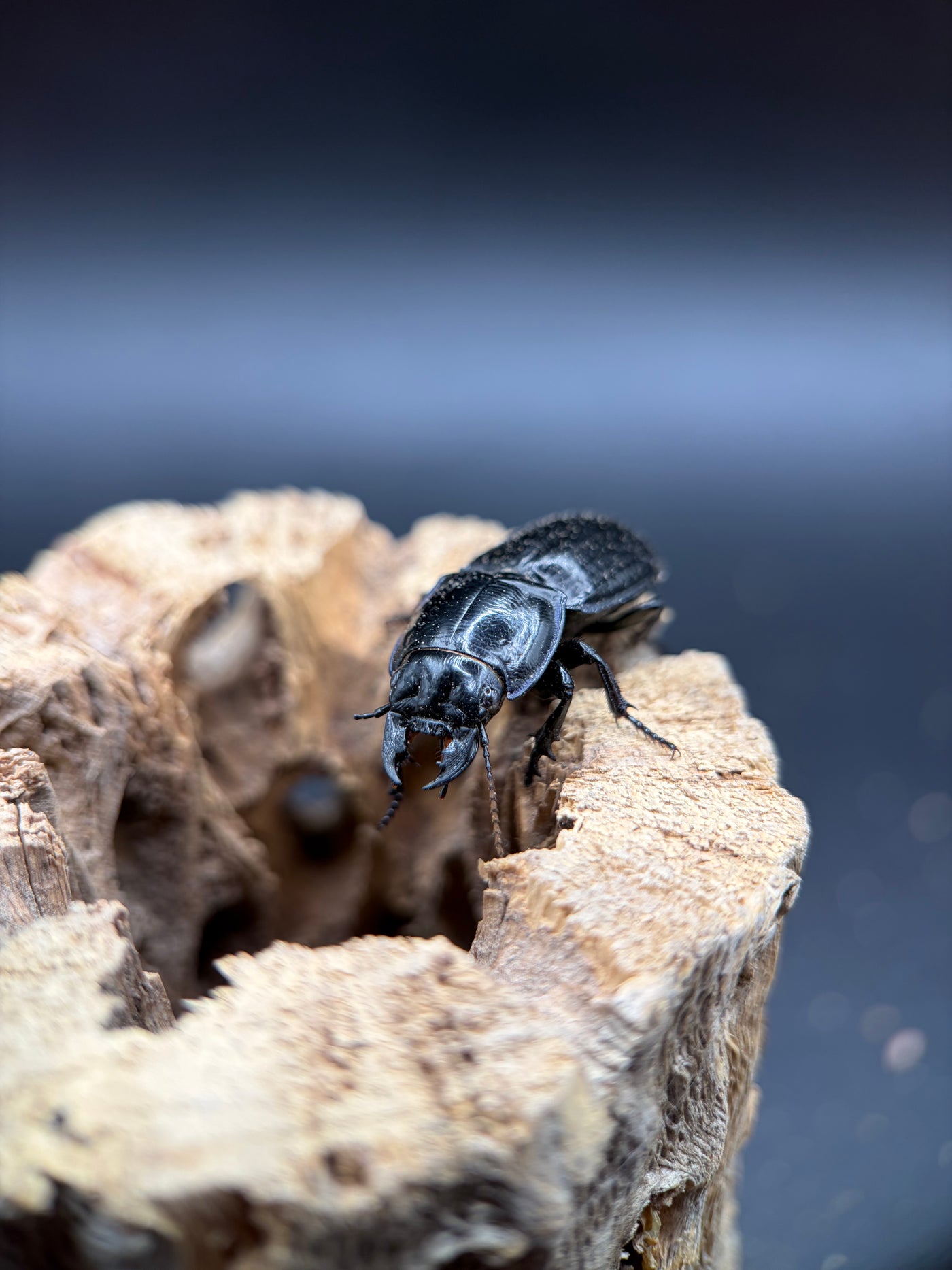
Blue Side Warrior Beetle for sale from Big Z's (Pasimachus subsulcatus). Spice-rated keeper notes, care guidance, and live-arrival packing where eligible.
Jet black, edged in electric blue, and built to hunt
Pasimachus subsulcatus, the Blue Side Warrior Beetle, is a large predatory ground beetle out of the American South. Picture a jet black tank with a razor line of metallic blue or violet running down each edge of its shell. This is no slow scavenger. It is an active hunter with big, powerful jaws made for running down other insects, and at 1 to 1.25 inches it moves fast and looks like armor with an attitude.
This is a look, do not touch animal. Those jaws deliver a genuinely painful pinch, and grab it and it fires off a sharp, foul defensive odor. Keep it solo, because it is cannibalistic and will eat tankmates. Care is beginner friendly, and it is hardy and long lived: a couple of inches of half sand, half coco substrate, a cork bark hide, room temperature, and one lightly damp corner, fed crickets, roaches, or superworms every few days. Check the care guide before setup and you will have a striking, low fuss predator on display for years.
The numbers live in the care guide. Enclosure size, temps, humidity, feeding schedule, premolt signs, handling boundaries: it's all in the care guide for this exact fella. Start with the full Advanced guide, or click for the quick Open the Simple version →
Browse the simple and advanced guide library for matching setup notes, care difficulty, and handling boundaries.
View in Care Guides libraryBlue Side Warrior Beetle for sale from Big Z's (Pasimachus subsulcatus). Spice-rated keeper notes, care guidance, and live-arrival packing where eligible.
Jet black, edged in electric blue, and built to hunt
Pasimachus subsulcatus, the Blue Side Warrior Beetle, is a large predatory ground beetle out of the American South. Picture a jet black tank with a razor line of metallic blue or violet running down each edge of its shell. This is no slow scavenger. It is an active hunter with big, powerful jaws made for running down other insects, and at 1 to 1.25 inches it moves fast and looks like armor with an attitude.
This is a look, do not touch animal. Those jaws deliver a genuinely painful pinch, and grab it and it fires off a sharp, foul defensive odor. Keep it solo, because it is cannibalistic and will eat tankmates. Care is beginner friendly, and it is hardy and long lived: a couple of inches of half sand, half coco substrate, a cork bark hide, room temperature, and one lightly damp corner, fed crickets, roaches, or superworms every few days. Check the care guide before setup and you will have a striking, low fuss predator on display for years.
The numbers live in the care guide. Enclosure size, temps, humidity, feeding schedule, premolt signs, handling boundaries: it's all in the care guide for this exact fella. Start with the full Advanced guide, or click for the quick Open the Simple version →
Browse the simple and advanced guide library for matching setup notes, care difficulty, and handling boundaries.
View in Care Guides library
Tarantula

Spider

Tarantula
Tarantula
Invertebrate
Tarantula
Flash Sale −20%
Tarantula
Flash Sale −10%
Tarantula