Curly Hair Tarantula (Tliltocatl albopilosus)
Tarantula

Carlsbad Green Tarantula for sale from Big Z's (Aphonopelma gabeli). Spice-rated keeper notes, care guidance, and live-arrival packing where eligible.
A New Mexico native wearing an olive-green cast most Aphonopelma never get
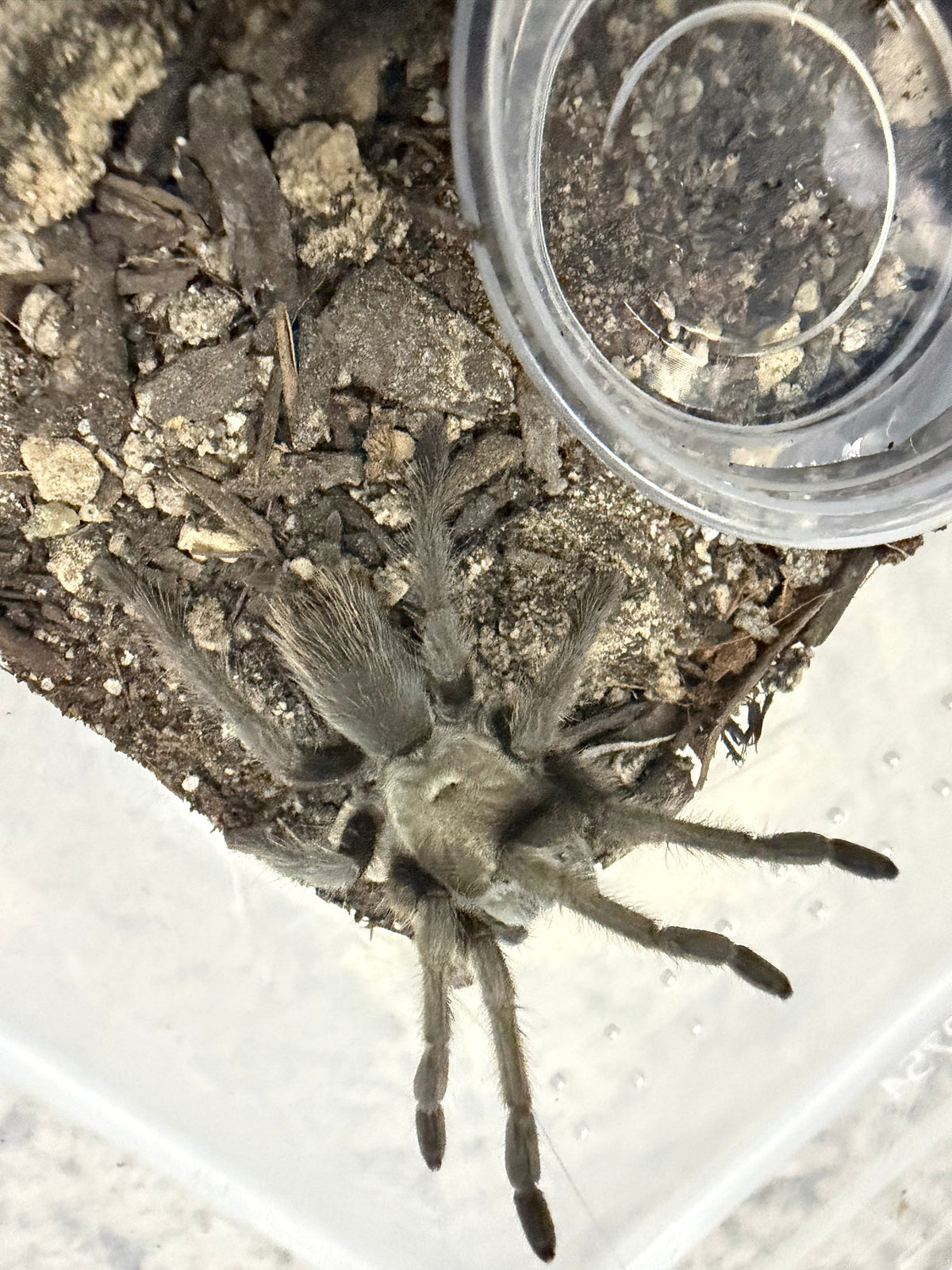
Aphonopelma gabeli, the Carlsbad Green, is a Chihuahuan Desert native from southern New Mexico and west Texas, named for the country around Carlsbad Caverns. It carries a muted olive-to-bronze wash over the carapace that sets it apart from the plain browns most of the genus wears. These arrive at subadult to adult size, which means the notoriously slow part of the growing is already behind them.
Everything good about North American Aphonopelma applies here. It is slow, calm, exceptionally hardy, and asks for close to nothing: dry substrate deep enough to burrow into, a hide, a shallow water dish, and room temperature. Pushed hard enough it kicks hair rather than biting, and mostly it simply does not get pushed. That combination makes it both an excellent first tarantula and a genuinely interesting native display animal, sitting comfortably at Spice 2. The care guide covers the desert setup.
The numbers live in the care guide. Enclosure size, temps, humidity, feeding schedule, premolt signs, handling boundaries: it's all in the care guide for this exact fella. Start with the full Advanced guide, or click for the quick Open the Simple version →
Tarantula
Carlsbad Green Tarantula (Aphonopelma gabeli) care guide Read shipping & LAG
Carlsbad Green Tarantula for sale from Big Z's (Aphonopelma gabeli). Spice-rated keeper notes, care guidance, and live-arrival packing where eligible.
A New Mexico native wearing an olive-green cast most Aphonopelma never get
Aphonopelma gabeli, the Carlsbad Green, is a Chihuahuan Desert native from southern New Mexico and west Texas, named for the country around Carlsbad Caverns. It carries a muted olive-to-bronze wash over the carapace that sets it apart from the plain browns most of the genus wears. These arrive at subadult to adult size, which means the notoriously slow part of the growing is already behind them.
Everything good about North American Aphonopelma applies here. It is slow, calm, exceptionally hardy, and asks for close to nothing: dry substrate deep enough to burrow into, a hide, a shallow water dish, and room temperature. Pushed hard enough it kicks hair rather than biting, and mostly it simply does not get pushed. That combination makes it both an excellent first tarantula and a genuinely interesting native display animal, sitting comfortably at Spice 2. The care guide covers the desert setup.
The numbers live in the care guide. Enclosure size, temps, humidity, feeding schedule, premolt signs, handling boundaries: it's all in the care guide for this exact fella. Start with the full Advanced guide, or click for the quick Open the Simple version →
Aphonopelma gabeli - Spice 2: Beginner. Burrow Buddy: the correct home for the supplied subadult to adult animals; Adult custom terrestrial build sized from the measured animal, low profile and wide floor; Baby Buddy: slings only
Aphonopelma gabeli
Identity confidence: provisional. This is a genus, group, or trade name rather than a confirmed species. Treat it as the closest match we can stand behind, and use the more conservative end of any range.
Big Z's Quick Verdict: A Chihuahuan Desert native and about as forgiving as tarantulas get. Keep it at 70-80F on 3-4 in of dry packed substrate with an anchored hide and a full water dish, and it will largely look after itself. The supplied animals are subadult to adult, so the slow years are already behind them. Calm enough for a first tarantula, native enough to be genuinely interesting, and dry enough that the only real way to kill it is to keep it wet. Keep it spicy. - Big Z
| Temp | 70-80F working room range. Ordinary indoor night drops into the 60s are normal and beneficial for a species from a high-desert climate with sharp diurnal swings. No supplemental heat is needed in a normally heated home. |
|---|---|
| Humidity | No numeric % target, and lean dry. Manage by method: keep the surface dry, keep a pebble-filled water dish full, and ventilate low. This is a desert species and standing damp substrate is the primary captive killer. If the enclosure needs moisture at all, add it to one lower corner and let it dry back fully. |
| Setup | Dry desert terrestrial with a scrape or shallow burrow |
| Substrate | 3-4 in of dry, firmly packed coco fiber and topsoil or another additive-free soil mix. Packed firmly enough to hold a scrape. Anchor a cork hide over a started depression. Keep the fall zone short - a heavy-bodied adult terrestrial should not be able to climb higher than roughly its own diagonal leg span. |
| Feeding | Supplied subadult to adult animals: one appropriately sized cricket or roach every 10-14 days, adjusted by abdomen condition. Juveniles: weekly. Prey no longer than the spider's body. Remove uneaten prey within 24 hours and withhold entirely through premolt until fangs are dark and the exoskeleton is firm. Long voluntary fasts with a healthy abdomen need no intervention. |
| Handling | Not recommended. Catch cup transfers only. |
Humidity zones: Very Low under 30% - Low 30-60% - Low-Moderate 40-70% - Moderate 60-80% - Moderate-High 70-85% - High 80%+ - Very High 90%+
Current Big Z's catalog: Yes
Aphonopelma gabeli
Identity confidence: provisional. This is a genus, group, or trade name rather than a confirmed species. Treat it as the closest match we can stand behind, and use the more conservative end of any range.
Keeper Snapshot: A Chihuahuan Desert native and about as forgiving as tarantulas get. Keep it at 70-80F on 3-4 in of dry packed substrate with an anchored hide and a full water dish, and it will largely look after itself. The supplied animals are subadult to adult, so the slow years are already behind them. Calm enough for a first tarantula, native enough to be genuinely interesting, and dry enough that the only real way to kill it is to keep it wet. Keep it spicy. - Big Z
| Temperature | 70-80F working room range. Ordinary indoor night drops into the 60s are normal and beneficial for a species from a high-desert climate with sharp diurnal swings. No supplemental heat is needed in a normally heated home. |
|---|---|
| Humidity | No numeric % target, and lean dry. Manage by method: keep the surface dry, keep a pebble-filled water dish full, and ventilate low. This is a desert species and standing damp substrate is the primary captive killer. If the enclosure needs moisture at all, add it to one lower corner and let it dry back fully. |
| Setup Type | Dry desert terrestrial with a scrape or shallow burrow |
| Substrate | 3-4 in of dry, firmly packed coco fiber and topsoil or another additive-free soil mix. Packed firmly enough to hold a scrape. Anchor a cork hide over a started depression. Keep the fall zone short - a heavy-bodied adult terrestrial should not be able to climb higher than roughly its own diagonal leg span. |
| Feeding | Supplied subadult to adult animals: one appropriately sized cricket or roach every 10-14 days, adjusted by abdomen condition. Juveniles: weekly. Prey no longer than the spider's body. Remove uneaten prey within 24 hours and withhold entirely through premolt until fangs are dark and the exoskeleton is firm. Long voluntary fasts with a healthy abdomen need no intervention. |
| Care Difficulty | Spice 2: Beginner |
| Handling | Not recommended. Catch cup transfers only. |
Humidity zones: Very Low under 30% - Low 30-60% - Low-Moderate 40-70% - Moderate 60-80% - Moderate-High 70-85% - High 80%+ - Very High 90%+

Tarantula

Spider

Tarantula

Invertebrate

Tarantula

Tarantula

Scorpion

Tarantula