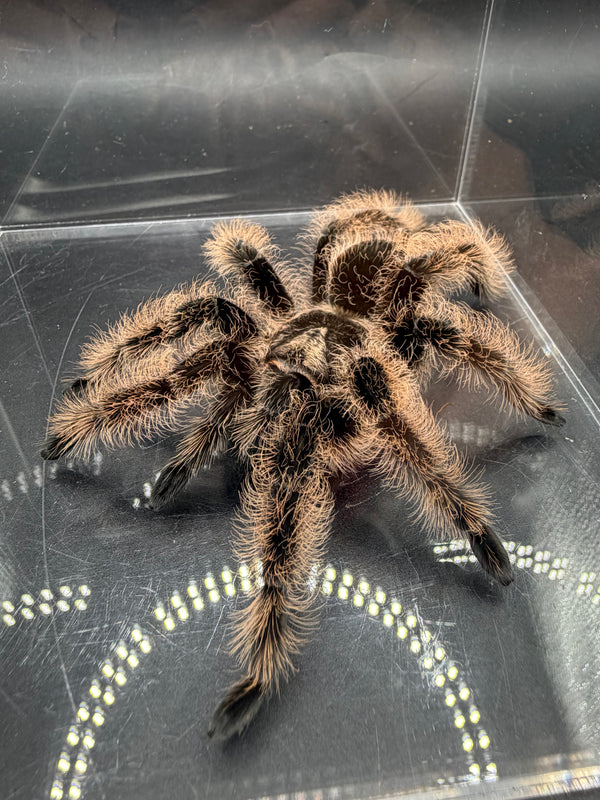
Curly Hair Tarantula (Tliltocatl albopilosus)
Tarantula

Oklahoma Brown Tarantula for sale from Big Z's (Aphonopelma hentzi). Spice-rated keeper notes, care guidance, and live-arrival packing where eligible.
The beginner tarantula that can outlive the keeper who bought it
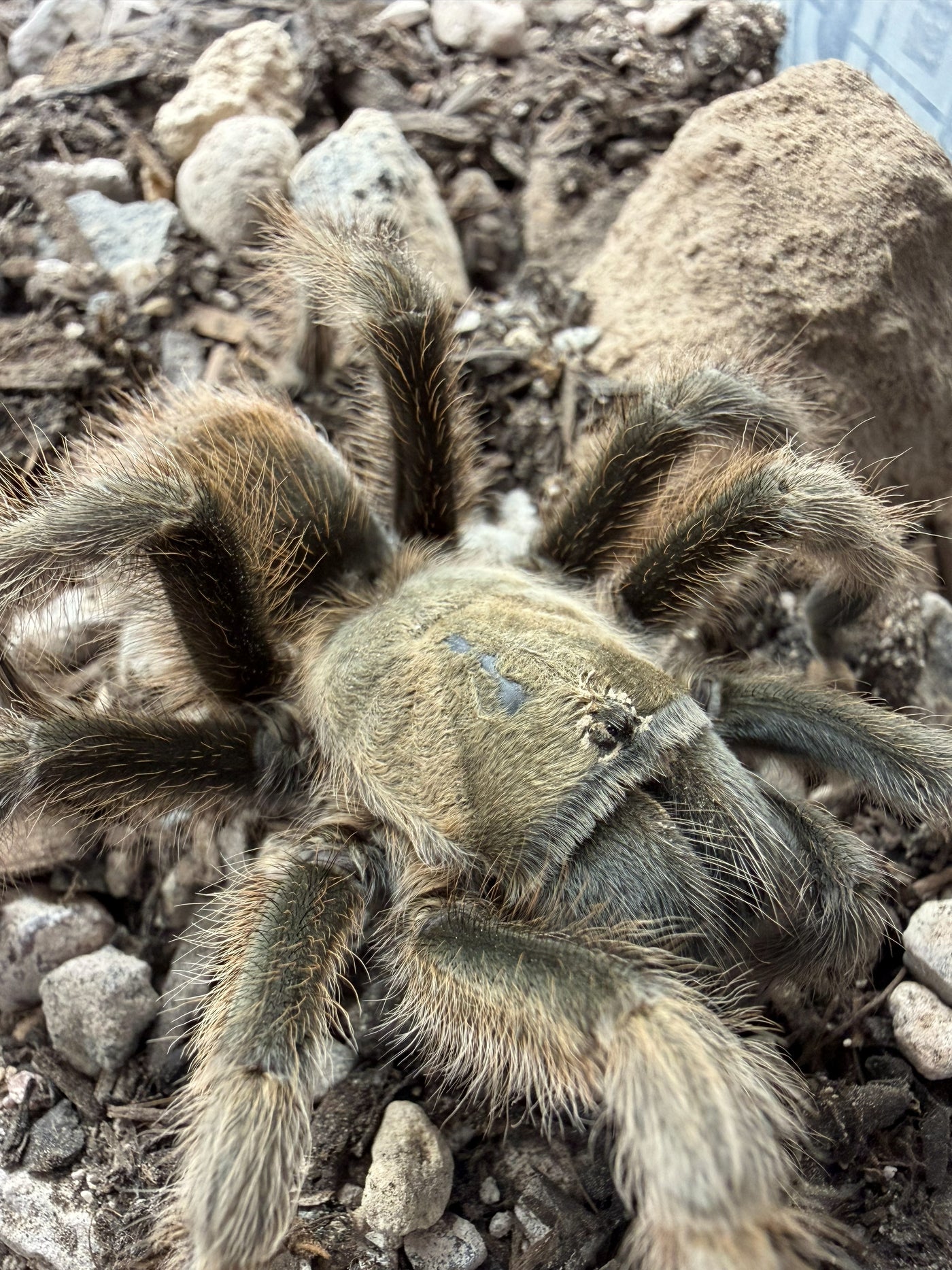
Aphonopelma hentzi, the Oklahoma Brown Tarantula (sold regionally as the Texas Brown), is the classic American spider: a sturdy 4 to 5.5 inch terrestrial in warm earth brown, built low and unbothered. It roams the plains of the central and southern US, digging burrows and waiting out the years. This is the tarantula most people picture when they picture a tarantula, and it wears the role well.
Temperament is the selling point: calm, slow growing, and forgiving, with a wide tolerance for humidity and nothing worse than a kick of urticating hairs when startled. It is a genuine beginner animal, one of the most easygoing tarantulas in North America, and it can outlast the keeper who bought it. Give it a simple terrestrial setup with real digging depth and it thrives. The care guide has the build and the boundaries.
The numbers live in the care guide. Enclosure size, temps, humidity, feeding schedule, premolt signs, handling boundaries: it's all in the care guide for this exact fella. Start with the full Advanced guide, or click for the quick Open the Simple version →
Tarantula
Burrow Buddy fits the listed juvenile size, but the animal may outgrow it at full adult size. Plan for larger custom terrestrial enclosure. Ask Big Z if you need help choosing the next enclosure.
Oklahoma Brown Tarantula (Aphonopelma hentzi) care guide Read shipping & LAG
Oklahoma Brown Tarantula for sale from Big Z's (Aphonopelma hentzi). Spice-rated keeper notes, care guidance, and live-arrival packing where eligible.
The beginner tarantula that can outlive the keeper who bought it
Aphonopelma hentzi, the Oklahoma Brown Tarantula (sold regionally as the Texas Brown), is the classic American spider: a sturdy 4 to 5.5 inch terrestrial in warm earth brown, built low and unbothered. It roams the plains of the central and southern US, digging burrows and waiting out the years. This is the tarantula most people picture when they picture a tarantula, and it wears the role well.
Temperament is the selling point: calm, slow growing, and forgiving, with a wide tolerance for humidity and nothing worse than a kick of urticating hairs when startled. It is a genuine beginner animal, one of the most easygoing tarantulas in North America, and it can outlast the keeper who bought it. Give it a simple terrestrial setup with real digging depth and it thrives. The care guide has the build and the boundaries.
The numbers live in the care guide. Enclosure size, temps, humidity, feeding schedule, premolt signs, handling boundaries: it's all in the care guide for this exact fella. Start with the full Advanced guide, or click for the quick Open the Simple version →
Aphonopelma hentzi - Spice 2: Beginner. Burrow Buddy for slings/juveniles; larger terrestrial Burrow Buddy setup for adults
Aphonopelma hentzi
Big Z's Quick Verdict: One of the most common, most collected wild tarantulas in the US Great Plains: sturdy, docile, and famous for the fall mating-season migrations when males wander roads by the hundreds. About as beginner-friendly as tarantulas get.
| Temp | 70-82°F |
|---|---|
| Humidity | Low-Moderate ambient (40-55%), generously ventilated; dry substrate, shallow dish |
| Setup | Terrestrial burrowing tarantula, simple beginner setup |
| Substrate | Dry-leaning burrowing substrate (coco fiber/soil mix), 4-6in deep with a starter hide |
| Feeding | 1/4-3/8" crickets for juveniles, 3/4-1" for adults (no larger than body length); juveniles 2x/week, adults every 1-2 weeks, offered at dusk |
| Handling | Handling discouraged. Kicks urticating hairs when disturbed. |
Humidity zones: Very Low under 30% - Low 30-60% - Low-Moderate 40-70% - Moderate 60-80% - Moderate-High 70-85% - High 80%+ - Very High 90%+
Current Big Z's catalog: Yes
Aphonopelma hentzi
Keeper Snapshot: One of the most common, most collected wild tarantulas in the US Great Plains: sturdy, docile, and famous for the fall mating-season migrations when males wander roads by the hundreds. About as beginner-friendly as tarantulas get.
| Temperature | 70-82°F |
|---|---|
| Humidity | Low-Moderate ambient (40-55%), generously ventilated; dry substrate, shallow dish |
| Setup Type | Terrestrial burrowing tarantula, simple beginner setup |
| Substrate | Dry-leaning burrowing substrate (coco fiber/soil mix), 4-6in deep with a starter hide |
| Feeding | 1/4-3/8" crickets for juveniles, 3/4-1" for adults (no larger than body length); juveniles 2x/week, adults every 1-2 weeks, offered at dusk |
| Care Difficulty | Spice 2: Beginner |
| Handling | Handling discouraged. Kicks urticating hairs when disturbed. |
Humidity zones: Very Low under 30% - Low 30-60% - Low-Moderate 40-70% - Moderate 60-80% - Moderate-High 70-85% - High 80%+ - Very High 90%+

Tarantula

Spider

Tarantula

Invertebrate

Tarantula

Tarantula

Scorpion

Tarantula