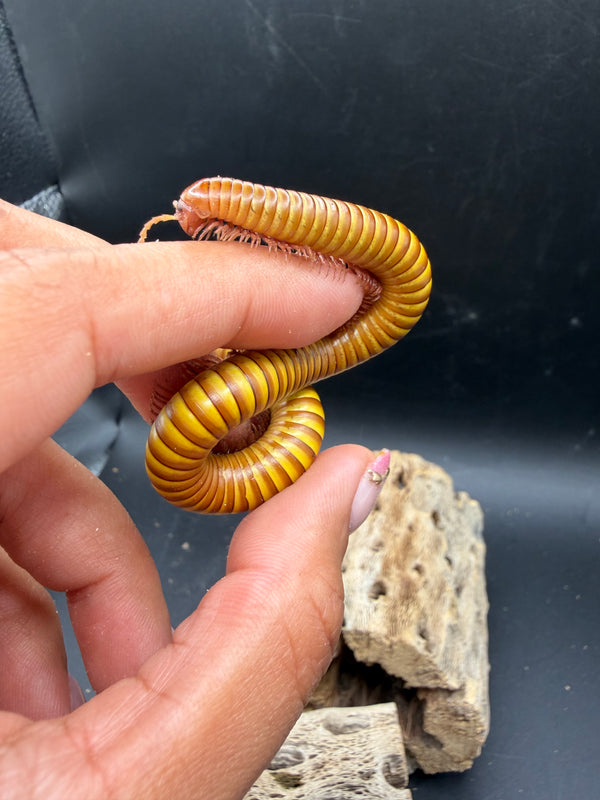
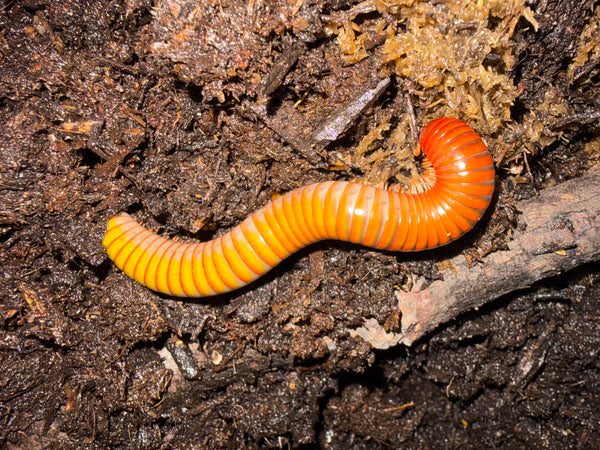
Texas Gold Millipede (Orthoporus ornatus)
Millipede

Socotra Island Blue Tarantula for sale from Big Z's (Monocentropus balfouri). Spice-rated keeper notes, care guidance, and live-arrival packing where eligible.
Powder-blue baboon, and the spider that raises its kids together
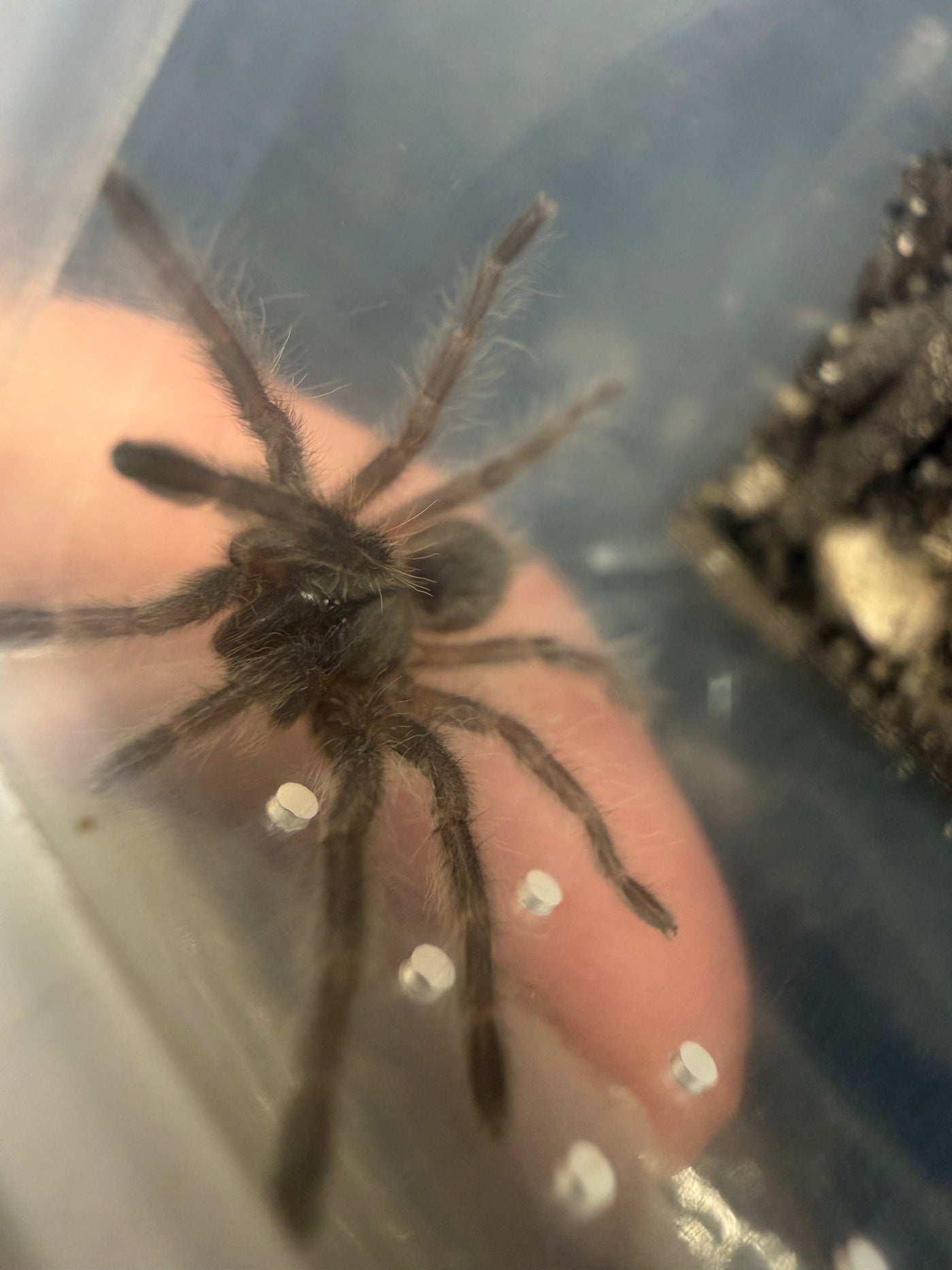
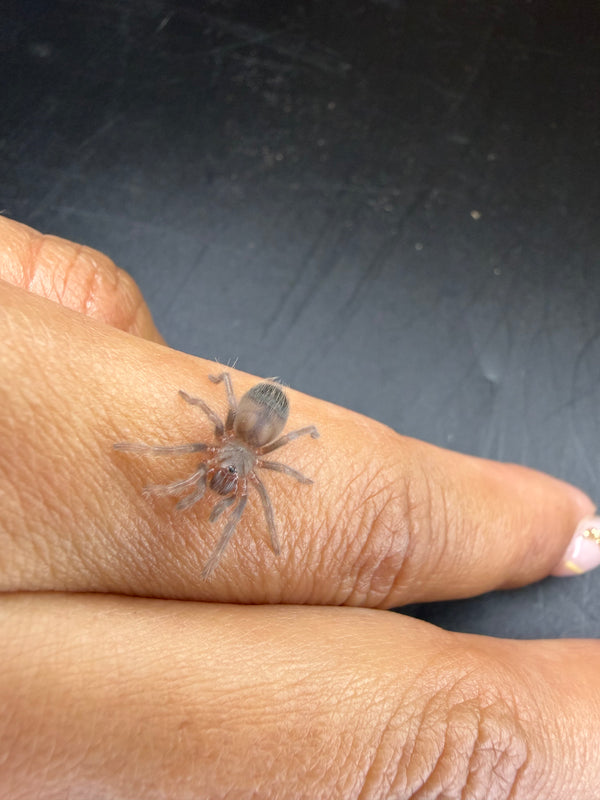
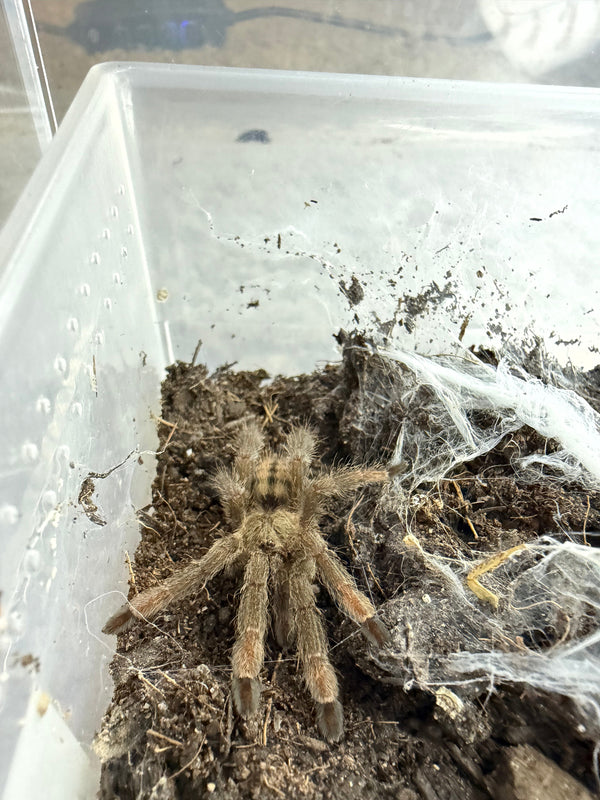
Monocentropus balfouri, the Socotra Island Blue, comes from one of the strangest places on Earth, the alien-looking island of Socotra off Yemen. It is a soft powder-blue and tan baboon spider, smaller than most, and it has a trick no other tarantula reliably pulls off: it is genuinely communal.
Raised together as siblings, balfouris cohabit peacefully, share webwork, and, remarkably, the mother tends her slings in the burrow rather than treating them as snacks. A small colony of these in one enclosure is one of the coolest displays in the hobby. Defensive but usually retreats; dry, easy care. The care guide covers the communal setup and the no-handling line (Old World venom is no joke).
The numbers live in the care guide. Enclosure size, temps, humidity, feeding schedule, premolt signs, handling boundaries: it's all in the care guide for this exact fella. Start with the full Advanced guide, or click for the quick Open the Simple version →
Tarantula
Burrow Buddy fits the listed juvenile size, but the animal may outgrow it at around 1.5" DLS. Plan for larger adult terrestrial (it makes a great small communal); matures near 4–5" DLS. Ask Big Z if you need help choosing the next enclosure.
Socotra Island Blue Tarantula (Monocentropus balfouri) care guide Read shipping & LAG
Socotra Island Blue Tarantula for sale from Big Z's (Monocentropus balfouri). Spice-rated keeper notes, care guidance, and live-arrival packing where eligible.
Powder-blue baboon, and the spider that raises its kids together
Monocentropus balfouri, the Socotra Island Blue, comes from one of the strangest places on Earth, the alien-looking island of Socotra off Yemen. It is a soft powder-blue and tan baboon spider, smaller than most, and it has a trick no other tarantula reliably pulls off: it is genuinely communal.
Raised together as siblings, balfouris cohabit peacefully, share webwork, and, remarkably, the mother tends her slings in the burrow rather than treating them as snacks. A small colony of these in one enclosure is one of the coolest displays in the hobby. Defensive but usually retreats; dry, easy care. The care guide covers the communal setup and the no-handling line (Old World venom is no joke).
The numbers live in the care guide. Enclosure size, temps, humidity, feeding schedule, premolt signs, handling boundaries: it's all in the care guide for this exact fella. Start with the full Advanced guide, or click for the quick Open the Simple version →
Monocentropus balfouri - Spice 3: Intermediate. Baby Buddy: spiderlings only (escape-proof ventilation; rehouse up before it's cramped); Burrow Buddy: grow-out for single juveniles; Larger custom enclosure for an adult, or a roomy custom communal build (lots of floor, many anchor points, equal-sized animals) for a group
Monocentropus balfouri
Big Z's Quick Verdict: A heavy-webbing Old World species famous for possible communal keeping: adults reach about 4-5 inches across.
| Temp | 75-82°F |
|---|---|
| Humidity | Low-Moderate ambient (45-60%) with good airflow; dry substrate, water dish, one damp corner |
| Setup | Semi-arid heavy-web terrestrial |
| Substrate | Dry soil mix with web anchor points |
| Feeding | Weekly; group feed carefully if communal |
| Handling | NEVER |
Humidity zones: Very Low under 30% - Low 30-60% - Low-Moderate 40-70% - Moderate 60-80% - Moderate-High 70-85% - High 80%+ - Very High 90%+
Current Big Z's catalog: Yes
Monocentropus balfouri
Keeper Snapshot: A heavy-webbing Old World species famous for possible communal keeping: adults reach about 4-5 inches across.
| Temperature | 75-82°F |
|---|---|
| Humidity | Low-Moderate ambient (45-60%) with good airflow; dry substrate, water dish, one damp corner |
| Setup Type | Semi-arid heavy-web terrestrial |
| Substrate | Dry soil mix with web anchor points |
| Feeding | Weekly; group feed carefully if communal |
| Care Difficulty | Spice 3: Intermediate |
| Handling | NEVER |
Humidity zones: Very Low under 30% - Low 30-60% - Low-Moderate 40-70% - Moderate 60-80% - Moderate-High 70-85% - High 80%+ - Very High 90%+

Millipede

Scorpion

Tarantula

Spider

Millipede

Tarantula

Arachnid

Millipede