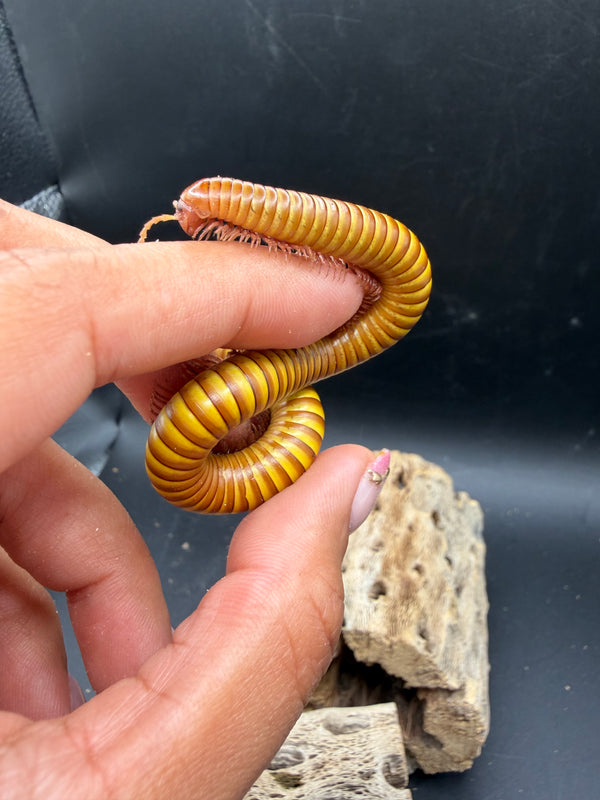
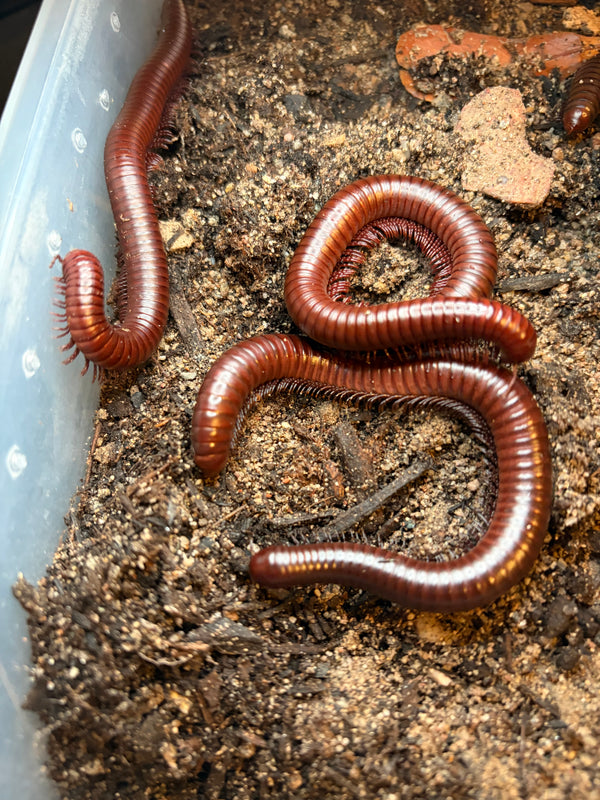
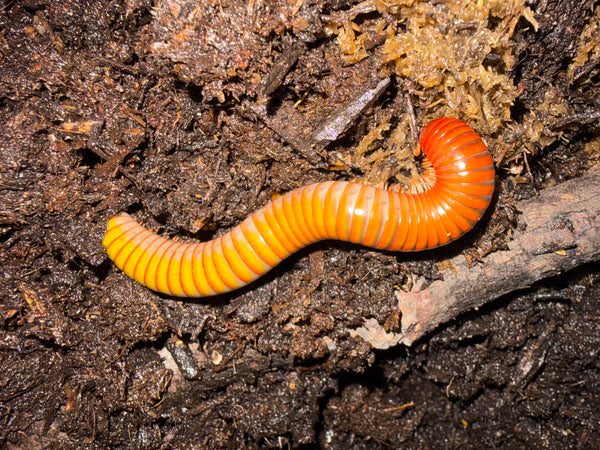
Texas Gold Millipede (Orthoporus ornatus)
Millipede

Brazilian Red Tarantula for sale from Big Z's (Nhandu carapoensis). Spice-rated keeper notes, care guidance, and live-arrival packing where eligible.
Warm rust-red hair on a heavy Brazilian frame, with the attitude to match
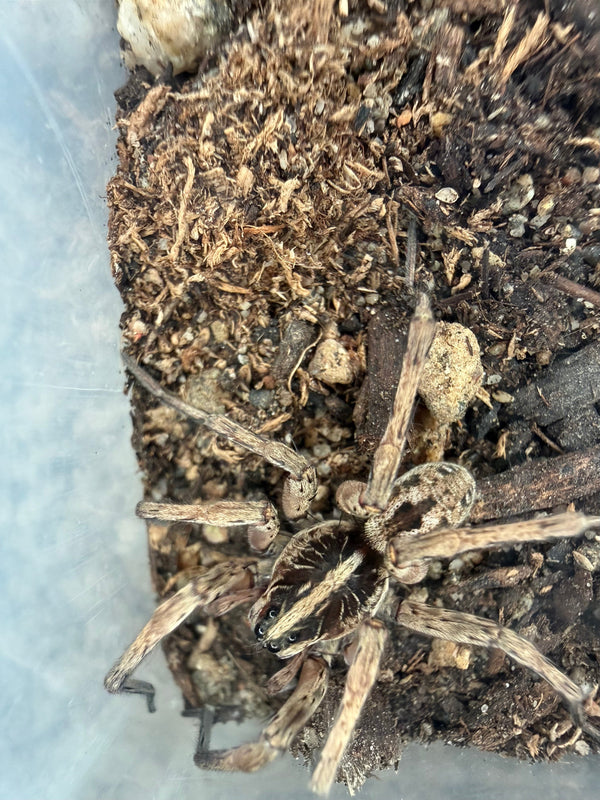
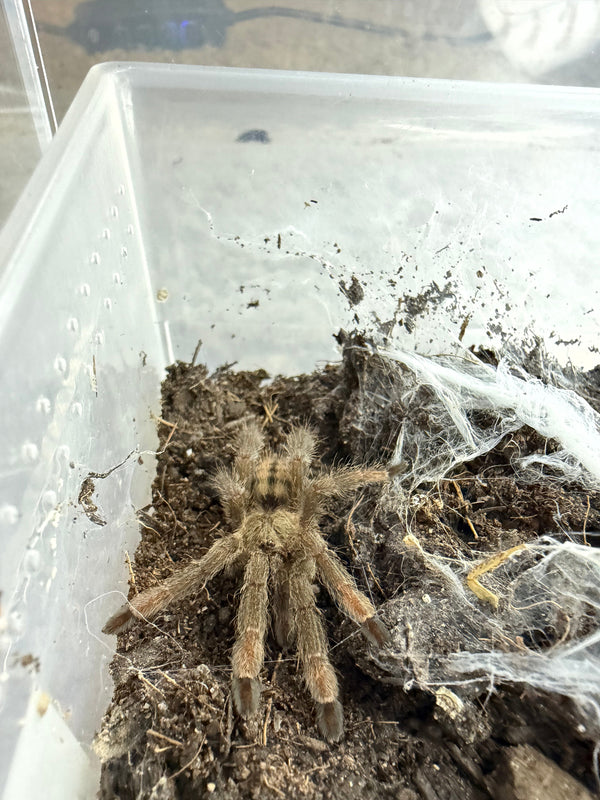
Nhandu carapoensis, the Brazilian Red, is a large Brazilian terrestrial carrying dense rust and copper hair over a dark body, brightest in the days right after a molt. At 2.5 to 3 inches this is a solid juvenile with a long way still to go: adults push seven to eight inches on the heavy build the genus is known for.
Nhandu have a reputation and it is earned. This is a skittish, quick-to-bolt spider that is generous with urticating hair and will kick a cloud of it at very little provocation. None of that makes it hard to keep, because the husbandry is simple: dry terrestrial substrate, a hide, a water dish, good ventilation. It does make it a display animal rather than a handling one, with maintenance done using tongs and a little patience. Spice 3, intermediate lane, and the care guide covers both the setup and the temperament.
The numbers live in the care guide. Enclosure size, temps, humidity, feeding schedule, premolt signs, handling boundaries: it's all in the care guide for this exact fella. Start with the full Advanced guide, or click for the quick Open the Simple version →
Tarantula
Brazilian Red Tarantula (Nhandu carapoensis) care guide Read shipping & LAG
Brazilian Red Tarantula for sale from Big Z's (Nhandu carapoensis). Spice-rated keeper notes, care guidance, and live-arrival packing where eligible.
Warm rust-red hair on a heavy Brazilian frame, with the attitude to match
Nhandu carapoensis, the Brazilian Red, is a large Brazilian terrestrial carrying dense rust and copper hair over a dark body, brightest in the days right after a molt. At 2.5 to 3 inches this is a solid juvenile with a long way still to go: adults push seven to eight inches on the heavy build the genus is known for.
Nhandu have a reputation and it is earned. This is a skittish, quick-to-bolt spider that is generous with urticating hair and will kick a cloud of it at very little provocation. None of that makes it hard to keep, because the husbandry is simple: dry terrestrial substrate, a hide, a water dish, good ventilation. It does make it a display animal rather than a handling one, with maintenance done using tongs and a little patience. Spice 3, intermediate lane, and the care guide covers both the setup and the temperament.
The numbers live in the care guide. Enclosure size, temps, humidity, feeding schedule, premolt signs, handling boundaries: it's all in the care guide for this exact fella. Start with the full Advanced guide, or click for the quick Open the Simple version →
Nhandu carapoensis - Spice 3: Intermediate. Baby Buddy: small spiderlings only, with openings too narrow for the spider to pass and enough packed substrate for a started retreat; Burrow Buddy: short grow-out for the supplied 2.5-3 in animals while it can remain 1/2 to 2/3 filled, hold an anchored full-body hide, and keep a low fall zone; Adult custom terrestrial build sized from the measured animal, with a low horizontal profile, at least 5 in of packed substrate, a full-body hide, no hard fall hazards, and strong cross ventilation
Nhandu carapoensis
Big Z's Quick Verdict: A rarely kept New World terrestrial with limited species-specific literature but enough direct keeper evidence for an operational plan. Keep this fella at 73-80F in a low terrestrial enclosure with deep form-holding substrate, a secure hide, most of the surface dry, one lightly moist lower area, strong cross ventilation, and a full pebble-filled dish. Use the measured 2.5-3 in grow-out lane for this arrival regardless of formal life stage. Use tongs and a catch cup because direct institutional records report particularly irritating hairs. Keep it spicy. - Big Z
| Temp | 73-80F working daytime range, with an ordinary room-night range of 68-73F acceptable. Herpeton Academy gives 23-27C days and 20-23C nights for Nhandu carapoensis. Stable room warmth is preferable to a concentrated hot spot; do not force a nightly drop. |
|---|---|
| Humidity | No numeric % target. Manage by method: keep most of the surface dry, maintain a visibly darker and lightly moist lower area in one part of the substrate, cross-ventilate at substrate level, and keep a pebble-filled water dish full. Add water to the substrate rather than spraying the animal. |
| Setup | Terrestrial with deep substrate and a secure ground-level retreat |
| Substrate | Deep, firmly packed coco and topsoil or another additive-free soil-based mix that holds a retreat. For the supplied 2.5-3 in grow-outs, fill about 1/2 to 2/3 of a low enclosure. For larger animals, keep the same fill fraction and provide at least 5 in of packed substrate, with more when needed to keep the fall zone low and the hide stable. |
| Feeding | Spiderlings: small prey twice weekly. Supplied 2.5-3 in grow-outs: one appropriately sized cricket or roach every 7 days. Larger adults: one suitable meal every 10-14 days. Keep prey no longer than the spider's body, reduce frequency when the abdomen is already broad, remove uneaten prey within 24 hours, and withhold prey through premolt and until the fangs are dark and the exoskeleton is firm after a molt. |
| Handling | Not recommended. Catch cup transfers only. |
Humidity zones: Very Low under 30% - Low 30-60% - Low-Moderate 40-70% - Moderate 60-80% - Moderate-High 70-85% - High 80%+ - Very High 90%+
Current Big Z's catalog: No
Nhandu carapoensis
Keeper Snapshot: A rarely kept New World terrestrial with limited species-specific literature but enough direct keeper evidence for an operational plan. Keep this fella at 73-80F in a low terrestrial enclosure with deep form-holding substrate, a secure hide, most of the surface dry, one lightly moist lower area, strong cross ventilation, and a full pebble-filled dish. Use the measured 2.5-3 in grow-out lane for this arrival regardless of formal life stage. Use tongs and a catch cup because direct institutional records report particularly irritating hairs. Keep it spicy. - Big Z
| Temperature | 73-80F working daytime range, with an ordinary room-night range of 68-73F acceptable. Herpeton Academy gives 23-27C days and 20-23C nights for Nhandu carapoensis. Stable room warmth is preferable to a concentrated hot spot; do not force a nightly drop. |
|---|---|
| Humidity | No numeric % target. Manage by method: keep most of the surface dry, maintain a visibly darker and lightly moist lower area in one part of the substrate, cross-ventilate at substrate level, and keep a pebble-filled water dish full. Add water to the substrate rather than spraying the animal. |
| Setup Type | Terrestrial with deep substrate and a secure ground-level retreat |
| Substrate | Deep, firmly packed coco and topsoil or another additive-free soil-based mix that holds a retreat. For the supplied 2.5-3 in grow-outs, fill about 1/2 to 2/3 of a low enclosure. For larger animals, keep the same fill fraction and provide at least 5 in of packed substrate, with more when needed to keep the fall zone low and the hide stable. |
| Feeding | Spiderlings: small prey twice weekly. Supplied 2.5-3 in grow-outs: one appropriately sized cricket or roach every 7 days. Larger adults: one suitable meal every 10-14 days. Keep prey no longer than the spider's body, reduce frequency when the abdomen is already broad, remove uneaten prey within 24 hours, and withhold prey through premolt and until the fangs are dark and the exoskeleton is firm after a molt. |
| Care Difficulty | Spice 3: Intermediate |
| Handling | Not recommended. Catch cup transfers only. |
Humidity zones: Very Low under 30% - Low 30-60% - Low-Moderate 40-70% - Moderate 60-80% - Moderate-High 70-85% - High 80%+ - Very High 90%+

Millipede

Scorpion

Tarantula

Spider

Millipede

Tarantula

Arachnid

Millipede